
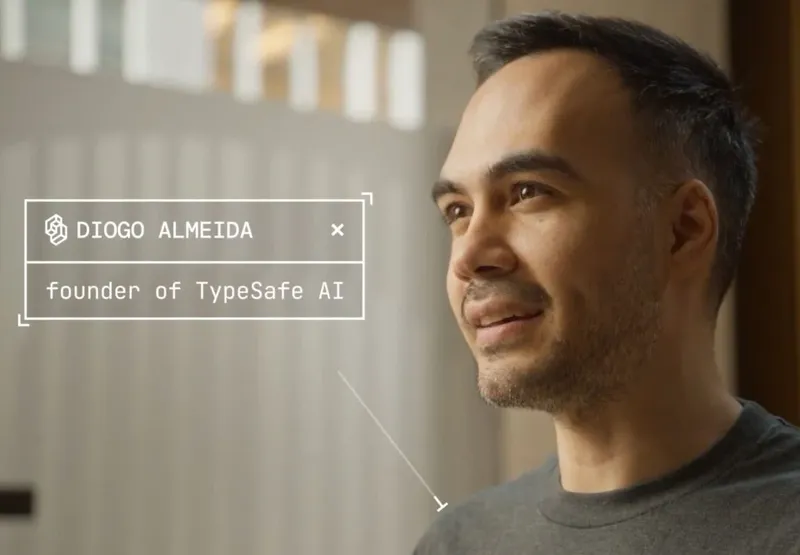
IT之家 News on 10/5 (October 5): According to a report by The Wall Street Journal, Jev, an artificial intelligence model that has only been out for three weeks, has already sparked heated discussion in Silicon Valley circles, with people beginning to explore alternative routes beyond large language models, and the model has also spawned quite a few copycat imitator products.
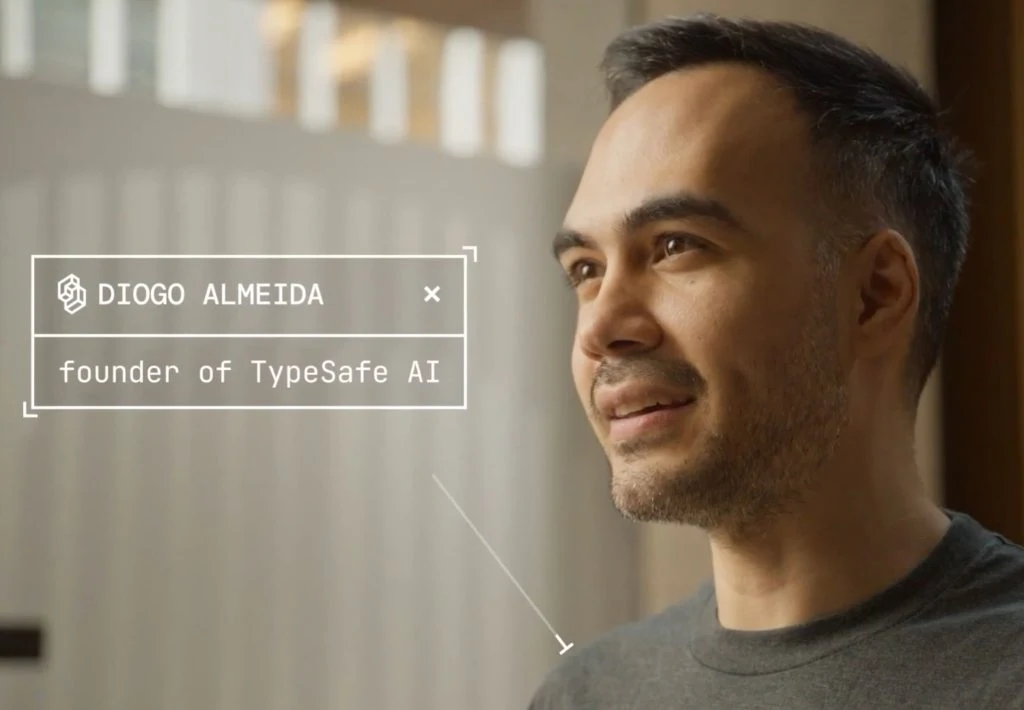
The startup TypeSafe AI released Jev on 9/15 (September 15) local time. The model operates differently from chatbots: it does not generate text. Instead, it uses machine learning to classify inputs into a set of predetermined output results: answering "yes" or "no", outputting a numerical score, or giving an answer from a fixed list. The company calls this technical approach "reinforcement learning for calibrated decision-making".
The startup is led by Diogo Almeida, who previously worked at OpenAI, participated in the development of ChatGPT, and left the company in 2024. With the official release of Jev, TypeSafe has also emerged from stealth; it had previously raised US$40 million (IT之家 note: approximately RMB 269 million at the current exchange rate) in funding.
Almeida is betting that Jev's leaner technical approach—faster, cheaper, and with reproducible outputs—can address some of the shortcomings of traditional large language models, namely the unpredictability of results. In an interview last Monday local time, Almeida said thatabout 25% of the Fortune Global 500 companies are already using the model.
“About a week ago,we were already processing one trillion tokens per day,” he said, “and the business is clearly still growing exponentially.”
The company has brought Jev to market, positioning it as a better choice for embedding into automated software. Almeida compared the model with today's mainstream large language models. In his view, mainstream LLMs can complete tasks with a human in the loop, but are “dramatically bad for automation use cases”.
“The way software works is generally to build a stable foundation layer, on which people can keep developing, layer upon layer, and call it repeatedly,” he said. “Chatbots simply cannot do this, because that is not how they operate at all.”
According to reports, investors have taken notice of the company. Last week, The Information disclosed that the company is negotiating a new round of funding, aiming to raise US$1 billion (approximately RMB 6.72 billion at the current exchange rate) or even more; some prospective investors have offered valuations exceeding US$10 billion (approximately RMB 67.201 billion at the current exchange rate). Almeida declined to comment on the funding news.
The craze has also spawned a large number of similar products, including both open-source models and tools from established major players. Last Tuesday local time, OpenAI launched a tool called the Decisions API, built on its own Luna model, used to “answer a set of user-defined specific questions, with answers restricted to a number of predefined outcomes”. The next day, the data analytics startup Databricks released a feature called ai_decide. Meanwhile, Cloudflare last week launched the open-source Clef / Clef-flash, which uses Qwen3.8-27B and Qwen3.5-9B as frozen base models, scoring candidate answers directly with a dedicated routing head (an output module specifically responsible for choosing between candidate paths or options), without token-by-token autoregressive generation; Amazon's previously released Strands Decider 2B also follows the same route. A new category of models is taking shape: generative models handle complex reasoning, while decision models handle high-frequency, limited-option routing, classification, approval, and an agent's next action.
Almeida said he had long anticipated the emergence of copycat competitors, but he still believes Jev has stronger capabilities and intelligence. In his view, Jev represents the beginning of “an entirely new class of AI”; he also hopes this product launch can drive a broader industry discussion about alternatives to large language models.
“There are actually still a great many frontiers waiting to be explored,” Almeida said. “It is just that TypeSafe has taken the first step into the next frontier, and more new directions will emerge in the future.”