
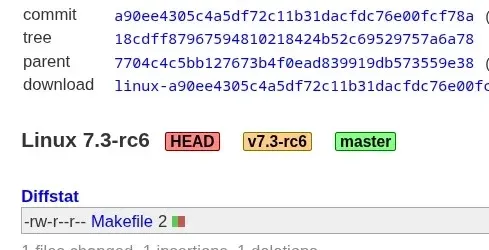
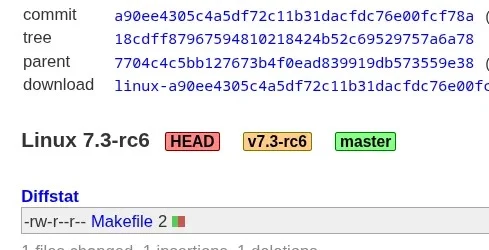
ITHome ITHome 10/5 news: Linus Torvalds released the Linux 7.3-rc6 test version on 10/4 local time. Compared with the rather unusual code change statistics of the previous week, this week has returned to normal overall, with driver fixes once again making up the largest share.
However, Torvalds also specifically noted that with the participation of AI and large language models (LLMs), this "AI new normal" has become part of the current Linux kernel development cycle.
Torvalds said nothing unusual occurred this week, and the code change statistics have returned to the familiar state of "about half coming from driver fixes." The driver side involves multiple subsystems including GPU, networking, USB, TTY, IIO, and audio, showing a fairly scattered pattern of fixes overall.
He also pointed out that the number of commits this time is also within the normal range, except that this is the new "AI normal" — a large number of small error-path handling fixes are entering the kernel tree. The previous Linux 7.3 test releases likewise saw many patches discovering problems or generated with assistance from AI / LLMs, making the fix activity across the entire development cycle noticeably more active.
In addition to driver fixes, Linux 7.3-rc6 also includes routine architecture updates, mainly related to KVM; core networking code also received fixes, the filesystem side was mainly SMB client-related work, and a batch of new kernel selftests was added.
On the hardware support front, Linux 7.3-rc6 adds support for the Turtle Beach VelocityOne Race steering wheel and pedal system. The device previously offered basic HID input under Linux but had some issues; with the corresponding device IDs now added via the hid-universal-pidff driver, it can receive more complete support. The kit is aimed at racing simulation games and is priced at roughly 649 to 700 US dollars (ITHome note: approximately 4,355 to 4,697 RMB at current exchange rates).
Meanwhile, Linux 7.3 also reverted the previously added Logitech Bolt receiver HID++ support, because too many problems were reported by users. The related HID updates also include a buffer overflow fix for the Intel THC driver, along with other device support and defect fixes.
Throughout the Linux 7.3 development cycle, there have already been multiple instances of AI / LLM participation in code review and defect discovery. At the Linux 7.3-rc3 stage, a large number of AI / LLM-related fixes entered the code tree; by rc4 and rc5, developers were still continuously addressing problems found by AI, and some AI-assisted generated kernel patches also appeared.
However, Torvalds does not consider the Linux 7.3 development unusual because of this. His use of the term "AI normal" this time actually describes a development model that has gradually become the norm: AI tools bring more code checking, defect discovery, and patch submissions, while also meaning maintainers need to handle more fragmented fix work.
Torvalds said that next week coincides with the annual Maintainer Summit and the Linux Plumbers Conference, and he himself as well as several other maintainers will be traveling, so the rc7 code statistics may look different, but this is not expected to affect the Linux 7.3 release schedule.
According to the current development schedule, the Linux 7.3 stable version is expected to be released in the middle of month 10 (October). Canonical had previously adjusted the target kernel for Ubuntu 26.10 from Linux 7.2 to Linux 7.3, so the release timing of the Linux 7.3 stable version will also directly affect the final kernel base of the subsequent Ubuntu 26.10 release.