Google · XOriginal · English

Project Suncatcher is our moonshot exploring whether we can one day host machine learning infrastructure in space 🚀

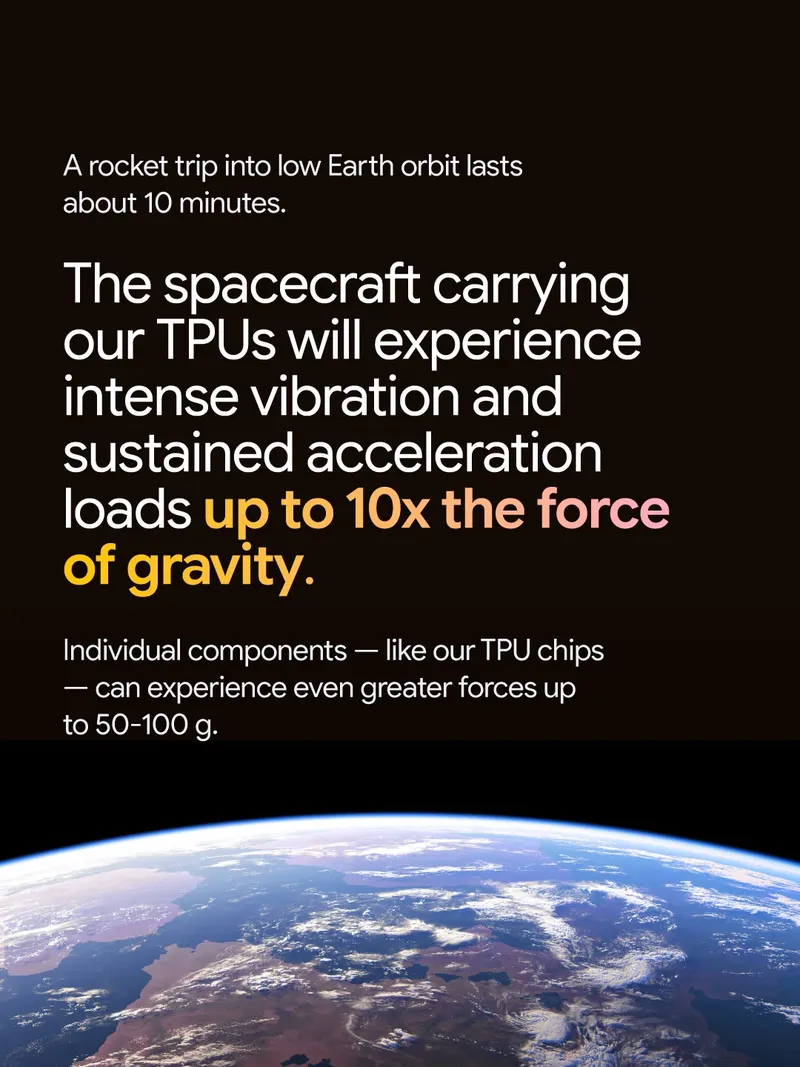
An infographic against a black background depicting the Earth below states that a rocket trip to low Earth orbit takes about 10 minutes, exposing spacecraft carrying TPUs to acceleration loads up to 10x gravity, and individual TPU chips to forces up to 50–100 g.
Image source · Google · X

Project Suncatcher is our moonshot exploring whether we can one day host machine learning infrastructure in space 🚀

To do so, we need to know whether our AI hardware can operate in orbit. Can our TPUs handle the physical stress of spaceflight and the radiation and thermal extremes of space? These are the questions Google researchers have been exploring for the past few years.

Last week, we launched our first test satellite carrying four TPUs into orbit — putting us one step closer to getting answers.
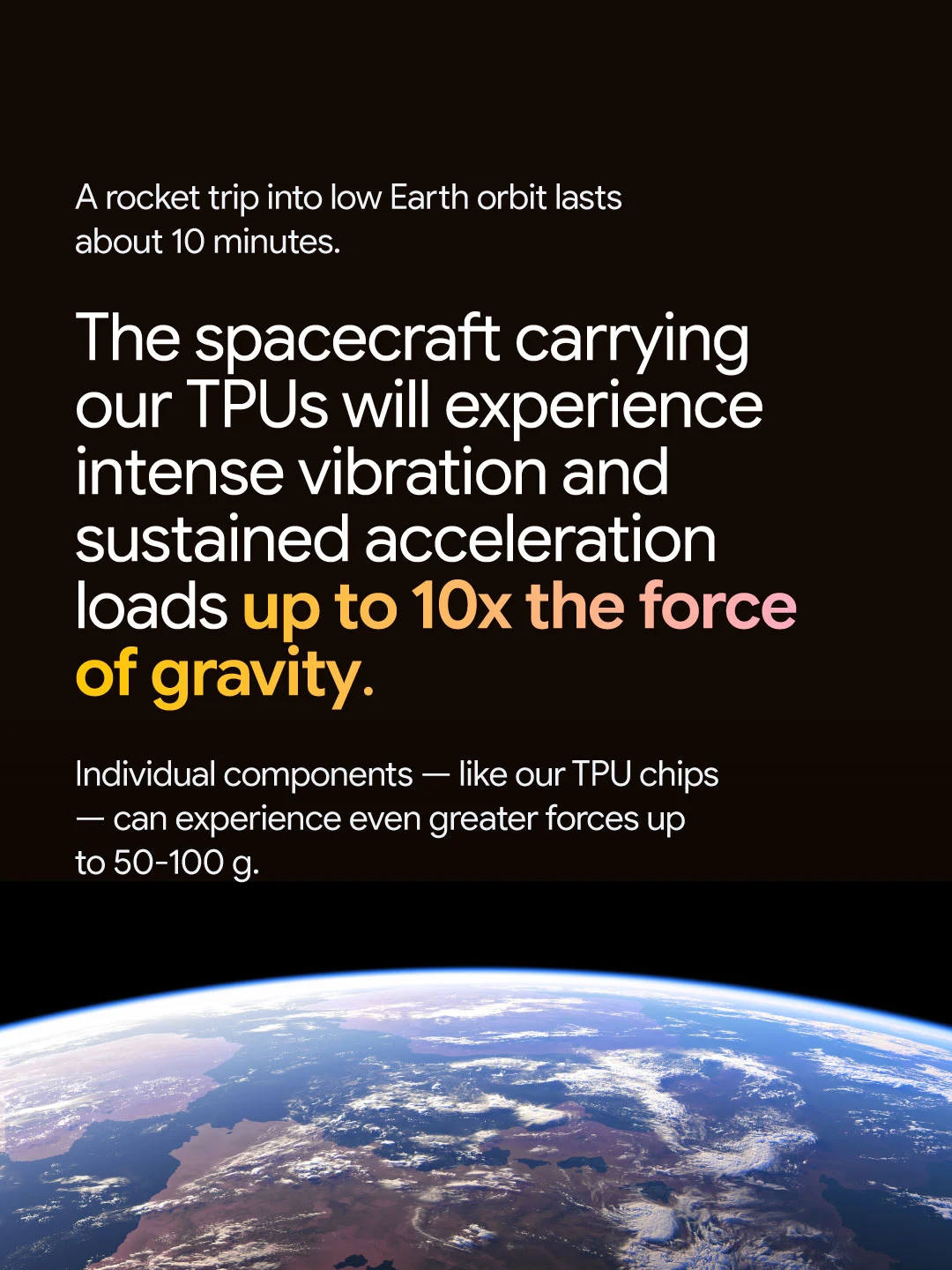
An infographic against a black background depicting the Earth below states that a rocket trip to low Earth orbit takes about 10 minutes, exposing spacecraft carrying TPUs to acceleration loads up to 10x gravity, and individual TPU chips to forces up to 50–100 g.
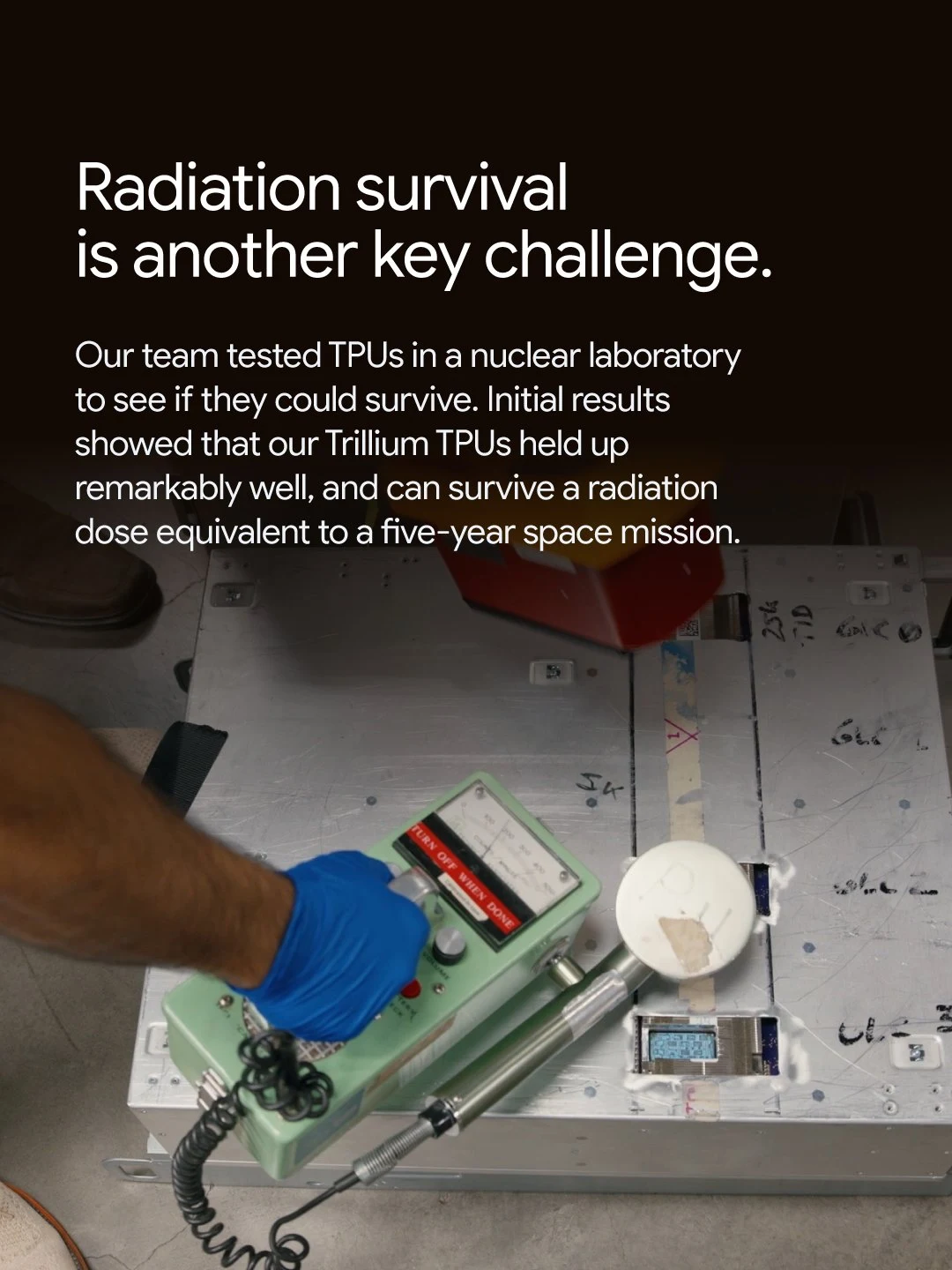
A person wearing glasses works with specialized laboratory equipment under a red laser line below text stating that Trillium TPUs can survive a radiation dose equivalent to a five-year space mission.
Original source

Google · X

Content notes

Original publication and rights belong to the source.