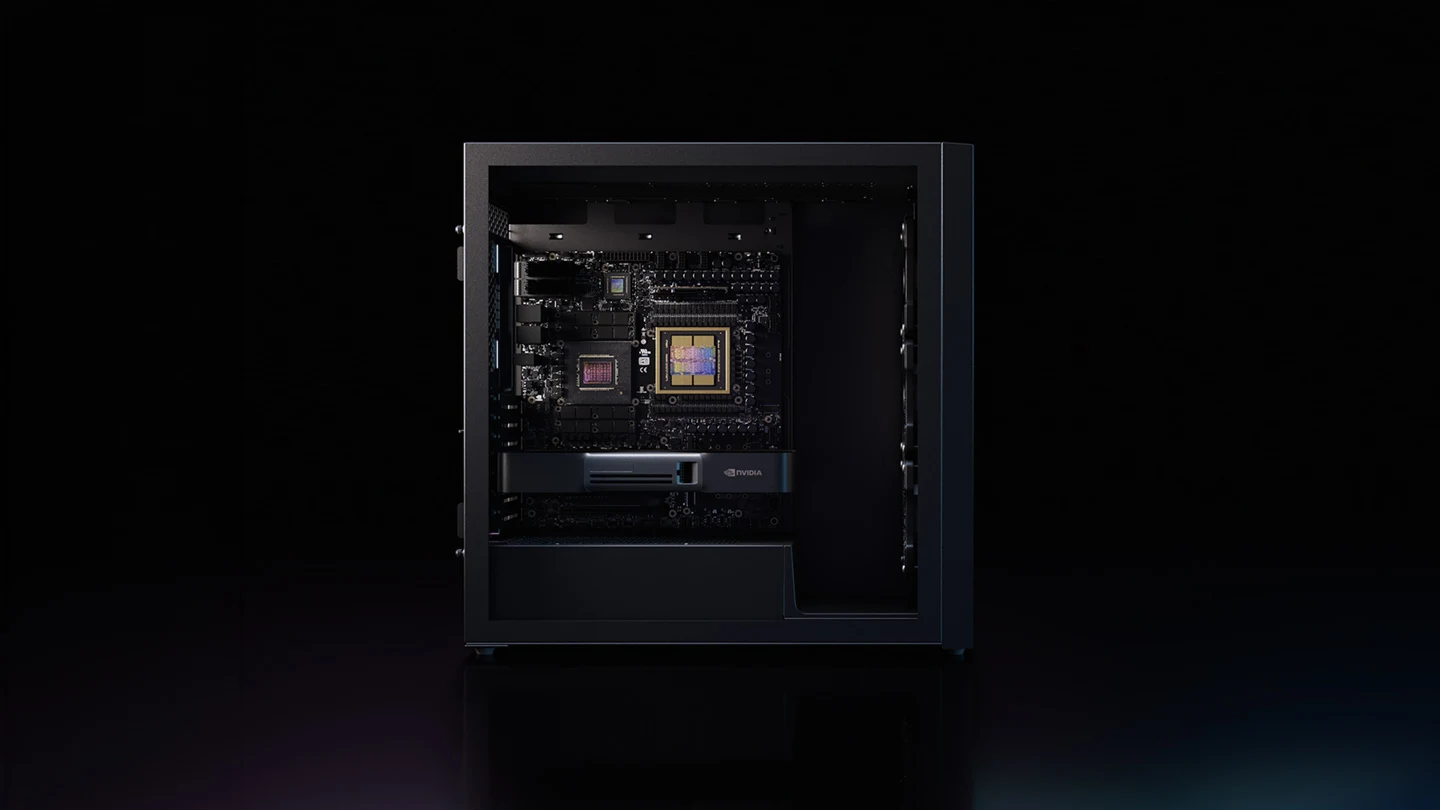
IT之家 news on October 8: At a press event held in San Francisco, USA at 10 a.m. Pacific Time on October 7 (1 a.m. Beijing Time on October 8), NVIDIA launched the DGX Station for Windows,positioned as a desktop-class AI supercomputer designed to let developers, researchers, and data science teams run large-scale AI models locally, with availability in the fourth quarter of 2026.
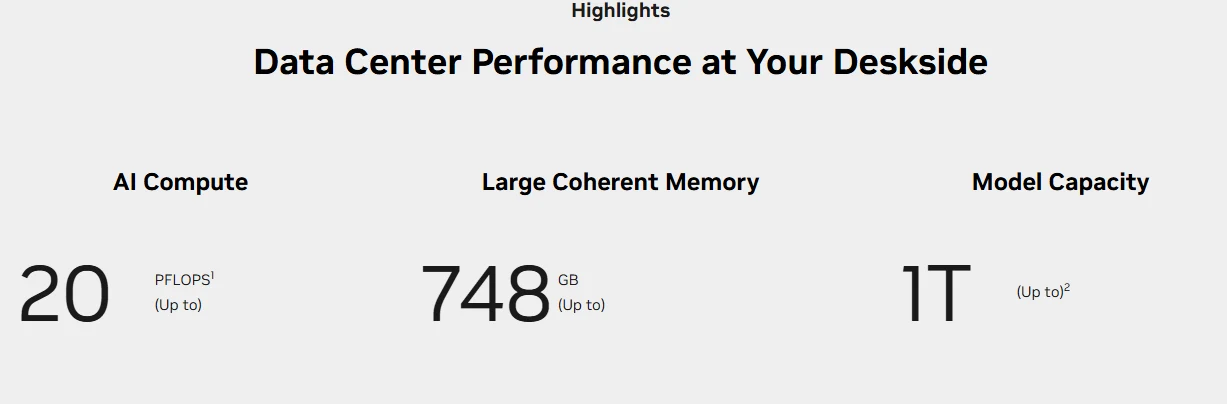
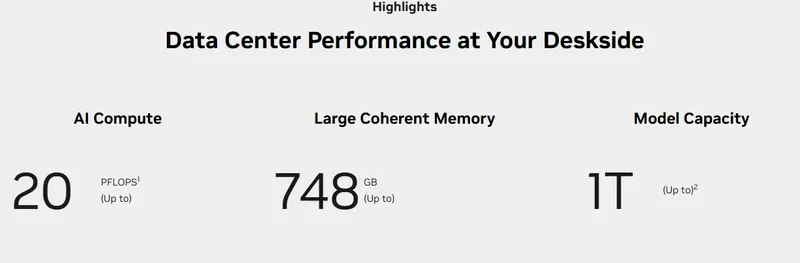
According to the blog post cited by IT之家, the DGX Station is powered by the NVIDIA GB300 Grace Blackwell Ultra Desktop Superchip, equipped with a 72-core Grace CPU, a Blackwell Ultra GPU, and up to 748GB of unified memory.
This includes 252GB of HBM3e GPU memory and 496GB of LPDDR5X CPU memory, with AI compute of up to 20 PFLOPS, supporting models with up to about 1 trillion parameters.
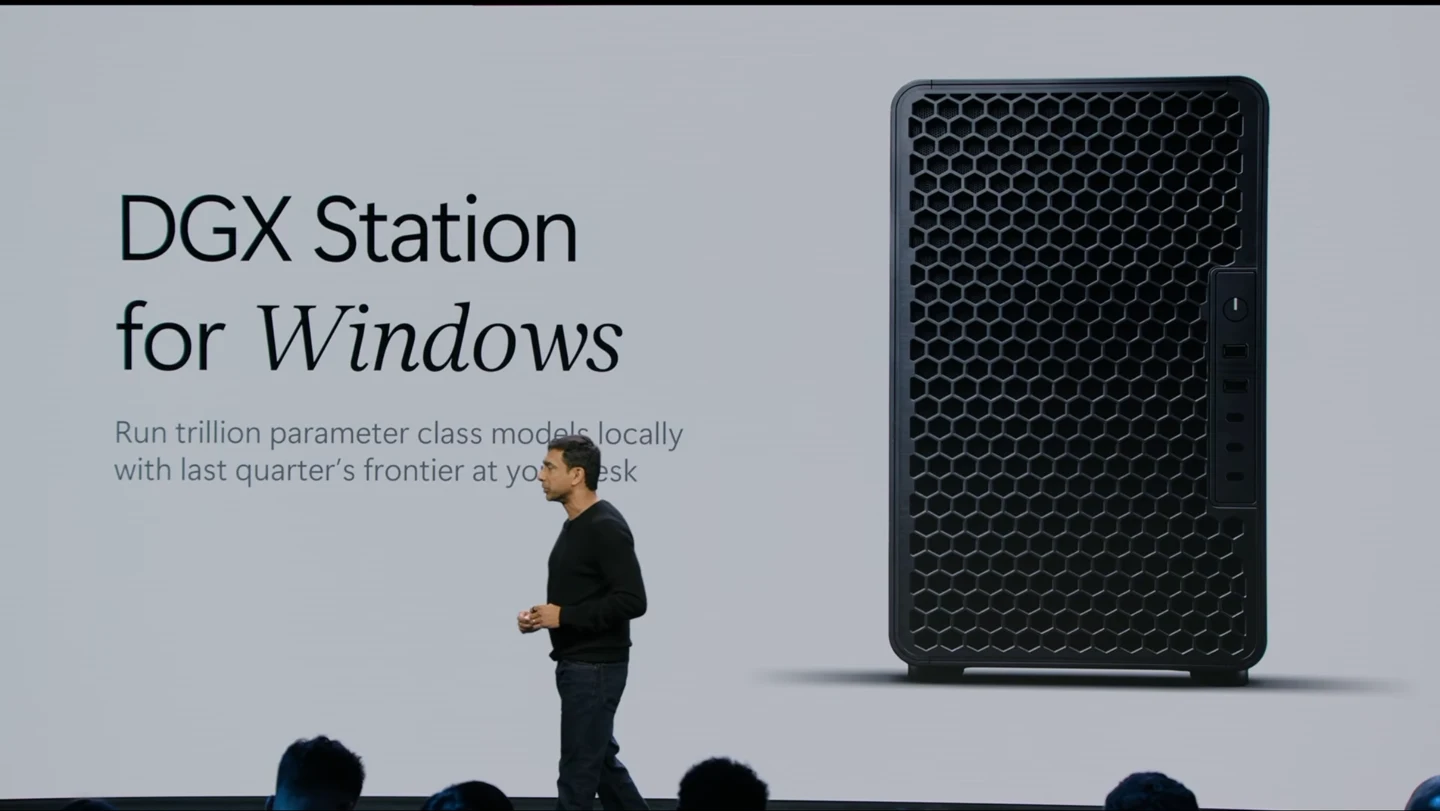
Compared with traditional high-performance workstations, the core selling point of the DGX Station is compressing data-center-grade hardware, unified memory, and the NVIDIA AI software stack into a desktop device. Developers can perform model fine-tuning, inference, agent development, and generative AI application testing locally, reducing the latency, cost, and privacy pressures of uploading data to the cloud.
NVIDIA is also officially combining the DGX Station with the Windows ecosystem, meaning developers can use local large-model capabilities in a familiar Windows environment and explore AI agents, Copilot, and hybrid intelligence applications.
Its maximum power consumption reaches 1,600W and it requires a 20A circuit, showing that although this device takes a desktop form factor, it is closer to a piece of local AI infrastructure aimed at professional users.