
Jessica, reporting from ROBO-car
Quantum Bit ROBO | WeChat Official Account AI4ROBO
Yes!
Porsche is carrying out major layoffs, cutting as much as 40 percent of its management directly.
Latest news: this luxury automaker, known for its high profit margins, has once again announced a restructuring plan:
The company will, by 2035, at most30% layoffs, including cutting 40% of management positions.
The layoffs are actually not all: Porsche also announced comprehensive cost reductions across its R&D, production, and sales, along with streamlining its model lineup. Even the previously aggressively pushed electrification strategy has taken a sharp turn, with more slots being given back to combustion-engine vehicles.
After the adjustment is complete, the company hopes that even with annual sales below 200,000 vehicles, it can still achievebreak-even。
even if annual sales fall below 200,000 vehicles. At the same time, Porsche also plans to launch more high-end models, raising theaverage price of its top models by about 20%.。
From layoffs and product streamlining to price adjustments, Porsche is carrying out a comprehensive overhaul of its original business model.
What is disheartening is that as recently as 2023, Porsche's group operating profit margin was still as high as18%, but by 2025 it had fallen to1.1%, with operating profit over two yearsshrinking by more than 90%.。
Even Porsche, which once raked in huge profits from high price premiums, has started pinching pennies — the days of the luxury car market have truly changed.
Laying off 9,000 people, Porsche cuts costs across the board
Porsche has just unveiledthe most sweeping restructuring plan in its history. The new strategy is named Sportwagenschmiede '35 (German, meaning "sports car forge"), mainly targeting 2035.
The new CEO,Michael Leiters,said the company's top priority at present is to cut costs and strengthen financial resilience.
The new plan first targets personnel and organizational structure:
The company plans, in the medium term,to trim 40% of its management positions, reducing the staff size of direct and indirect functional departments by 25%, toLayoffs of up to 30%As the ultimate strategic goal (these proportions use different calculation bases and cannot be directly added together to compute layoff numbers).
In fact, in July of this year, Porsche had already reached an agreement with employee representatives to cut a further 5000 jobs by 2035; combined with the previously announced reduction of about 4000 positions, the total headcount reduction amounts to9000 people。
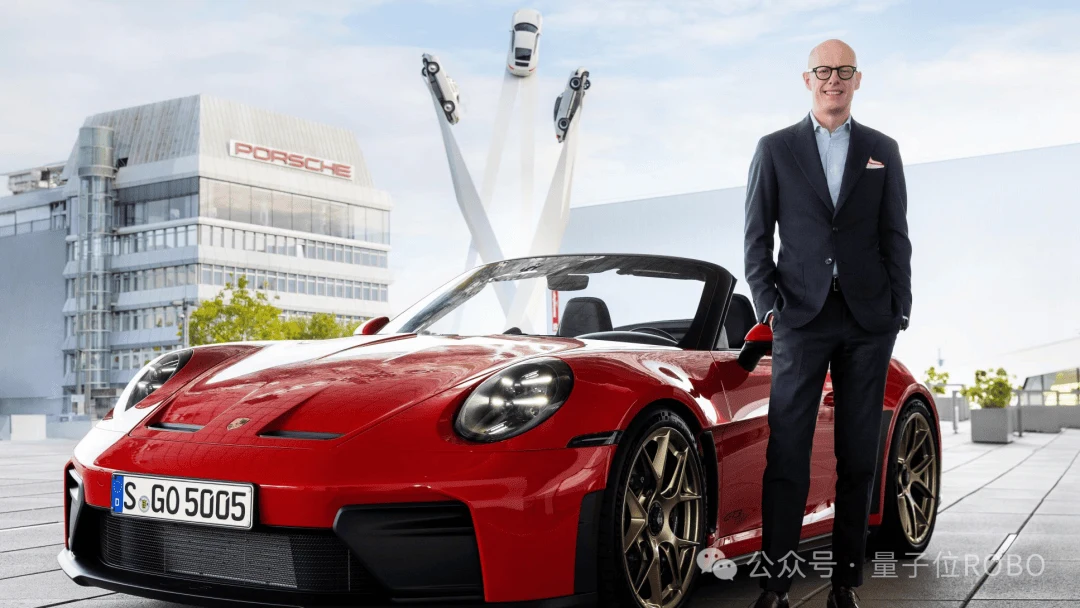
△Current CEO of Porsche
According to the agreement, the headcount reduction will mainly be carried out through natural attrition, early retirement, and voluntary severance packages; Porsche has pledged to extend employment protection for core employees in Germany until the end of 2035 and in principle will not carry out forced layoffs.
The remaining employees must also share the cost burden. Some contractual salary increases have been deferred, executives have given up part of their salary growth, Christmas bonuses have been gradually reduced, and the maximum number of remote workdays per month has been cut from 12 days to 8 days.
As an exchange, Porsche pledged that by 2035 it would cumulatively invest in its Zuffenhausen plant and Weissach development center in GermanyInvesting 2.1 billion euros(approximately 15.77 billion yuan), to maintain its core production and R&D operations.
The business divisions are also being adjusted. In July this year, the unit responsible for automotive software and information technologyCar-IT departmentMerged into the R&D department, reporting to a division under the executive boardreduced from 8 to 7; Porsche Engineering and Porsche Digital will also merge into Porsche Technologies, consolidating R&D resources.
On the production side,costs are similarly being cut: increasing the share of common parts, advancing shared production lines across models, and reducing global sales regions from 5 to 4. Assets with weaker links to the core business are also being divested: selling off some investment and consulting businesses, and shutting down some R&D and production activities in batteries and other businesses.
For a luxury carmaker that has long relied on a high brand premium to sustain profitability, such a systematic compression of costs is unusual.
After all, just a few years ago Porsche was enjoying growth in both sales and profits, and now it must drastically restructure its organization for a smaller sales scale.
Just how severe has Porsche's operating pressure become?
Profit margin falling from 18% to 1.1%, Porsche's China sales halved
This round of drastic cost reduction must be understood starting from the change in profitability.
In 2023, Porsche had only recently gone public, with sales, revenue and profit all at high levels.
That year, the group's operating revenue was 40.53 billion euros, operating profit was 7.284 billion euros, and the operating profit margin reached as high as18%, and the company had also set a long-term target of achieving an operating profit margin of over 20%.
Such a level of profitability can be described as outstanding among global automakers.
But over the following two years, the situation deteriorated sharply.
In 2024 the company's operating profit margin fell to 14.1%; in 2025 the group's operating revenue dropped to 36.272 billion euros, and operating profit was only 413 million euros,with the operating profit margin falling to 1.1%, compared with 2023a shrinkage of about 94%。
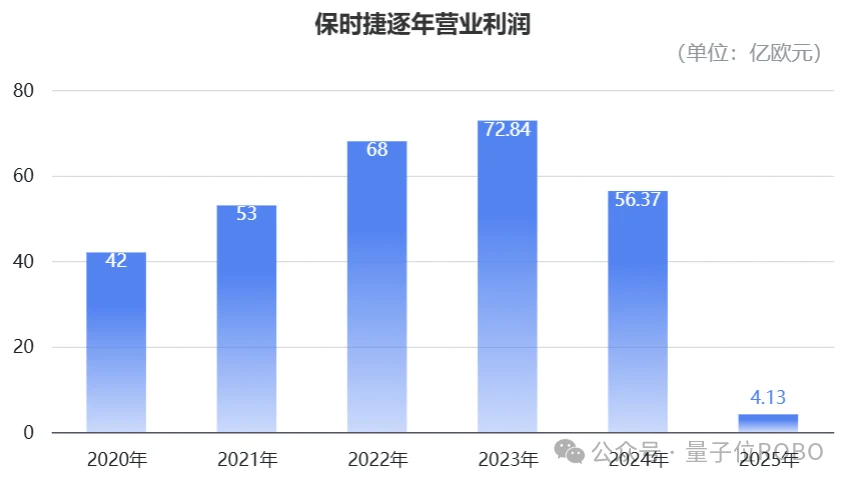
The operating profit of the automotive business alone was only 90 million euros, with the margin falling to 0.3%, far removed from the previous high profitability.
However, the sharp drop in profit this year also had special factors.
According to the financial report, in 2025 the group had approximately3.9 billion eurosin special charges, of which about 2.4 billion euros came from product strategy adjustments and scale restructuring (including asset impairments caused by the delay of some all-electric projects), with battery business adjustments and tariffs each accounting for about 700 million euros.
These charges were also closely related to changes in the operating environment, the first being declining sales, especially in theChinese market。
In 2021, Porsche delivered 95,671 new vehicles in China, an increase of 8% year-on-year,making it for the seventh consecutive yearthe world's largest single market, as well as the largest market for models such as the Cayenne, Panamera and Macan.
However, since then Porsche's sales in China have declined continuously: in 2024 it delivered 56,887 vehicles in China, and in 2025 this fell to 41,938 vehicles, down 26% year-on-year. Compared with the 2021 peak, this is a reduction of about 54,000 vehicles over four years,a decline of more than 56%。
Time has entered 2026. The situation has still not improved. In the first half of the year, Porsche delivered 14,501 vehicles in China, downanother 32%year-on-year; over the same period, global deliveries were 122,300 vehicles, down about 16% — China remains the major regional market with the largest decline.
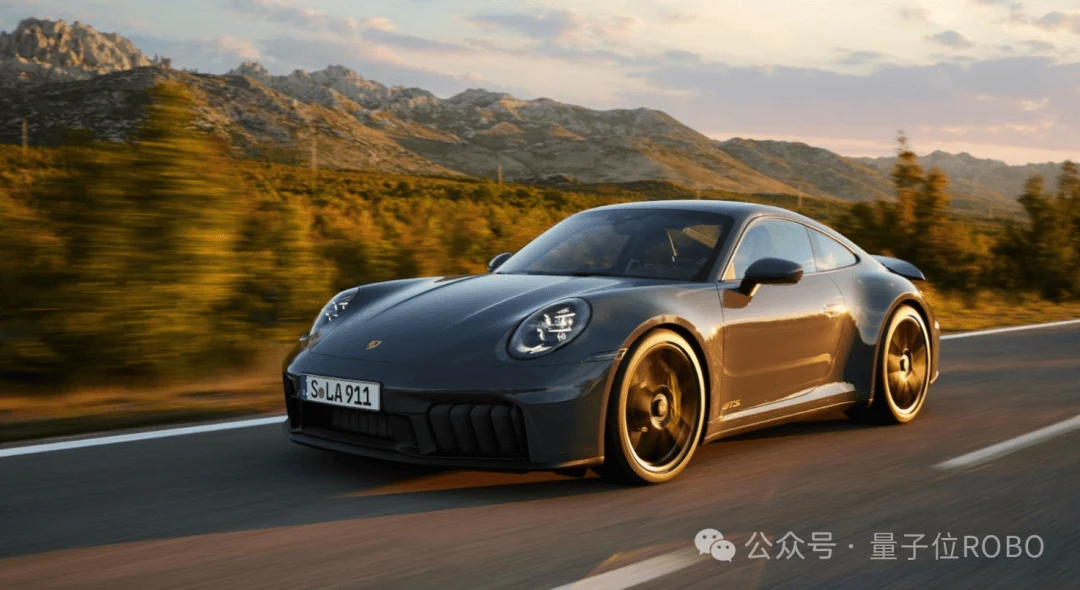
Porsche's plight is a microcosm of the collective pressure on overseas luxury brands.
Chinese new energy vehicle brands keep expanding into the high-end market, and AITO, Li Auto, NIO and Yangwang are already competing head-on with traditional luxury brands in certain price ranges, offering more choices in terms of smart cockpits, assisted driving, power performance and comfort.
For a traditional luxury brand like Porsche, the advantages originally built on driving performance, brand influence and its status as an imported car are facing new competition.
And theelectrificationthat Porsche had previously bet on has not proceeded entirely as expected.
In 2022, the company proposed that by2030raise the share of pure electric models tomore than 80%, investing large sums of money in projects such as the pure electric Macan, the 718, and high-performance batteries.
However, while demand growth in the luxury pure electric market fell short of expectations, Porsche's related models also faced fierce competition from Chinese brands.
In 2025, the pure electric sports car Taycan delivered 16,339 units worldwide, down about 22% year-on-year; yet the classic sports car 911 delivered 51,583 units, up about 1% year-on-year, setting a new record.
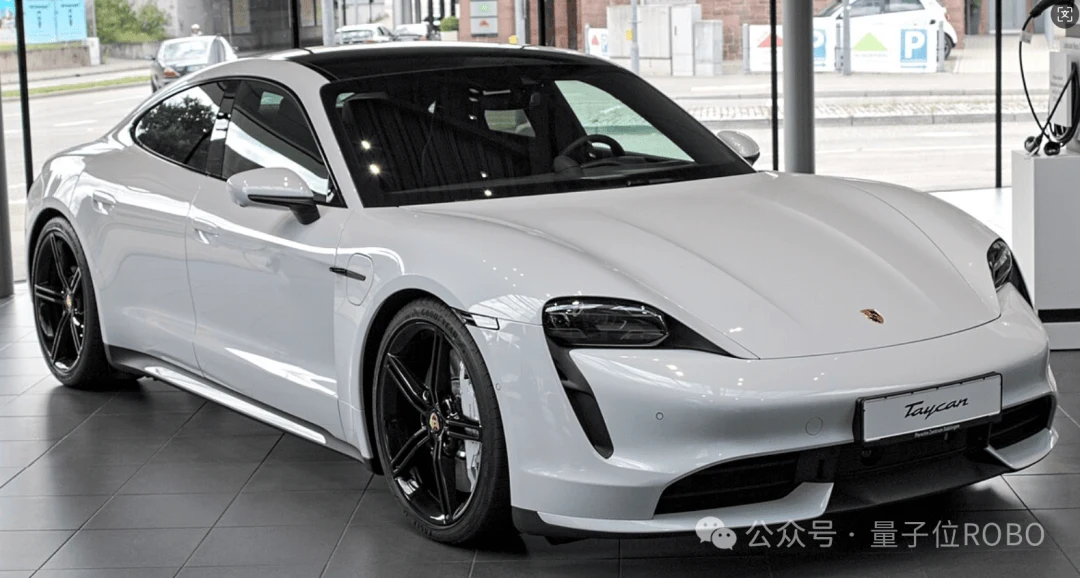
On one side are traditional sports cars that remain attractive; on the other are pure electric projects with huge investment and questionable demand, forcing Porsche to re-examine its product strategy.
In September last year, the company announced it would delay some pure electric projects and extend the life cycles of combustion-engine models; the flagship SUV, originally intended to be pure electric first, was changed to prioritize combustion and plug-in hybrid versions.
In October this year, the company further confirmed that in 2028 it will launch an all-new combustion and plug-in hybrid SUV, sold alongside the pure electric Macan.
With electrification investments not yet paying off and combustion vehicles now requiring renewed R&D resources, the strategic adjustment becomes even more complicated.
However, Porsche has not completely abandoned pure electric; the pure electric versions of the 718, Macan, and Cayenne are still in the planning stage, and for now it is pursuing acombustion, plug-in hybrid, and pure electric parallelroute.
Cost reduction has also begun to show up in the financial figures.
In the first half of 2026, Porsche AG's operating profit rose 33.9% year-on-year to 1.348 billion euros, with the operating profit margin recovering to 7.8%.
However, this improvement was affected by factors such as cost controls, product portfolio adjustments, and the reversal of some provisions, while the problem of declining sales still remains.
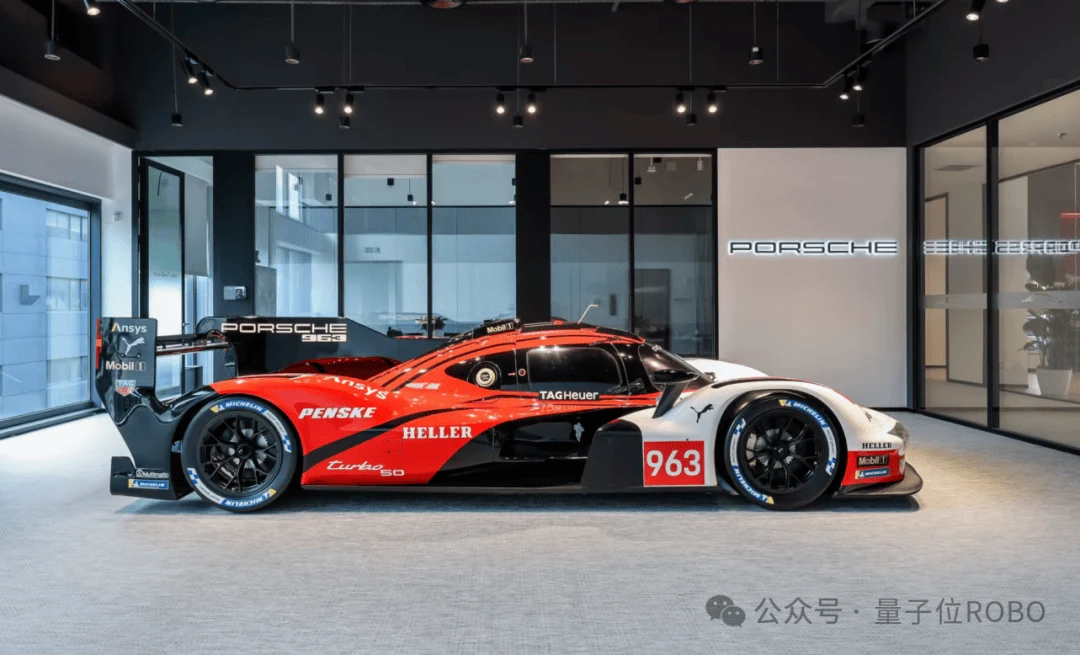
At the same time, in its latest strategy, Porsche has given a more conservative outlook for the Chinese market.
According to Reuters, Porsche expects the share of global sales contributed by the Chinese market may fall below 10% in the future. CEO Oliver Blume stated more explicitly thatthe current business plan does not assume a recovery of the Chinese market。
. From being the world's largest single market to no longer being counted on in recovery expectations, Porsche's judgment of the Chinese market is clearly changing, which also means it must re-establish profitability at a lower sales scale.
Selling fewer cars but making more money — Porsche begins to focus on the more premium segment
In addition to streamlining staff, Porsche's next step has also been determined — reducing reliance on sales volume and concentrating more resources on high-profit models.
The latest strategy sets out a clear business objective, namelyAchieve break-even even if annual sales fall below 200,000 units。
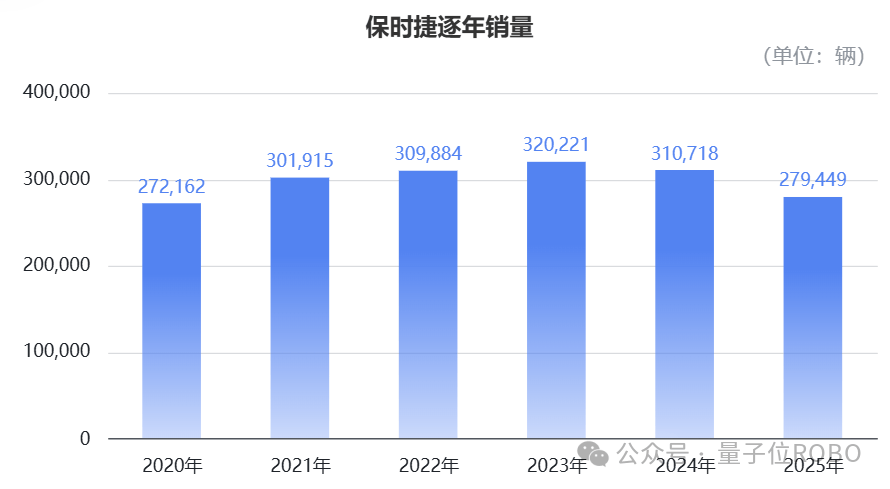
As a reference, in 2023 Porsche delivered 320,200 vehicles globally, and in 2025 it still delivered 279,400. This goal is not about pushing sales down to 200,000 units, but about bearing a lower sales volume by reducing fixed costs.
Meanwhile, Porsche hopesRevenue is growing faster than sales volume, and profit is growing even faster than revenue.。
The main way to achieve this goal is to increase the value per unit.
According to the plan, Porsche will reduce, in the medium term, approximately20%the derived versions of models, improving the average sales volume of individual versions and development efficiency.
For the most expensive models, Porsche is also planning to continue raising prices, moving the top-tier modelThe average selling price increased by about 20%.
The company also plans to increase the share of high-margin Class D and Class E models, concentrating on the high end. The exclusive customization business Sonderwunsch will also be further expanded, with the goal of raising its sales revenue to six times the current level.
On the product side, Porsche is exploring a brand-new mid-engine supercar positioned above the 911 and a luxury SUV positioned above the Cayenne, while the 911 will also gain more high-performance, high-price derivative models.
These products may not have large sales volumes, but their prices and customization margins are higher, and they can bring betterPer-vehicle profit opportunity。
In other words, Porsche hopes in the future to rely on a leaner organization, a more focused product lineup, and a customer base with stronger spending power to restore its previous high profit levels.
This path has had successful precedents in the ultra-luxury car market,Ferrariis the most typical representative.
In 2025, Ferrari delivered 13,640 vehicles worldwide, with sales slightly down year-on-year, but operating revenue grew 7%, operating profit grew about 12%, and the operating profit margin reached 29.5%.
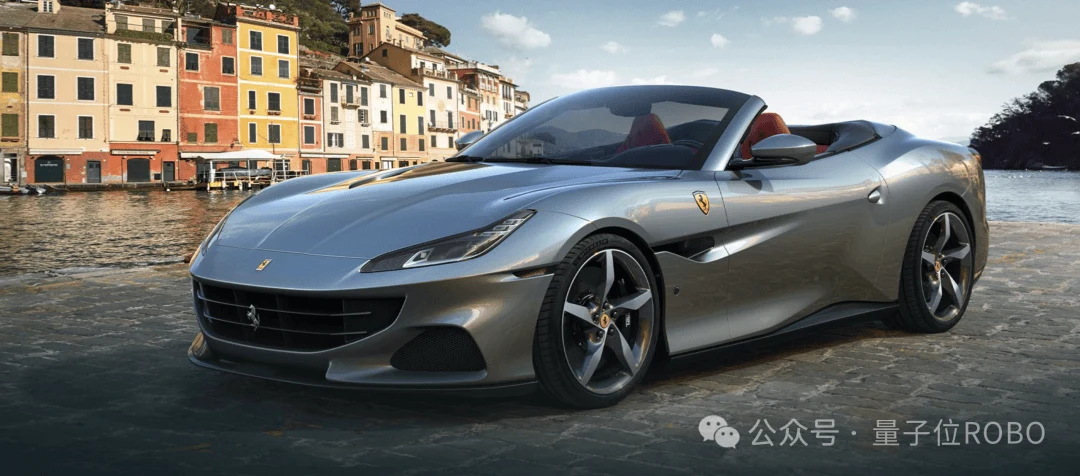
An automaker with annual deliveries of only just over 10,000 vehicles posted an operating profit of 2.11 billion euros, roughly five times Porsche's group operating profit for that year.
In other words, for Porsche to get out of its crisis, it can only move further toward the ultra-luxury luxury goods route.
They can sell less, but at higher prices, with better profits.
The question is just whether Porsche's user base can still move up along with it?