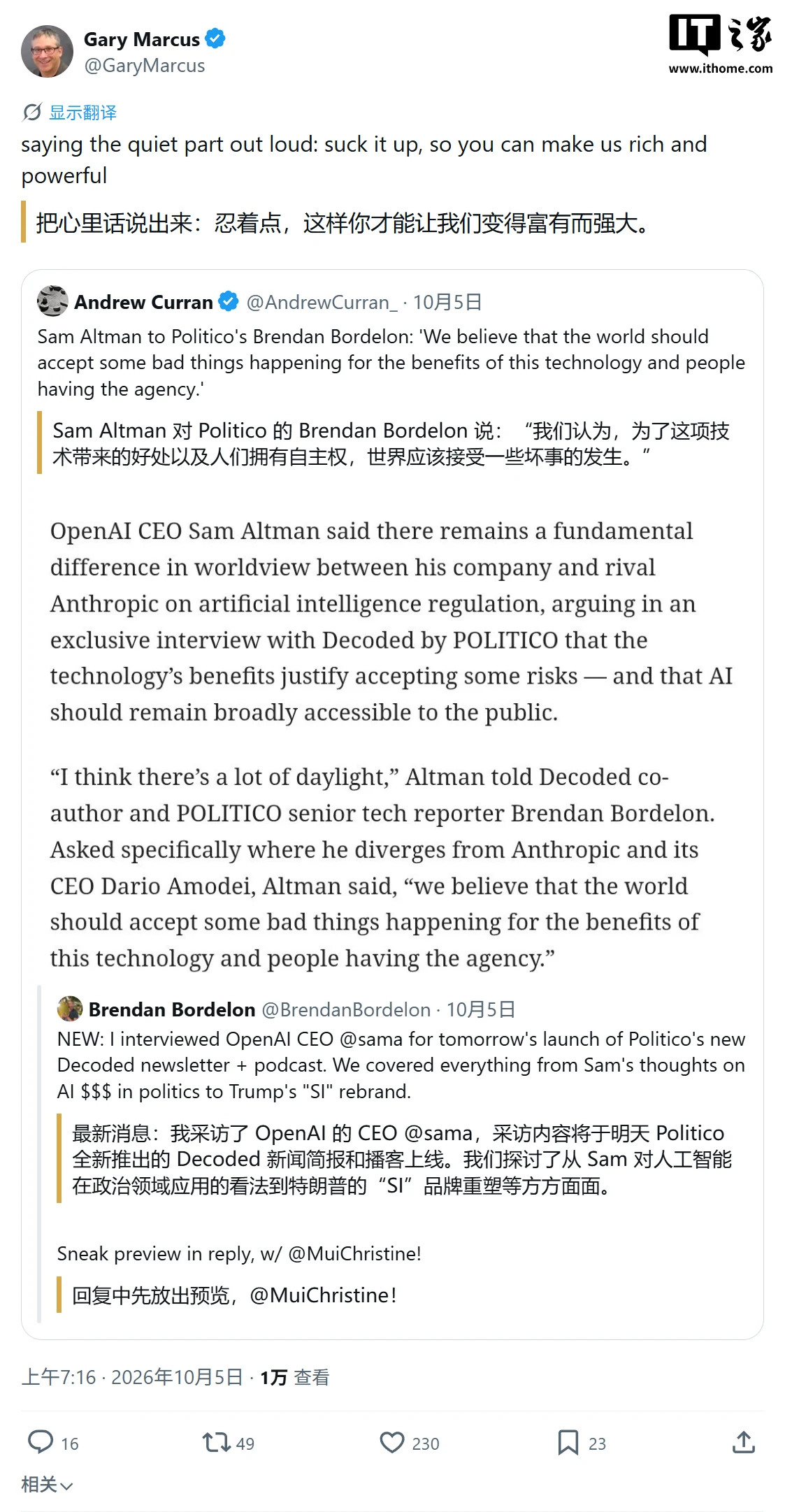
IT Home October 8 news: In an interview on the first episode of Politico's new podcast Decoded, OpenAI CEO Sam Altman said thatthe world should accept some of the 'bad things' brought by artificial intelligence in exchange for the technology's enormous benefits and user autonomy.
When asked how OpenAI's approach to AI safety differs from that of its competitor Anthropic, Altman said:
I think there's a lot of room for debate here. One of the key differences between OpenAI and some strict AI safety advocates is that we believe the world should accept some of the negative events brought by the technology, in exchange for the AI dividend and user autonomy.
We advocate a lighter touch regulatory stance, and as society explores system resilience, some bad things will happen.
Altman believes everything has two sides, but judging from the benefits of advancing AI, the good things about AI outweigh the bad by orders of magnitude. Tech media outlet TechSpot noted that even though AI has already caused mass unemployment, data center pollution and noise, copyright infringement, web spam, declining critical thinking, surging demand for electricity and water, and other problems, he still insists the benefits will far outweigh the drawbacks.
Gary Marcus, professor emeritus at New York University, criticized Altman for 'saying the quiet part out loud: suck it up, so you all can make us rich and powerful.' A large portion of the public expressed dissatisfaction with Altman once again stressing that AI's benefits far outweigh its drawbacks. IT Home attaches the relevant screenshots below: