
On October 8, 2026, at the 22nd Asia Pacific Retailers Convention & Exhibition (APRCE 2026), Zhengxing Innovation officially launched its Physical AI solution for the "human-robot collaboration" needs of open retail scenarios, built on its "embodied brain." The solution consists of robot hardware products focused on core tasks such as shelf replenishment, store inspection, and related material handling, together with a unified robot management platform responsible for task allocation, status monitoring, and human takeover, forming a complete closed loop spanning task acquisition, environmental perception, mobility, recognition, grasping, and task execution. The solution requires no modification of store shelves or customer flow layouts, supports rapid "0-modification" deployment, and creates a brand-new "human-robot collaboration" operations model to improve the quality and efficiency of 24/7 convenience store operations.
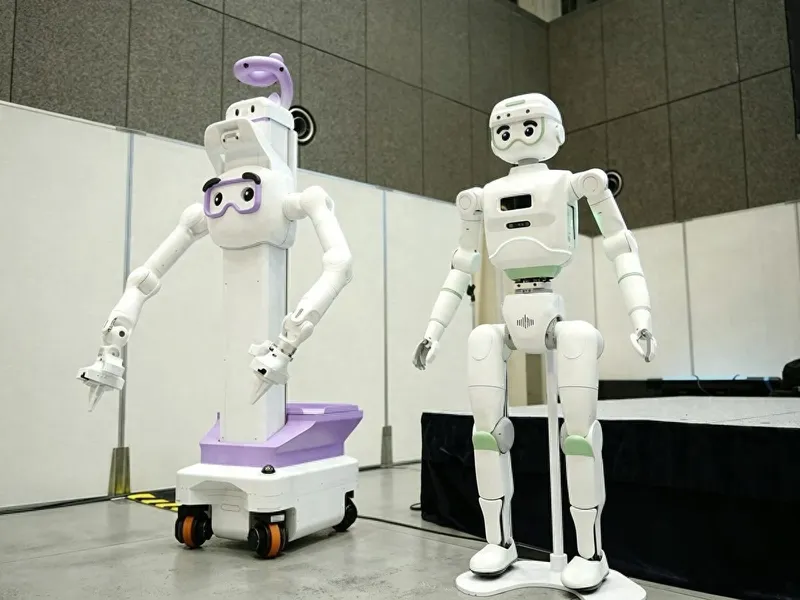
At this exhibition, Zhengxing Innovation debuted two hardware products under the solution: the general-purpose bipedal humanoid robot H1 designed for human activity spaces, and the wheeled-arm material handling and sorting robot C1 designed specifically for narrow spaces. The robots can take over high-frequency tasks such as handling, replenishment, inventory counting, and inspection, allowing staff to focus on other service optimization work; during continuous overnight operations, the robots can handle repetitive physical labor, freeing employees from working late into the night. Each plays to its strengths, jointly driving dual improvements in store operational efficiency and service quality.
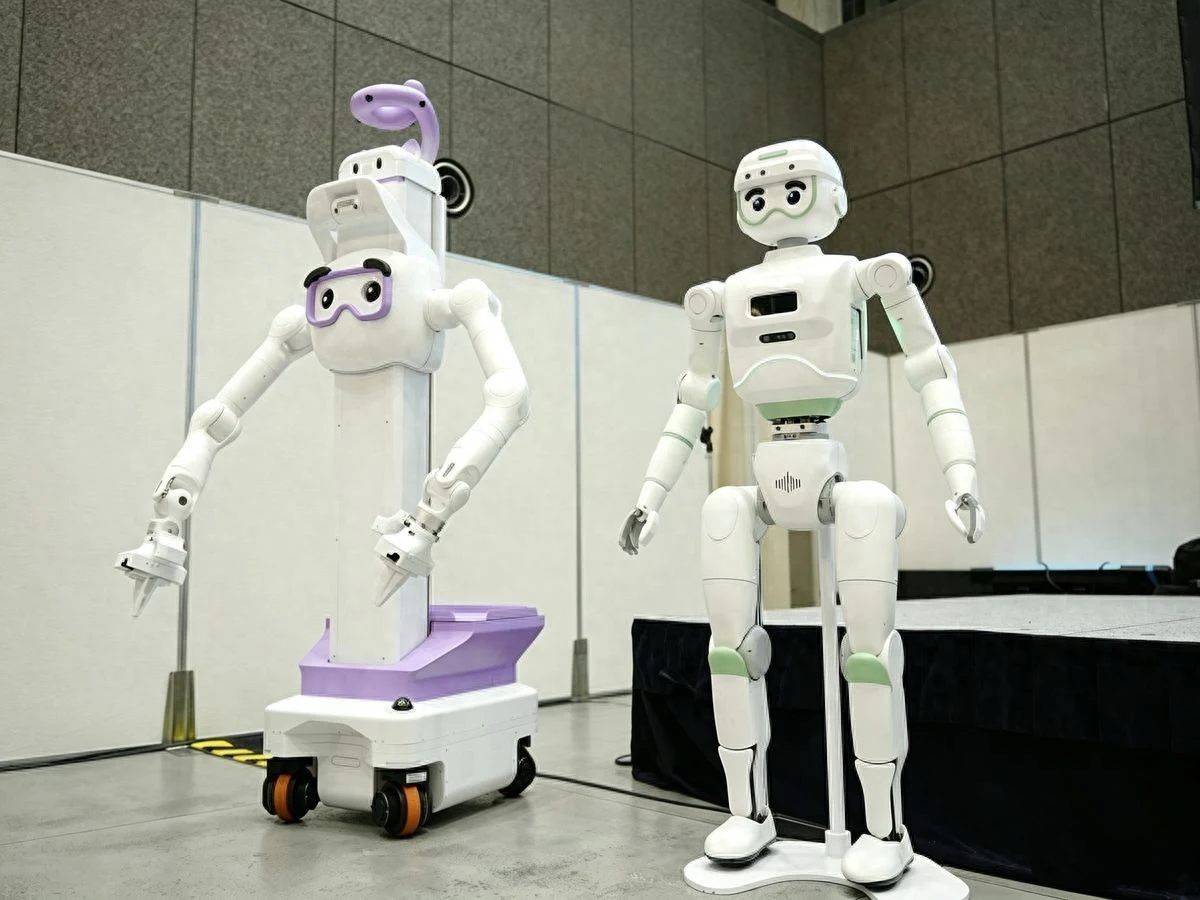
Zhengxing Innovation's wheeled-arm robot C1 (left) and bipedal humanoid robot H1 (right)
Alongside the solution's launch, Zhengxing Innovation will also partner with a globally renowned chain retail enterprise to advance product testing and commercialization, jointly validating the operational capabilities of Zhengxing Innovation's embodied intelligence solutions in real, open retail environments, continuously optimizing robot task workflows and operating systems, rapidly verifying return on investment (ROI), and gradually expanding into more retail processes such as hot food, inventory management, delivery sorting, and packaging. Zhengxing Innovation plans to officially offer commercial services in 2027, with customers able to choose direct purchase or RaaS (Robotics-as-a-Service) subscription services covering hardware, software, operations and maintenance, and continuous upgrades.
Zhengxing Innovation was co-founded by serial entrepreneurs Yao Song and Yang Yuxin, renowned young Tsinghua scholar Yu Chao, and the famous multinational industrial group Charoen Pokphand (CP) Group. With the mission of "bringing convenience to the world through physical intelligence," and based on a full-stack physical intelligence technology system encompassing world action models, reinforcement learning, embodied agents, robot hardware, and operations platforms, it enables robots to operate stably in real-world settings such as stores, warehouses, and factories. Zhengxing Innovation founder and CEO Yao Song stated in his keynote speech "Physical AI and the Future of 24/7 Retail": "We chose to start from retail, letting robots operate and evolve in the most complex and vibrant commercial environments, to become a globally trusted provider of robotic services."
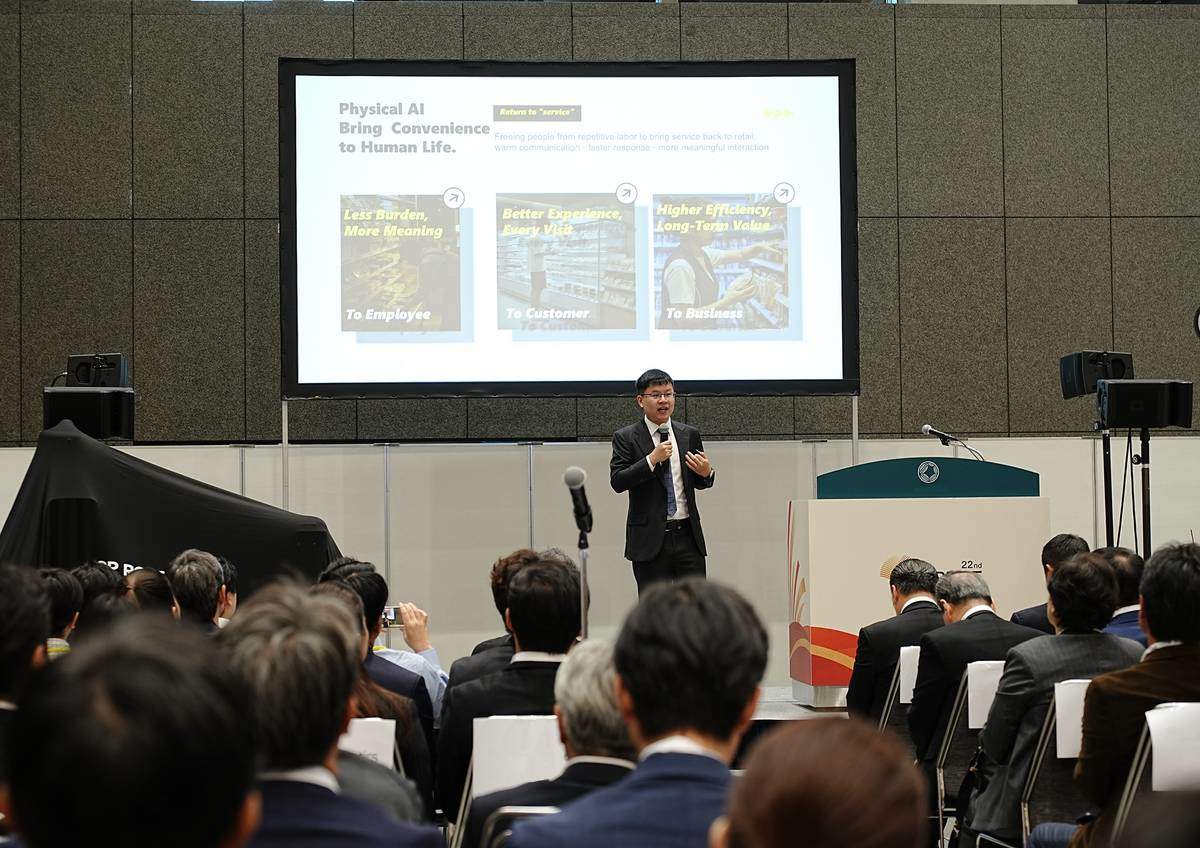
Targeting the Real Needs of the Retail Frontline, "Human-Robot Collaboration" Achieves Dual Improvements in Operational Efficiency and Service Quality
As retail volume grows ever larger, 24-hour formats continue to penetrate the market, and demands for refined operations keep escalating, retail stores are becoming the most commercially valuable landing scenarios for embodied intelligence. At the same time, however, retail is also one of the most difficult scenarios for physical intelligence to implement: stores are numerous, SKUs are abundant, shelves are densely packed, aisles are narrow, and customer flow and product displays change dynamically, with standardization and dynamism coexisting—placing demands on robots' environmental perception, real-time decision-making, and dynamic adaptation capabilities far higher than in other scenarios.
Currently, most robotic solutions in the industry are concentrated in structured, fixed settings such as warehouse backrooms and closed storage facilities, making it hard to adapt to the real environment of the retail front floor, with dense crowds, complex foot traffic, and changing demands. The real need of the retail frontline is precisely efficient division of labor in an open operating environment. The front floor requires flexible responses to customer inquiries and reception while maintaining order and customer experience; the back area must support functions such as replenishment, sorting, and inventory turnover, flexibly adjusting operational strategies according to holidays and changes in customer flow to keep stores running continuously.
The retail physical intelligence solution built by Zhengxing Innovation achieves exactly this "human-robot collaboration" in open environments and complex tasks. Robots can autonomously complete 99% of tasks, effectively taking on standardized matters such as high-frequency repetitive work, physically demanding labor, and overnight duty, freeing frontline employees from inefficient repetitive labor and redirecting them to more valuable and humane work such as customer service, operational optimization, and handling complex problems.
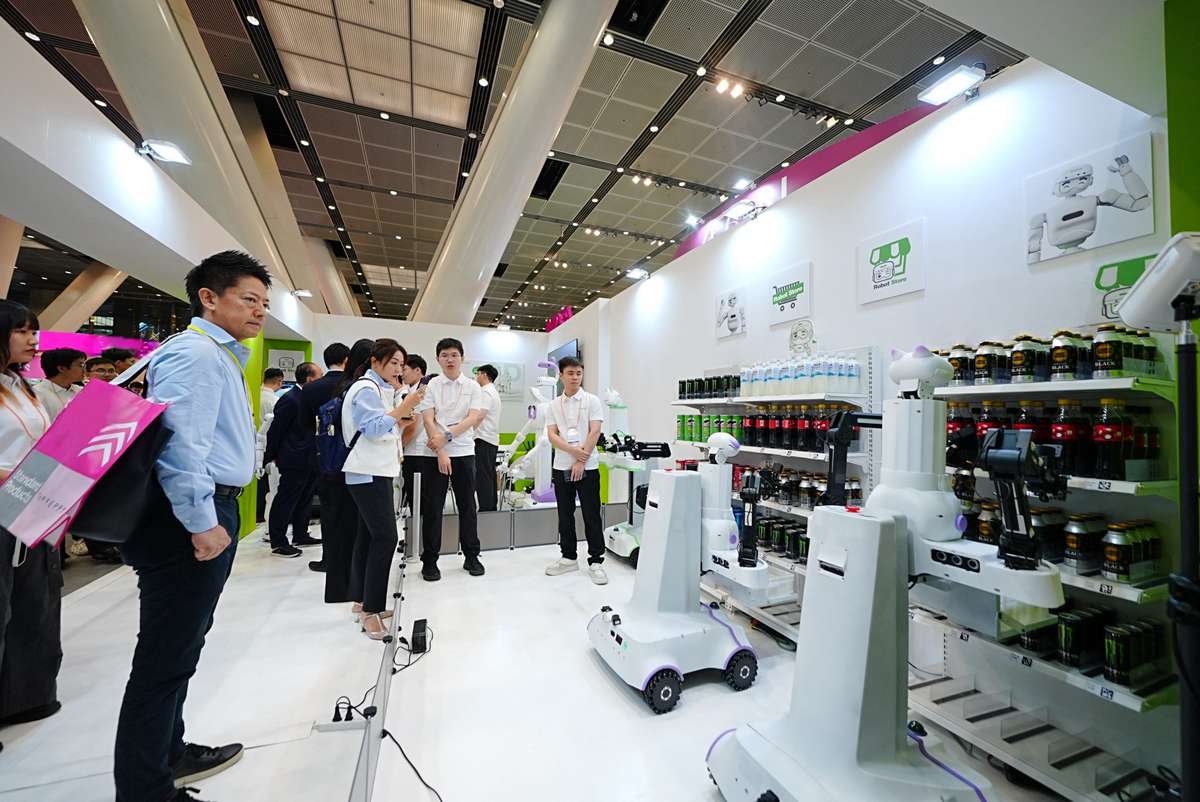
Robot replenishment operation
Among them, the general-purpose humanoid robot product for human activity spaces, the bipedal humanoid robot H1, features a soft appearance design, supports interaction in more than 20 languages, and can express 45 kinds of facial expressions and 36 kinds of gestures, providing an affable, friendly customer interaction experience; it also offers open APIs, supports secondary development, and adapts to diverse operational needs.
The wheeled-arm material handling and sorting robot C1, designed specifically for narrow spaces, is equipped with a narrow-body omnidirectional chassis and can flexibly maneuver through the narrow aisles of convenience stores without modifying existing shelves. Its operating height covers a range from 100mm to above 1750mm, fitting the needs of full-shelf operations and completing cargo transport, shelf replenishment, and loading/unloading within limited spaces. In terms of safety design, the C1 can perceive surrounding pedestrians through multi-sensor fusion, with an emergency braking distance of less than 10cm when encountering obstacles; it is also equipped with front and rear depth vision and 360-degree panoramic vision, combined with a lightweight, compact body design, balancing mobility and operational efficiency.
Serving as the unified hub supporting multi-robot collaborative operations, the robot management platform M1 builds a self-developed software-hardware integrated operations foundation adapted to multiple robot forms and cross-scenario use, closing the full-chain gaps from device onboarding and task execution to data review, and supporting large-scale deployment, orchestration, and continuous optimization of "human-robot collaboration" tasks.
In the future, Zhengxing Innovation will further expand into a heavy-load version and launch the A1 precision manipulation robot for fine operation scenarios such as checkout and bagging, forming a product portfolio of standard, dexterous, and heavy-load types to meet the more diverse "human-robot collaboration" needs of the retail frontline, giving store operations greater flexibility and resilience.
Empowering Robots to Continuously Evolve in Real Scenarios and Tasks with the "Embodied Brain"
The solution released this time is capable of "human-robot collaboration" in open working environments and complex tasks, backed precisely by Zhengxing Innovation's "embodied brain." As a complete physical intelligence system jointly built from embodied models, algorithms, data, and infrastructure (Infra), it not only possesses fundamental capabilities such as understanding the world, learning actions, and executing tasks, but its core characteristic is the ability to continuously iterate and evolve through the actual operation of tasks in real scenarios.
Smaller models and faster responses are the prerequisites for robots to leave the laboratory and work in real time in stores. Zhengxing Innovation's self-developed lightweight world action model SLM-0.5 is responsible for understanding the relationship between environments and actions. The model achieves a 98.6% average task success rate on the LIBERO benchmark, with inference speed 24 times faster than mainstream solutions.
Closed-loop training in real scenarios is key to robots achieving continuous capability evolution. Based on RLinf, Zhengxing Innovation built a reinforcement learning post-training system, STEAM, using lightweight task data and human feedback to drive rapid adaptation of retail tasks. In validation of the designated product shelving task, the execution success rate reached 95%. Execution results and corrective feedback are used to optimize operation policies, with data collection, model training, and evaluation integrated into a closed loop of "execution—feedback—learning—redeployment," enabling robots to perform real-world tasks more steadily and faster.
Achieving "human-robot collaboration" also requires precise understanding of task goals, flexible task coordination, and decision-making planning capabilities. Rpent, an agent foundation launched by Zhengxing Innovation jointly with Tsinghua University and Wuxin Qiong, integrates the task understanding and planning capabilities of general large models, the fine manipulation capabilities of expert models such as VLA, as well as memory, tools, and robot interfaces, forming a complete closed loop from perception, decision-making, and execution to error-correction feedback. Taking "restock this row of shelves" as an example, Rpent first decomposes the goal and plans the execution sequence, then dispatches modules such as navigation, recognition, and manipulation to work collaboratively; during execution, it monitors progress in real time, and when anomalies such as displaced goods or failed grasps occur, it immediately adjusts strategies or replans, enabling the robot both to accurately understand task goals and to execute every step with high quality.
The intelligent upgrade of the retail industry is essentially not aimed at replacing humans with machines, but rather through the division of labor and collaboration between people and machines, breaking the human resource boundaries and the temporal-spatial limits of retail operations, truly achieving refined operations, around-the-clock service, and experience upgrades. With the support of the retail business ecosystem of global partners such as Charoen Pokphand (CP) Group, Zhengxing Innovation is accelerating the large-scale replication and implementation of its solutions, delivering a reusable physical intelligence deployment paradigm for the retail industry and pushing physical retail into a new stage of "human-robot collaboration" in open scenarios.
This article was provided by Zhengxing Innovation and reprinted by QbitAI with authorization; the views belong to the original author.