
Jessica from ROBO-car
Quantum Bit ROBO | Public Account AI4ROBO
Zunjie responded.
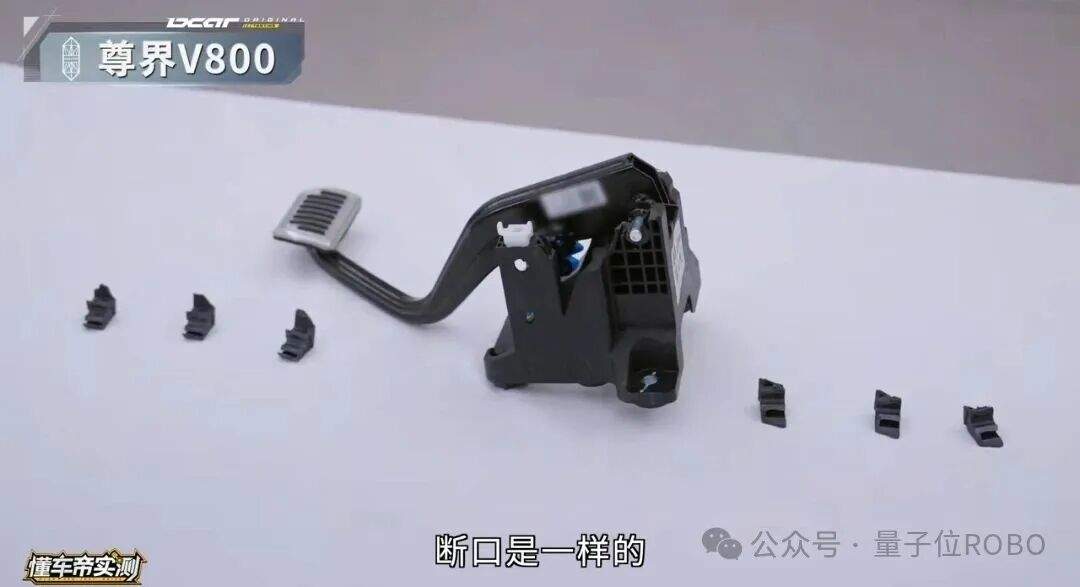
On the first day after the event, what triggered everything was a testing video released by Dongche Di. Three new cars worth millions were subjected to continuous emergency braking, resulting in broken pedals. As a result, Zunjie V800 became a hot search topic, and Jianghuai Automobile reached a limit down price on the first trading day after National Day.
After fermenting for a whole day, Zunjie responded officially that night, and also announced a decision directly related to the car owner who has received it.
However, the turmoil did not stop there; Dongche Di spoke again later.
The hot discussion caused by a test is still ongoing.
Zunjie responded to “brake pedal broken”
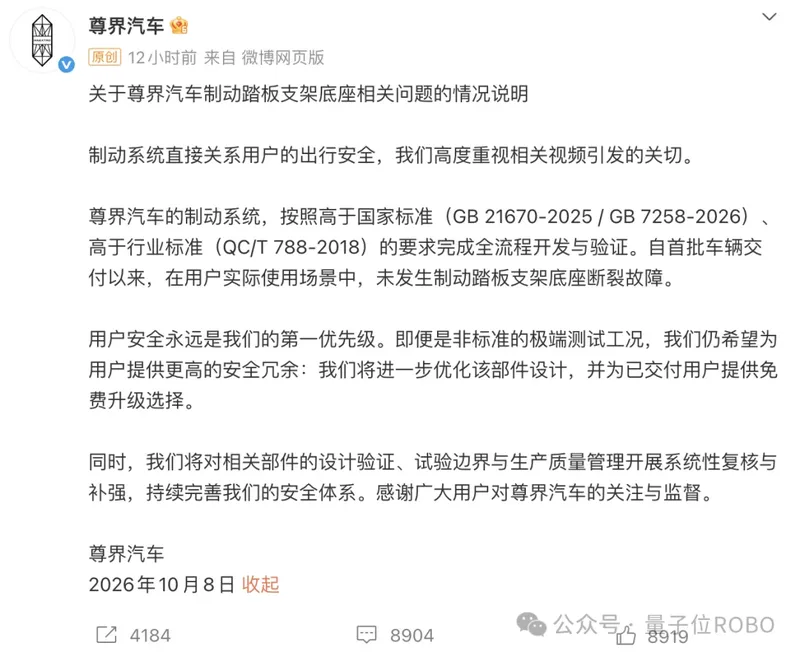
At 9 p.m. on October 8th, Zunjie Automobile released a “Statement on Issues Related to the Base of the Zunjie Automobile Brake Pedal Support”. The core information consists of three points.
First, complies with standards. As a renowned brand, its braking system has been developed and verified throughout the entire process in accordance with requirements higher than those of national standards GB 21670-2025, GB 7258-2026, and industry standards QC/T 788-2018.
Secondly, no similar failures have occurred in actual use. Zunjie states that since the delivery of the first batch of vehicles, there has been no breakage of the brake pedal bracket base during user usage.
Thirdly, Zunjie defines this test as “non-standard extreme test conditions”.
But a full statement is not just an explanation.
There are several new action measures—
Zunjie also announced that, even under extreme testing conditions, it is willing to provide higher safety redundancy for users:
Further optimize the design of related components, and offer free upgrades for delivered users; at the same time, conduct systematic reviews and strengthenments on component design verification, testing boundaries, and production quality management.
Compared to the previous explanations of standards and records, the free upgrade may be the most substantial product action in this statement.
So, in response, if you savor it carefully, there really is something to appreciate.
In any case, the defects of the million-dollar luxury cars are not acknowledged, but engineering measures have been decided to address the issues exposed during testing.
As for the technical reasons behind the consecutive breakage of the three test vehicles, Zunjie has not yet provided a clear explanation. The component adjustment plan and implementation time involved in the upgrade also remain to be announced.
And after Zunjie's response, the other side of the controversy, Dongche Di, also spoke out.
Regarding the claim of “extreme conditions”, the relevant personnel at Dongchedi said to The Paper that the 100-kilometer braking test is one of the most basic tests for cars. It cannot be simply classified as extreme conditions; when three cars experience similar breaks simultaneously at the same position, there are certain safety risks.
Another response involves the 4589N pedal force that caused controversy online earlier. This reading in the test video led to questions about “overusing the pedal”.
Dongche Di explained that it was the digital ghosting caused by different refresh frequencies between the high-speed camera used for testing the display screen and the device, when recording it. The actual peak pedal force recorded was 1612N, and there was no violent test as rumored online.
At this point, the differences between the two parties are clear.
Zunjie emphasizes that the product has passed verification above the relevant standards, and regards this test as non-standard extreme conditions; Dongchedi believes that 100-kilometer emergency braking is a common test item, and three similar breaks are sufficient to draw attention to the vehicle’s safety.
However, there is actually a easily overlooked difference in the test boundaries discussed by both parties.
The 100-kilometer emergency braking is a common item, but it does not mean that continuous full-force stepping meets the standard test procedure; if the testing conditions exceed the standards, it also does not mean that structural failure is a normal result.
Whether the testing method is reasonable needs to be determined by considering conditions such as loading force, direction, and duration.
And the reliability of the pedal support ultimately still requires engineering data to explain it.
Three breaks, exceeding the testing limits
Regarding this test, many numbers have been circulating online: 500N, 1500N, 1612N, and even 2000N. The technical requirements associated with them are not the same.
Let’s start with 500N.
According to GB 21670-2025 “Technical Requirements and Test Methods for Passenger Vehicle Brake Systems”, in related cold-state brake performance tests, the brake pedal operating force must be controlled between 65N and 500N.
In simple terms, the 500N constraint refers to the pushing force needed to achieve the specified braking performance, not the maximum pressure the pedal can withstand.
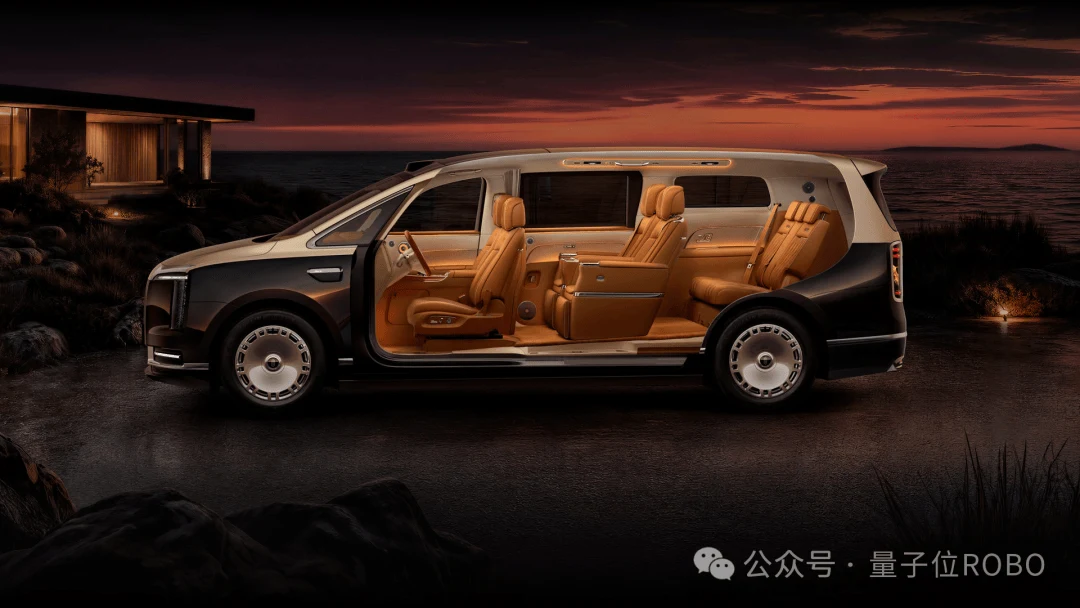
As for the structural strength of the pedal itself, there are corresponding requirements.
The industry recommended standard QC/T 788-2018 stipulates that in the braking pedal strength test, a longitudinal force of 1500±20N should be applied, held for 5 seconds each time, and repeated 5 times. After the test, there should be no cracks or damage, and the permanent deformation should not exceed 5 millimeters.
1500N, which is approximately equal to the gravity produced by a 153-kilogram object.
However, this standard mainly applies to mechanical hinged metal pedals; other types can be implemented by reference. It refers to the bench loading under specified conditions, which differs from the full vehicle dynamic braking tests conducted by Dongchedi.
Therefore, even if 1612N exceeds the nominal test load of 1500N, it cannot be directly concluded that Zunjie violates the standard.
Additionally, GB 21670-2025 sets requirements for the structural strength of pedals and brackets, but lacks a unified limit load value. Automobile manufacturers usually develop more comprehensive internal verification requirements by considering product structure, material properties, and usage scenarios.
This involves an important concept in automotive safety design: safety redundancy.
During daily driving, drivers rarely need to press the brake pedal with full force continuously; however, in emergency situations, the pressure, speed, and direction of pressing the pedal can become out of control.
The pedals and brackets must not only meet the established testing requirements, but also provide sufficient capacity for complex scenarios.
Several automotive R&D engineers interviewed by Yicai Finance previously also emphasized that pedal engineering design should avoid being directly broken by the driver. Factors such as force application direction and structural design will affect the final load capacity.
According to the data released by Dongche Di, during the first emergency brake of the third Zunjie V800, the maximum force on the pedal was 1596N, allowing the vehicle to stop normally; the second time, the maximum pedal force was 1612N, and the bracket broke immediately—the two peak values differ by only 16N.
The difference of 16N is not sufficient to infer the fracture threshold; however, the consecutive fractures at similar locations in three vehicles indicate that the phenomenon is repetitive.
In contrast, the other 8 models tested completed 6 full braking attempts under a average pedal force of over 1600N each, and neither the pedal nor the bracket was damaged. The results still require careful evaluation in conjunction with vehicle differences based on the testing methods, but they have provided a reference for analyzing the structural strength of Zunjie.
In fact, the brake pedal bracket breaks, which has been a common occurrence in the automotive industry. In November 2020, Ford recalled 2627 imported Mustangs in China because the brake pedal bracket might break during emergency braking.
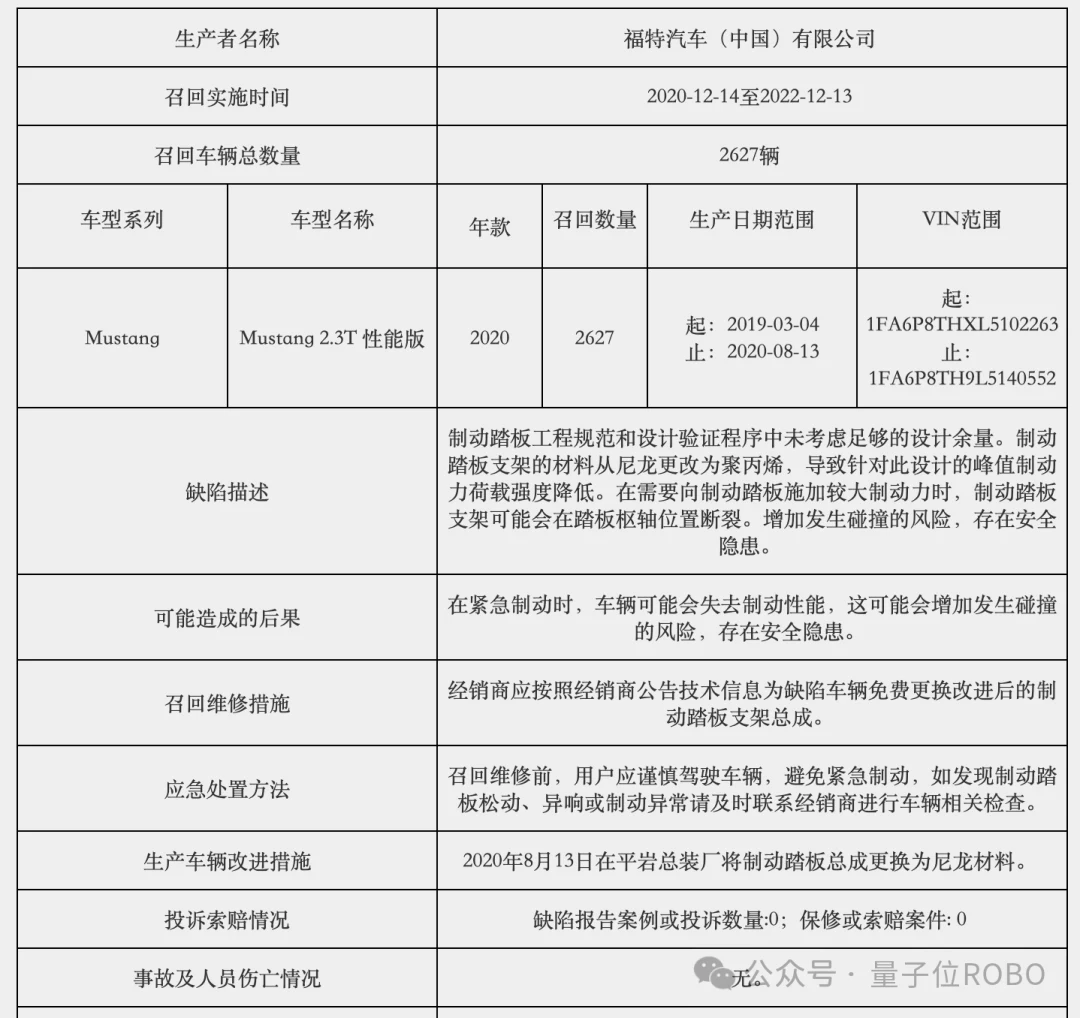
According to information from the Defect Products Management Center of the State Administration of Market Regulation, the material used for the pedal bracket of the involved vehicle has been changed from nylon to polypropylene, resulting in a reduction in the peak braking force load intensity.
The official also clearly stated that the brake pedal engineering specifications and design verification procedures did not consider sufficient design margin, which may cause the vehicle to break at the pivot position when a greater braking force is required, increasing the risk of collision.
Ford finally replaced the improved pedal bracket assembly for the related vehicle for free.
There is another detail regarding this recall: at the time the recall information was announced, there were 0 reports and complaints about defects, 0 warranties and claims, and no accidents or casualties were recorded.
0 report suggests that “no failure reports were received during actual use” does not eliminate potential risks—the identification of risks relies on design verification, testing, and engineering investigations, rather than waiting for accidents to occur.
The reasons behind the two cases of Ford and Zunjie may not be the same, but the engineering principles are actually consistent:
The value of safety redundancy lies precisely in scenarios where the probability of occurrence is low, but the consequences can be extremely serious.
After all, a safe and reliable braking ability is always a basic requirement for automotive products.
And for the status of the million-dollar luxury cars, marketing might also need to slow down, so that engineering can keep up with marketing.
One More Thing
The market’s response to Zunjie provided feedback.
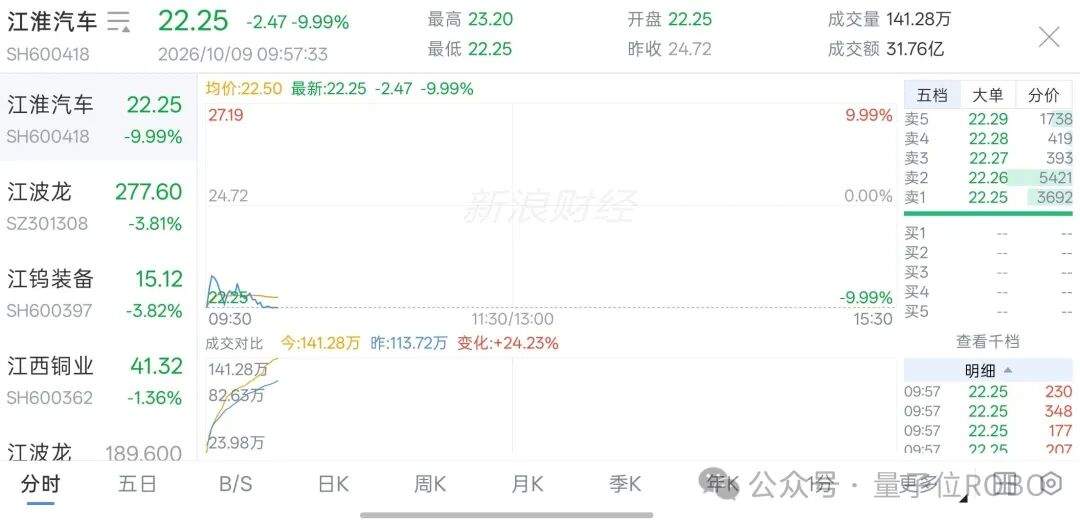
Today at opening, Jianghuai once again hit a limit down, reporting at 22.25 yuan per share, and has been at a limit down for two consecutive trading days.
Compared to the closing price on September 30 before the festival, Jianghuai Automobile's market value has evaporated by over ten billion yuan in two days.