
Jessica, reporting from ROBO-Car
QbitAI ROBO | Official Account AI4ROBO
Tesla FSD entered Europe, and was promptly knocked back to its original form.
FSD can no longer be calledFull Self-Driving(Full Self-Driving); it had to be renamedTesla Assisted Driving(Tesla Assisted Driving). The product name Musk had insisted on for years was thus downgraded a level in Europe……
Interestingly, though, the name change was actually madevoluntarilyby Tesla.
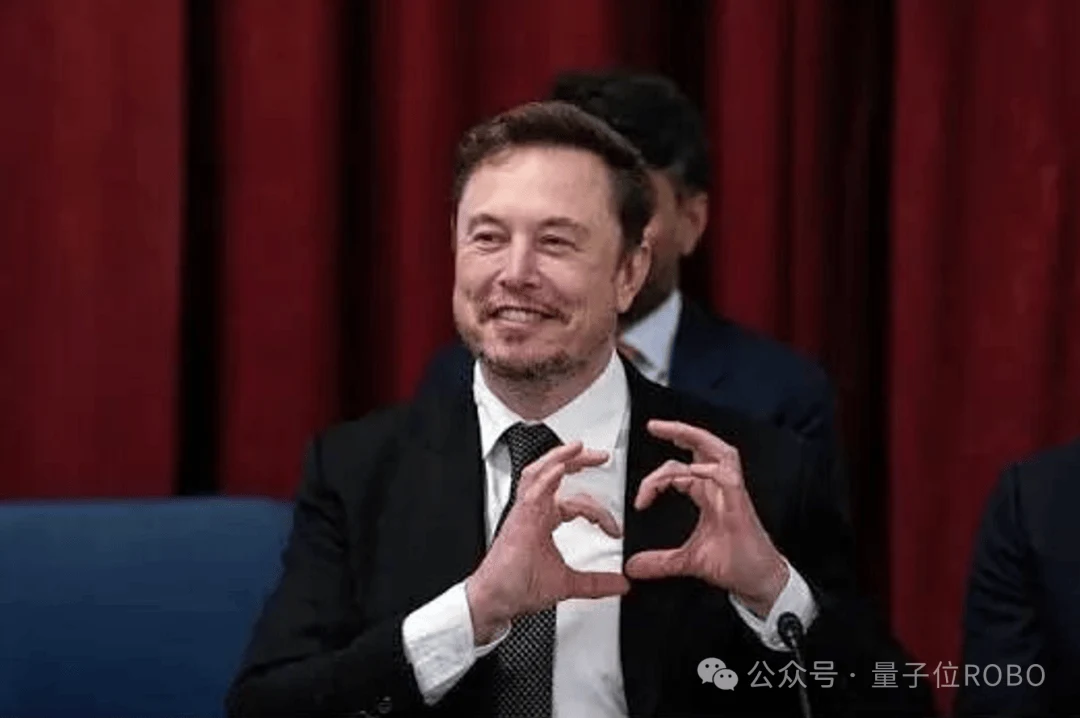
Even Musk himself, unusually, was polite for once, thanking the German government in German. Yet as recently as month 3 of this year, Musk was still complaining that "EU regulation is heavy and stifles innovation"……
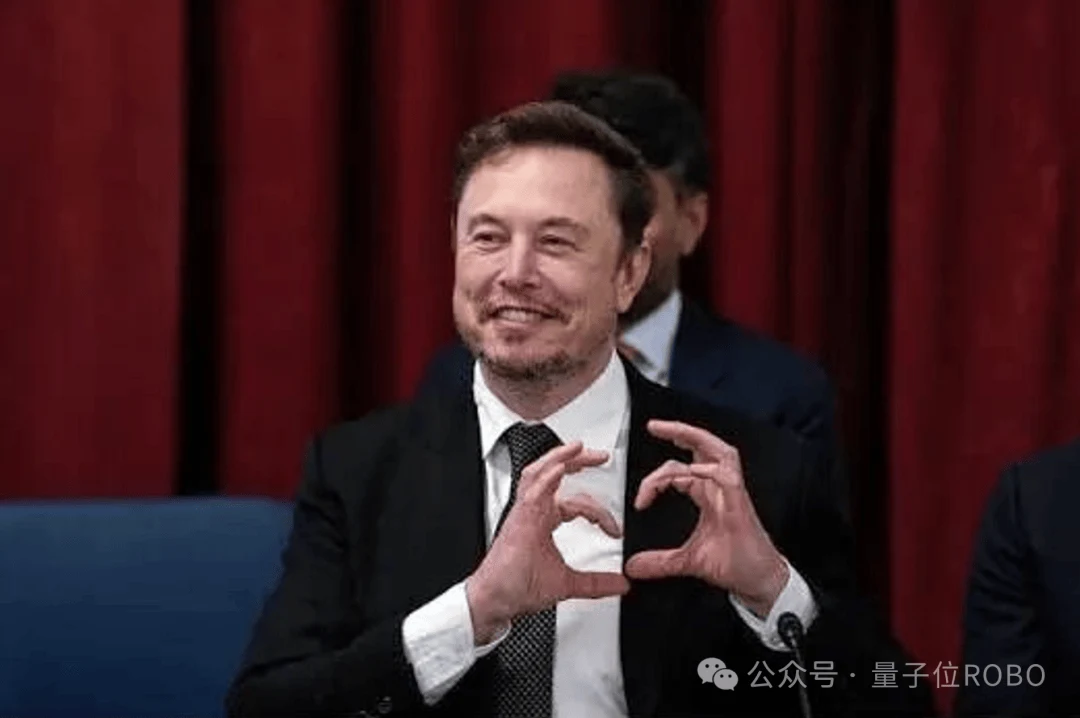
Why did Musk, who is rarely willing to back down, become so agreeable this time?
Tesla FSD renamed in Europe
Tesla FSD—the name Musk had insisted on for a decade—has officially been renamed in Europe.
On its official websites in Germany, Spain, the Netherlands, Slovakia and several other European countries, Tesla has already changedFull Self-Driving (Supervised)toTesla Assisted Driving。
The original FSD product page now redirects to the new Tesla Assisted Driving page.
Meanwhile, on the other side of the Atlantic, the US official website still retains the Full Self-Driving (Supervised) name.
This name change did not come without warning.
Just three days earlier, the German Federal Ministry of Transport issued a statement disclosing a recent series of consultations between Tesla and the German government.
In the view of the German Transport Ministry, based on the information currently available, Tesla's system demonstrates a high level of capability (especially in urban traffic), butthe name FSD is somewhat misleading:
Although the system can already assist with driving tasks such as acceleration, braking and steering, itcannot fully take over driving, and drivers must continue to pay attention to road conditions.
Faced with questioning from the German government,Tesla proactively proposedrenaming the system to Tesla Assisted Driving.
In fact, this is the second time this year that Tesla has adjusted the name of its assisted driving product. Even earlier, the naming dispute over FSD had persisted for years.
Last year in month 12, the California Department of Motor Vehicles in the United States ruled that Tesla, in its marketing, usedAutopilot, Full Self-Driving Capabilityin its marketing was misleading and violated local law.
The dispute ended with Tesla making concessions. In month 2 of this year, the California Department of Motor Vehicles confirmed that Tesla had stopped using the Autopilot name in its local marketing, thereby avoiding the penalty of having the relevant licenses suspended for 30 days.
But California at the time did not require Tesla to abandon the FSD (Supervised) name altogether. The renaming in Europe can be seen as a step further, explicitly adding the qualifier “assisted” to Tesla's autonomous driving features.
Of course, there must be a reason why Tesla was willing to back down proactively.
One detail was also mentioned in the German government's announcement this time:Tesla received the German government's public support for FSD's access to Europe.。
The statement revealed that in September this year, when German Transport Minister Steffen Bilger consulted with Tesla, they discussed issues such as system functions, driving responsibility, and European approval.
The two sides quickly reached a series of consensus, one of which involved the rather controversialspeed offset function.。
According to the plan agreed by both sides, FSD allows vehicles to drive, under certain circumstances, atup to 10% above the legal speed limit.The German government believes that a slight speed offset helps maintain smooth traffic flow and expressed its willingness to support this plan in the European approval process.
After completing these consultations, German Transport Minister Bilger also publicly stated that hewould push for Tesla's assisted driving system to gain approval for the entire EU as soon as possible.。
The German government's support quickly reached Musk's ears.
On October 7, Musk reposted the relevant news on the X platform and, using a German phrase,Danke schön (thank you very much),expressed his gratitude to the German government.
It is somewhat unexpected.
After all, in the 3rd month of this year, Musk was still publicly criticizing the EU for imposing excessive regulatory burdens that stifle European innovation; in the 11th month of last year, he also publicly described his experience dealing with European regulators as "as absurd as a Kafka novel"...
Behind Musk's change of attitude is FSDEuropean approvalhas entered a critical stage.
According to the EU's relevant voting mechanism, Tesla needs to secure at least55%and support from member states representing at least 65% of the total EU population is required for approval.Germany, Francethe attitudes of populous countries such as these, and therefore has significant influence.
However, judging by the current situation, Tesla also faces considerable resistance.
Last month, the European Transport Safety Council (ETSC) publicly called on EU member states to oppose approval of Tesla FSD, focusing on the safety risks that its speed offset function may pose.
The EU-wide approval vote, originally planned for the 10th month, was ultimately postponed to at least the 12th month of this year.
Rather than continuing to argue over the name, Tesla is clearly more eager to get FSD into the European market for real.
Entering 8 European countries in half a year, FSD fights to expand its market
This year it is indeed possible to sense that Tesla's rollout of FSD in Europe is visibly accelerating.
On April 10 of this year, the Netherlands Vehicle Authority RDW was the first to approve FSD (Supervised), allowing eligible Tesla vehicles to use the system locally. After that, Lithuania, Estonia, Denmark, Belgium, Slovenia, the Czech Republic and Croatia joined one after another.
In half a year,8 EU countrieshave already approved FSD's entry. Slovakia's transport minister has also recently signaled that the country is expected to become the ninth to approve it.
However, spreading out the list reveals that these countries are still mostlysmaller-populationmarkets, together covering only about 12.6% of the EU's population.
Meanwhile, major car markets with real scale effects, such asGermany, France, Italy and Spain, have yet to fully open FSD to ordinary car owners.
From another dimension, Tesla also genuinely needs FSD to start working in Europe as soon as possible.
The reason comes first fromcar sales。
. In recent years, Chinese new-energy vehicle brands have accelerated their push into the European market, with BYD, Chery, Leapmotor and other companies successively expanding local sales networks, bringing more choices in price, configuration and technology.
Data from the European Automobile Manufacturers' Association ACEA show that from the 1st to the 8th month of this year, Tesla's new car registrations in the EU were about 142,000 units (14.2万), up 65.9% year-on-year, with sales already clearly rebounding.
During the same period, BYDIts EU new car registrations reached approximately 178,000 units,up 163% year over year,surpassing Tesla in both growth rate and total volume.
Moreover, Tesla's mainstay models are still theModel 3 and Model Ythat were launched years ago. Although they have gone through several rounds of facelifts and gained some new variants, there has long been a lack of a brand-new high-volume model.
Facing the increasingly dense product offensive from Chinese brands,FSD has practically become Tesla's key technological hallmark for re-establishing product differentiation and winning over consumers。
— a fact Tesla management has publicly acknowledged. On the Q2 earnings call this year, Tesla CFO Vaibhav Taneja said that FSD has become an important factor influencing consumers' car-buying decisions.
In addition, according to data Tesla disclosed in the second quarter of this year, Tesla'sglobal number of paying FSD users has approached 1.5 million, up about 56% year over year; of these, 55% are one-time purchase users and 45% are subscription users.
Tesla also explicitly stated that it has already removed the one-time purchase option for FSD in most markets, and that future growth in related revenue will rely mainly on subscriptions.
This reveals another reason Tesla is eager to push for European approval.
FSD can be delivered via OTA to eligible vehicles already on the road,and software subscriptionscarry greater incremental gross margin potential.
Once large automotive markets such as Germany and France are approved for release, Tesla will have the opportunity to convert more European owners into continuously paying software users, while also attracting new car-buying demand with FSD's functional advantages.
And beyond software revenue,more FSD users also mean more real-world road data。
. Traffic signs, road structures, and driving habits differ across European countries, and Tesla needs to continuously accumulate local data to improve its models' adaptability to the European road environment.
In fact, before officially receiving European approval, Tesla had already collected approximately 3.1 million kilometers of high-quality manually driven data through its engineering fleet, and had accumulated approximately 1.6 million kilometers of FSD engineering validation data for model training and testing. Markets including Germany and France were within the testing scope.
As more vehicles are approved to use FSD, Tesla will also have the opportunity to obtain larger-scale real-world operational data, further improving its model's ability to handle complex driving scenarios.
More users bring software revenue, actual usage brings training data, and technological improvement can in turn attract more users. For Tesla, the value of the European market is compounding across these several links.
In fact, it's not just Europe—Tesla FSD's rollout in China has also gone through a long wait.
In November (11月) last year, Musk said that he expected to receive full approval from Chinese regulators by February (2月) or March (3月) of 2026. In April (4月) this year, Tesla pushed the expected timeline back to the third quarter.
Now that the third quarter has ended, the full version of FSD still hasn't been fully opened in China.
But that's not to say there's been no progress—
In May this year, Tesla briefly listed China in its official information about FSD-supported regions worldwide:
In the same month, Tesla also recruited on-vehicle assisted driving testers in 9 cities including Beijing, Shanghai, Guangzhou, and Shenzhen, covering work such as road testing and software feature validation.
Now that TAD is about to launch in Europe, does that mean its entry into China isn't far off either?