

IT Home On October 11, according to Phoronix’s report yesterday (October 10), the Linux Plumbers Conference was held in Prague, Czech Republic this week.Quanta Engineering Engineer Khem Raj questioned the adaptability of Linux Long Term Support (LTS) version in the era of generative AI at the conference, especially when a large number of patches are submitted and error reports are received.

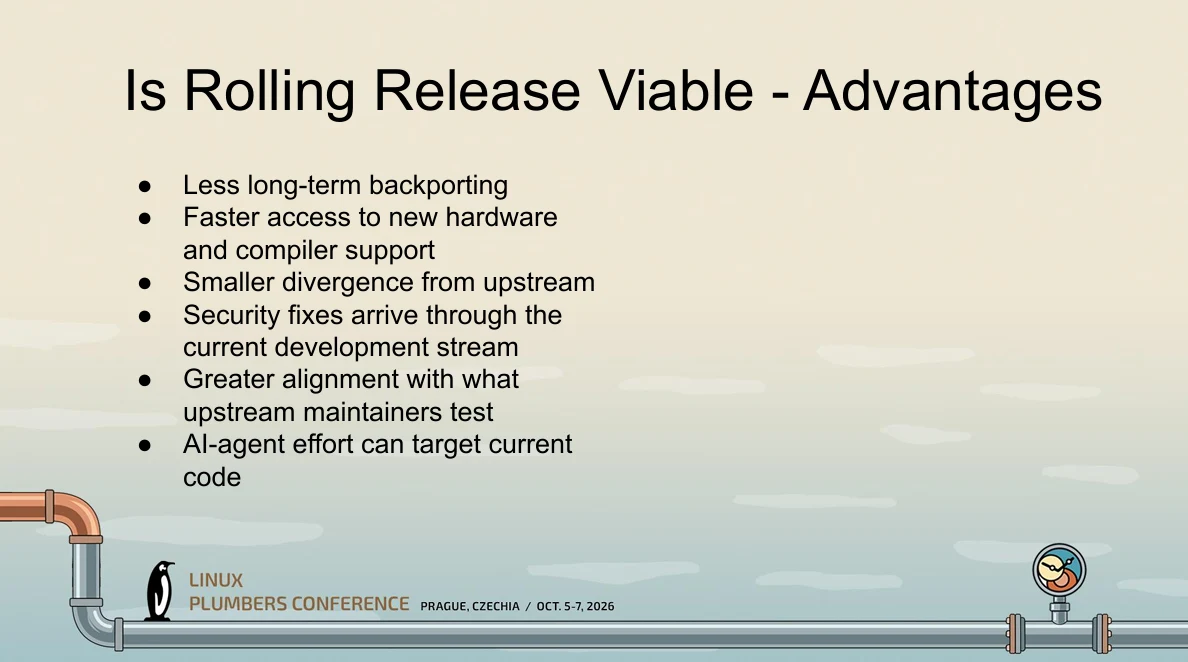
Khem Raj argued the benefits of rolling release versions in the AI era. He said that as AI programming agents continuously speed up the submission of patches to the Linux kernel and related open-source projects, it imposes a huge burden on open-source maintainers, as well as on version publisher companies.
According to IT Home from a PPT, Raj believes that the benefits of rolling updates are reducing the need for backtracking on all patches, minimizing conflicts with upstream teams, and enabling faster security fixes, among others.
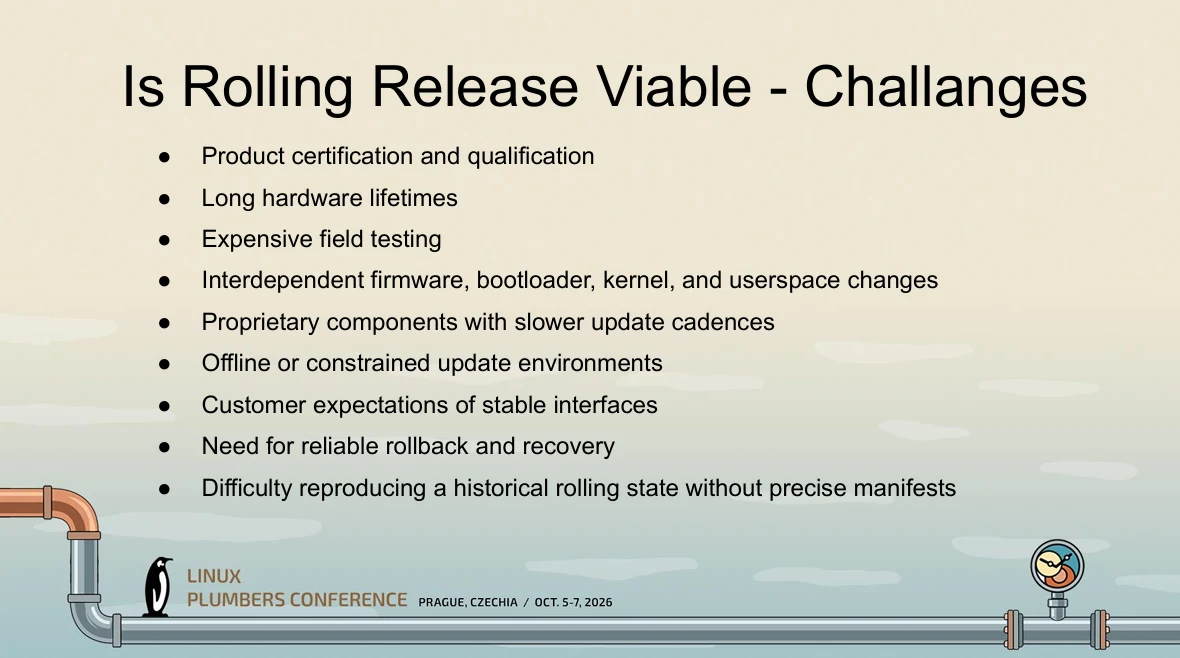
However, he also mentioned that the scroll update mode presents challenges in areas such as authentication and qualification review.
Raj said that it is necessary to rethink the usability of the LTS version, and to see if the rolling update model is more effective for releases, especially for embedded Linux releases and maintenance versions with a smaller community. Raj also said that generative AI tools can be used to help maintain the release of the LTS version.