
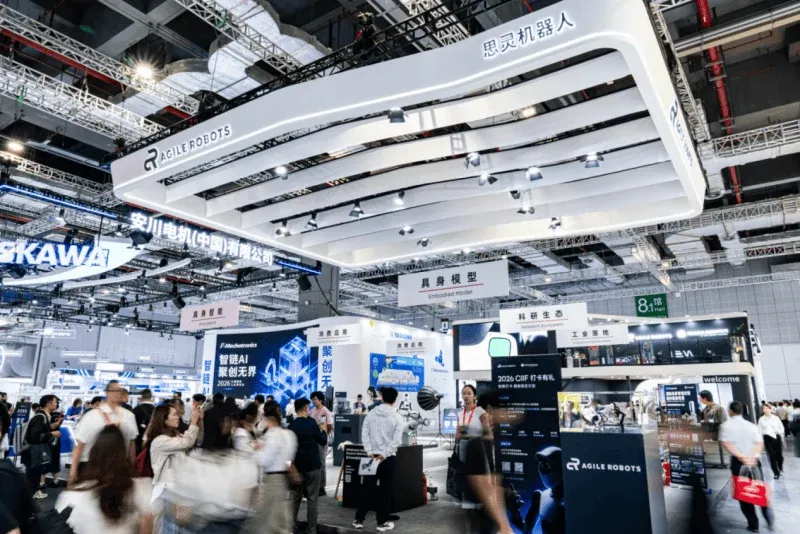
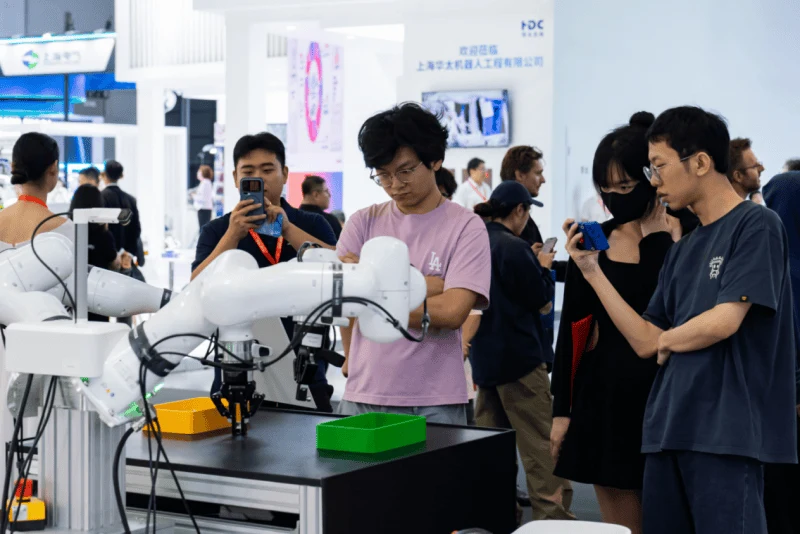
From October 12 to 16, the 26th China International Industry Fair is being held at the National Exhibition and Convention Center (Shanghai). Agile Robots is exhibiting 12 exhibits across five major exhibition zones — "Embodied Intelligence, Embodied Models, Research Ecosystem, Consumer Applications, and Industrial Deployment" — systematically presenting its full-stack technology capabilities, from humanoid robots, models, force control and perception technology, and data collection systems, to diverse scenario solutions.
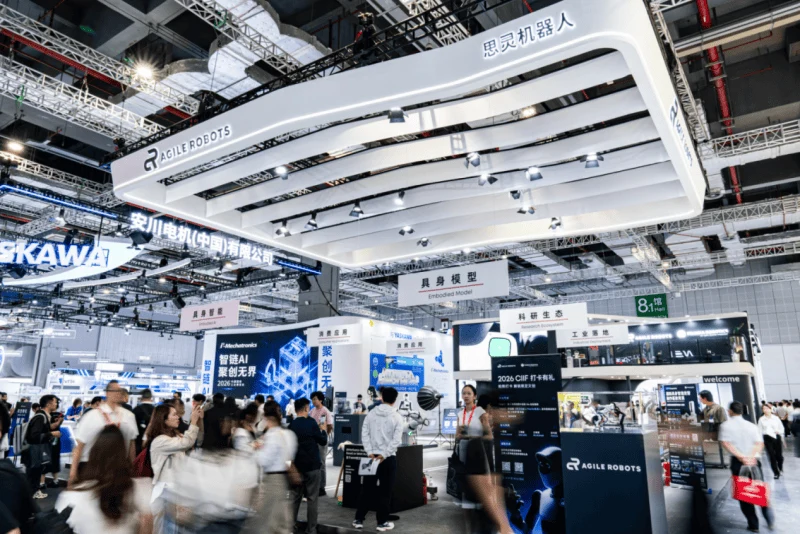
Making Physical AI Tangibly Real
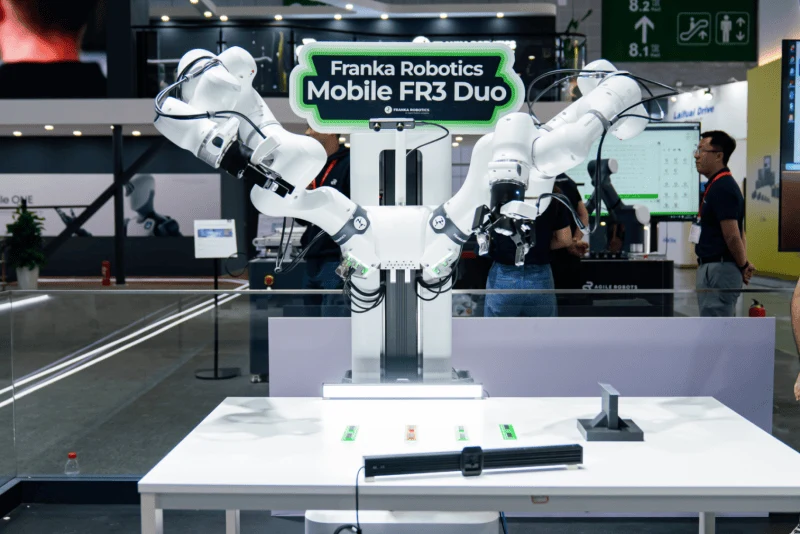
Mobile FR3 Duo: Giving Physical AI Research a "Mobile Body"
As embodied intelligence research moves from tabletop manipulation to dynamic spaces, mobility, perception, and dual-arm manipulation are no longer independent topics. The coordination between the chassis and the robot arms, the integration of sensor data, and policy execution on real hardware can all become engineering burdens before algorithm validation.
Agile Robots' Franka Robotics Mobile FR3 Duo dual-arm mobile research platform deeply integrates the FR3 Duo baseline platform with the Tactile Mobile Robot (TMR), combining dual-arm manipulation, multimodal perception, and omnidirectional mobility, so that teleoperation, data collection, and policy execution can all be completed on a single platform.
In 2026, the first EBiM (Embodied Bimanual Manipulation) Challenge officially launched, attracting 119 teams from around the world to register. The competition aims to establish a standardized evaluation system for real-world embodied intelligence, ensuring that robot algorithms are not only "effective in simulation" but can also be validated across different laboratories, different environments, and real robot platforms. As the event's main sponsor, Agile Robots provides the unified platform for the competition — the Mobile FR3 Duo — supporting researchers worldwide in conducting real robot testing, letting algorithms be tested on real hardware.
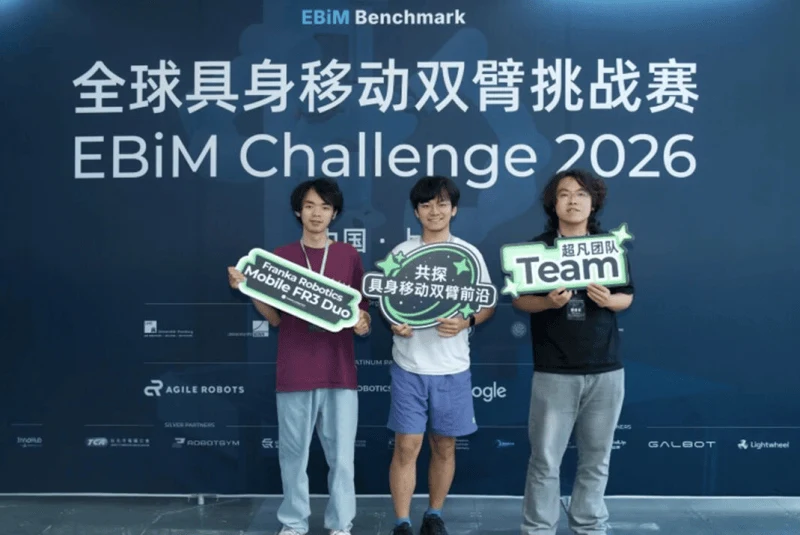
2026 is the starting point; 2027 will expand further. EBiM 2027 will enter a new Beta phase, with plans to further expand participating teams, task types, and test platforms, while continuously refining the standardized evaluation protocol. We sincerely invite universities, research institutions, developers, and robotics companies from around the world to participate — bring your algorithms and have them validated on real robots, real tasks, and in real environments.
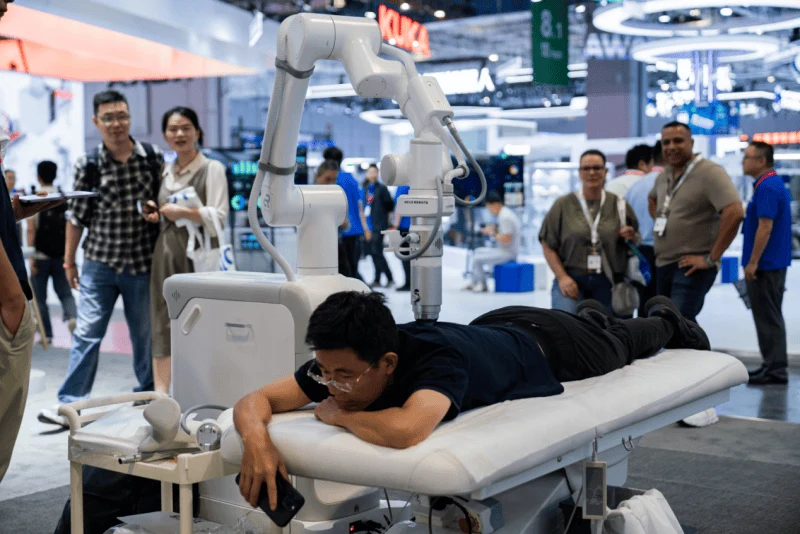
AI Physiotherapy and Wellness Robot: The "Human Warmth" of Physical AI
At this year's CIIF, the AI Physiotherapy and Wellness Robot drew the longest queues for hands-on experience at the Agile Robots booth. This reflects both the appeal of Agile Robots' excellent products and the concrete manifestation of genuine market demand.
As the health and wellness industry enters a period of rapid growth, combined with profound demographic changes, demand for physiotherapy and wellness services continues to be released, while contradictions on the supply side have become increasingly acute: stores are widely troubled by difficulties in recruiting professional therapists, low retention rates, inconsistent service standards, and high labor costs; meanwhile, consumers' demands for safety, personalization, and immersive experiences keep rising.
In response to this structural contradiction, Agile Robots' solution is to bring Physical AI into physiotherapy and wellness scenarios. The Agile Robots AI Physiotherapy and Wellness Robot is equipped with a self-developed high-precision force-controlled robotic arm and a five-end quick-change system, allowing a single device to seamlessly switch among five professional therapy modes: endogenous heat, manual massage, sleep regulation, radial wave therapy, and electro-moxibustion. For operators, it is also a digital operations system: a cloud-based library of 100+ standard courses lets new therapists get started in half a day, transforming services that "rely on experience and feel" into "replicable, quantifiable" standard processes; it supports parallel operation of "autonomous robot work + manual handheld work," reshaping space efficiency and labor efficiency; and a full-chain management system automatically accumulates equipment usage data and member health records, moving store operations from "going by feel" to "relying on data."
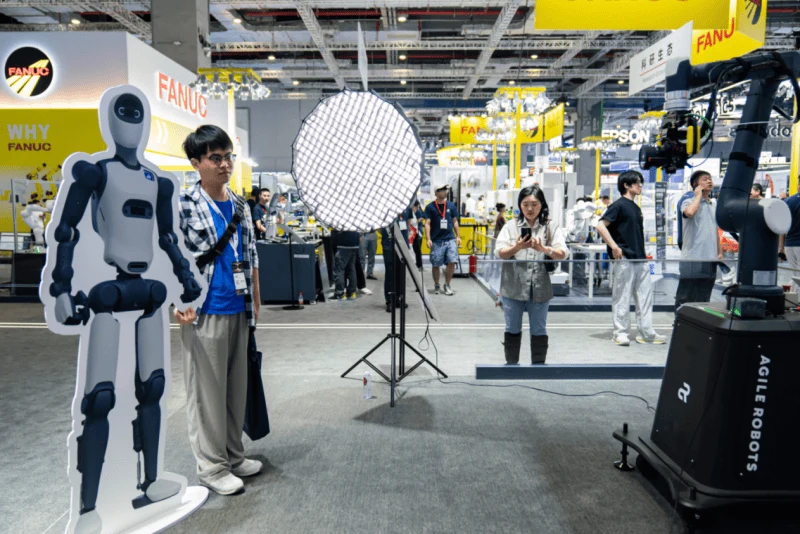
Photography Robot: Unleashing Creative Freedom
The industrialization of film and television, together with the explosion of short video and livestream e-commerce, is pushing professional shooting demand to unprecedented levels. Yet high-quality camera movement has long depended on two scarce resources: expensive professional equipment such as jibs, sliders, and motorized gimbals, and experienced cinematographers.
The Agile Robots Photography Robot combines AI, force control, and shooting workflows, allowing photographers to use the robot with simple, familiar creative logic. Unlike the complex teaching operations of industrial robots, the Agile Robots Photography Robot supports drag-to-set waypoints: users can directly guide the robotic arm to target positions, set keyframes, and then have the trajectory planning model generate camera movement paths.
For image control, the system is equipped with a focus motor, supports customizing focus points on key frames, and automatically computes focus information and performs focus tracking during shooting. Camera movement and focus control work in tandem, enabling the robot not only to repeat motions but also to execute more expressive shooting designs. Repeatability further translates into production efficiency. Shooting trajectories can be saved, shared, and reused, supporting similar product shoots, multiple rounds of creative adjustments, and template-based production.
The greatest value of the Agile Robots Photography Robot lies not in replacing the cinematographer's judgment, but in handing complex, repetitive execution to the robot, allowing creators to devote more energy to composition, storytelling, and expression. This shares the same underlying logic as the "cloud-based 100+ course library" of the AI Physiotherapy and Wellness Robot — transforming scarce skills that depend on talent and accumulation into storable, replicable, distributable digital assets.
This may be the most important value Physical AI offers to every industry: it does not merely replace repetitive labor, but liberates human experience from individuals, turning it into productive capacity that can circulate at scale.
Full-Stack Capabilities, Presented in Three Dimensions
Beyond the three key exhibits, the remaining exhibits further showcase Agile Robots' technological depth from the dimensions of industry, research, and ecosystem.
Diana3 Duo Automotive Parts Wire Harness Routing SolutionDirectly addressing a typical challenge in flexible manufacturing: wire harnesses deform easily and their state is not fixed, making stable operation difficult with preset trajectories alone. The solution combines Agile Robots' self-developed 7-axis intelligent force-controlled robotic arm and is designed specifically for flexible routing / arranging / tying processes of automotive parts (such as domain controllers and cockpit wire harnesses), achieving fully automated wire harness organization and assembly through force control + vision + the Agile Core system. The modular tooling supports complete line changeover within 15 minutes without major equipment adjustments, adapting to the flexible production needs of automotive production lines.
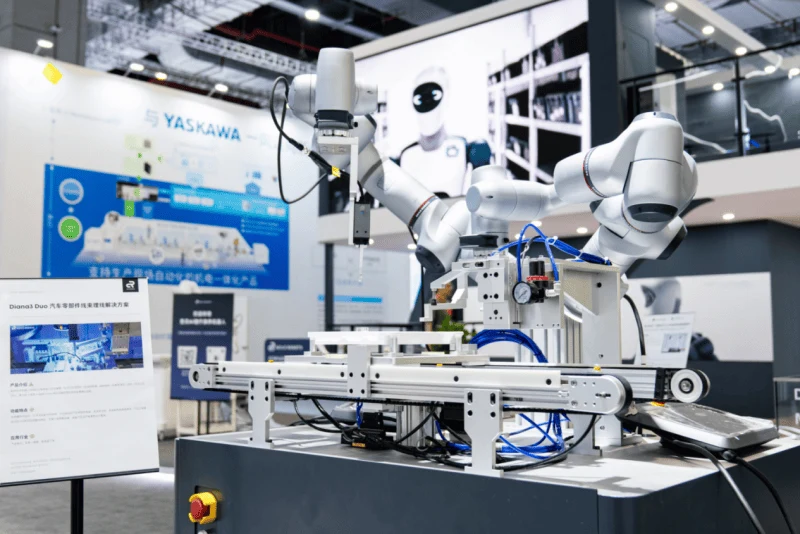
Diana 3, industrial-grade force control with a 3 kg payload, targets entry-level, lightweight research and laboratory scenarios. It retains the 7-DOF redundant structure, joint torque sensing, and compliant control, and shares the same development interface as the Diana 7 and FR3 — likewise supporting FCI. Precision manipulation research, laboratory automation, medical research assistance, sample handling, and small complex operations are all its main battlegrounds.
Agile Core + Visuo-Tactile SortingCombining perception capabilities with system integration capabilities. The VT10-G visuotactile sensor can output RGB images, dynamic force field distributions, depth maps, and 3D point clouds, providing contact information for grasping; Agile Core is Agile Robots' self-developed robot operating system and software platform, positioned as the robot's "intelligent brain," unifying connections to heterogeneous devices such as robots, vision, force control, mobile robots, and PLCs. Through drag-and-drop programming and interface extensions, it lowers the barriers to workflow development and cross-device deployment.
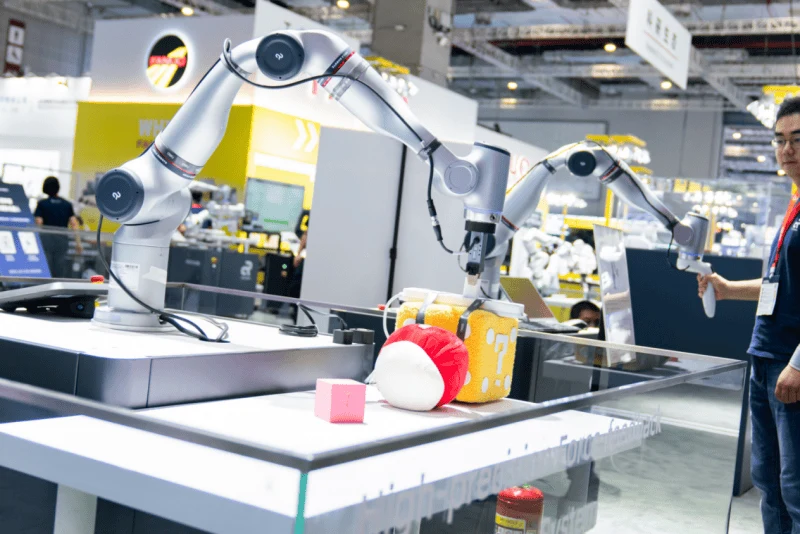
High-Precision Force-Feedback Teleoperation SystemA master-slave teleoperation platform built on Agile Robots' new-generation Diana 7. The new-generation Diana 7 has been refreshed and upgraded, with more open control and more flexible applications. It enables millisecond-level bidirectional force feedback, full-joint torque sensing, and real-time bidirectional haptic transmission, allowing operators to remotely perceive contact forces, and it shares the same development interface as the Diana 3 and FR3 — likewise supporting FCI. From algorithm research in the laboratory to system validation in real-world scenarios, the new-generation Diana 7 aims to become the robotics platform connecting Physical AI innovation with industrial applications.
WAM-Model-Based Disturbance Resistance DemonstrationBuilt on the FR3 Duo hardware platform and optimized based on FastWAM, it greatly improves robustness against visual disturbances in the environment, exploring the model's ability to execute reliably under changing conditions.Dexterous Handfocuses on the execution and perception foundations of fine manipulation.Agile Handadopts a five-finger modular design, combining a multi-sensing system with active compliance control, and can be extended to 16 degrees of freedom by upgrading the opposed thumb actuator.
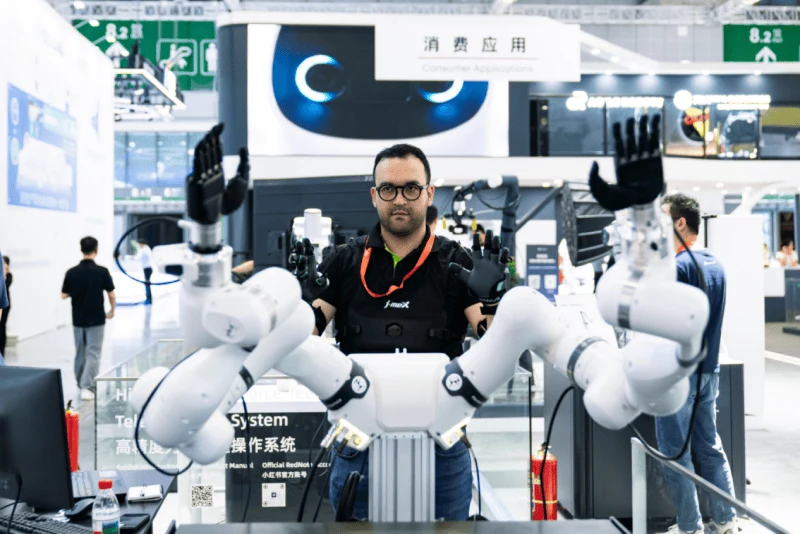
ThreeFranka partner ecosystem joint showcasecombines the open platform with partner capabilities:Dual-arm collaborative SMT tray multi-step fine manipulation, where the FR3 dual arms are equipped with Joyson Lingxi TeleHand Lite dexterous hands, simulating real factory quality inspection and demonstrating quality inspection workflows such as grasping, flipping, visual verification and tactile inspection;Wearable inertial motion capture collaborative system, where the FR3 is combined with j-mex AgileMaster, can precisely replicate human posture and subtle operations, achieving highly synchronized humanoid follow-motion, connecting motion capture, data transmission and robot replication, and effectively lowering the R&D threshold for humanoid robots, teleoperation and human-robot interaction;User-driven open-ended object interaction demonstration,with FR3 Duo combined with Robospec HERO v0.5, showcasing autonomous perception, general-purpose manipulation in real scenarios, as well as dynamic adjustment and exception recovery capabilities.
Since its founding in 2018, Agile Robots has built a fully self-developed system covering the WAM (World Action Model), perception, decision-making, force control, vision and operating systems, with full-chain independent control. Today, Agile Robots has grown into a global enterprise with more than 3500 employees from over 60 countries, headquartered in Munich, Germany, with annual revenue doubling for 8 consecutive years and nearly 40000 robots delivered to customers worldwide.
In the second half of embodied intelligence, the competition is about the depth of deployment. Agile Robots, grounded in full-stack technology and anchored on customer value, is bringing physical AI to every corner of the world.
This article was provided by Agile Robots and reprinted by QbitAI with authorization; the views belong to the original author.