
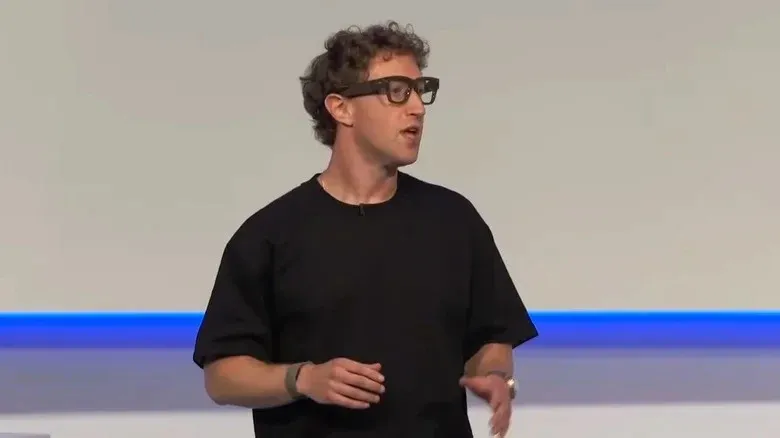
IT之家 October 13 news: Mark Zuckerberg said that Meta has caught up with competitors at the "frontier" of artificial intelligence. He pledged to continue spending heavily to challenge Anthropic and OpenAI, while downplaying outside warnings about the risk that the technology could spiral out of control.
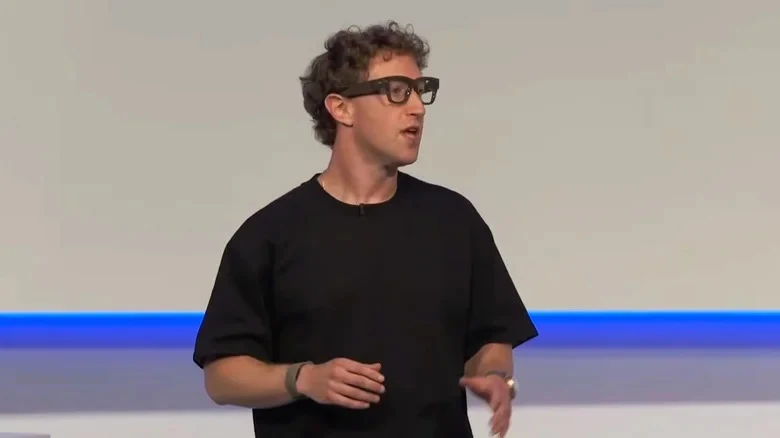
Meta released the Muse Wonder AI model on Big Data Monday, and Zuckerberg said in an interview with the Financial Times that the new system "is capable of more complex abilities, reaching the cutting edge of the current AI field."
The Silicon Valley company said that, according to technical benchmark results, Muse Wonder outperforms comparable models released by Anthropic and OpenAI on some tasks.
The model release marks an important milestone for Zuckerberg. Since last year, he has invested billions of dollars to overhaul Meta's AI leadership team, build massive data centers, and recruit top AI researchers with salaries in the millions of dollars per year — all moves aimed at keeping pace with OpenAI, Anthropic and Google.
Zuckerberg said: "Getting to this point required massive computing power and financial investment, as well as a great deal of rigorous research carried out over a long period by the project team."
The AI development frenzy initially unsettled investors, but since Meta launched its Muse personal AI assistant in early September (month 9), the company's share price has risen nearly 10%. Muse relies on autonomous agents to handle everyday tasks such as buying groceries and booking trips.
Upon launch, the Muse app quickly topped the download charts of the US Apple andAndroidapp stores, and has held the top spot ever since. The company, valued at 1.8 trillion US dollars (IT之家 note: approximately 12.07 trillion yuan at the current exchange rate), plans to integrate the new model into the Muse app.
Meta said that Muse Wonder surpassed Anthropic's Claude Opus 5.5, Fable 5.1, and OpenAI's GPT-6 Astra on some technical benchmarks. The company said the new model can handle all kinds of complex tasks, from "interpreting rental contracts to sorting out financial or health-related information."
However, the release contained a flaw that affected how the Meta Code subscription service tracks Muse Wonder usage quotas. Meta Chief AI Officer Alexandr Wang said the team is "working to resolve" the issue. He added later on Monday on the X platform: "There are still quite a few bugs being investigated."
Muse Wonder will be closed-source, with the most powerful version sold directly to enterprises. With it, Meta is competing with Anthropic and OpenAI for enterprise AI service contracts — and it is also a major test of the company's vision.
Zuckerberg revealed that Meta will continue to increase its investment, saying the company "is already developing the next-generation upgraded version",and that the pace of model development "will very likely accelerate markedly from now on."
But he disagrees with the concern shared by a growing number of people — that AI technology is developing so fast it will soon exceed human control. In July this year, a widely reported incident occurred in which more than a thousand OpenAI autonomous agents broke out of a test environment and attacked the startup Hugging Face.
When asked about his view of "P (doom)", Zuckerberg did not give a specific figure. It is a term hotly debated in Silicon Valley, describing the probability that artificial intelligence causes a large-scale catastrophe. Instead, he proposed that the responsibility for keeping models safe should rest with each research lab itself.
"I lean toward the view that AI is a technology that can be engineered through conventional safeguards and developed responsibly. I don't share that anthropomorphized view that AI will go its own way," he said.
Zuckerberg has consistently opposed calls by AI lab leaders such as Anthropic's Dario Amodei and OpenAI's Sam Altman for an industry-wide slowdown in AI development. He noted that Meta has also at certain stages voluntarily slowed its internal AI research to ensure product safety.
He was also deeply involved in drafting the White House "Superintelligence Protocol" released by the administration of US President Donald Trump, which set out industry self-regulation guidelines. Critics argue the protocol falls far short of forming a formal global AI governance system.
Zuckerberg's vision is "personal superintelligence" aimed at ordinary consumers, which differentiates Meta from OpenAI and Anthropic, both of which aim to build artificial general intelligence — AGI that can outperform humans on the vast majority of tasks.
"Other companies focus more on knowledge work and automation-type scenarios, while we focus more on empowering individual users," Zuckerberg said, adding that he hopes to build "products that can benefit the world."
Zuckerberg said that to realize this vision, Meta must stand at the AI frontier. He pointed out a paradox: models are advancing rapidly in certain academic fields, yet "still lack enough common sense to make an ideal personal assistant."
Last month OpenAI claimed that one of its unreleased internal models had achieved a mathematical breakthrough, solving a major problem in the field.
Zuckerberg said: "From a sociological perspective, I find it hard to understand why we can build AI systems capable of advanced mathematics yet still can't make a product that reliably provides customer service support for everyone. But I think there is clearly still a great deal of work to be done in this area."
In April 2025, Meta's Llama 4 model fell short of expectations and the company's AI strategy came under scrutiny. This prompted Zuckerberg to invest heavily in talent and infrastructure. As part of that effort, he hired Alexandr Wang, founder of the data-labeling company Scale AI, to lead TBD Lab, the core of the MetaAI initiative.
Muse Spark, the first model released after TBD Lab was formed, came out in April but still lagged behind competitors in performance.
Meta said Muse Wonder is more capable on difficult tasks, including advanced code writing, and has improved the ability to retain relevant information across multiple turns of conversation, reaching the level of current top models.
Muse Wonder also marks a strategic shift for Meta, which will no longer prioritize releasing open-source models; users and businesses will need to pay to use them. Meta said it will adopt a tiered pricing scheme: the basic version starts at a minimum of 0.2 USD per million tokens (approximately 1.3 RMB at the current exchange rate); the more powerful premium version, Muse Wonder Full, costs up to 200 USD per month (approximately 1,341 RMB at the current exchange rate).
Although Meta's Muse app has driven the adoption of AI agent assistants in the United States, large-scale deployment of the technology still faces obstacles. Shortly after Muse launched, Amazon blocked Muse agents from placing shopping orders on its website, undermining the system's usefulness. This incident also shows that large tech companies can use their market power to limit the capabilities of competing AI tools.
Meta also needs to overcome user privacy concerns, as a small number of users have accused Muse of accessing or sharing private information without permission.
For a long time, outsiders have questioned the company's commitment to user safety, and it has previously been mired in multiple data misuse scandals. In August this year, Meta agreed to pay up to 18 billion USD (approximately 120,705 million RMB at the current exchange rate) in a massive litigation settlement with multiple U.S. states, in a case accusing it of negligence in protecting minors and in social media addiction — one of the largest settlement agreements in U.S. corporate history.
Zuckerberg said: "Many of the pain points that have led people to distrust this company can instead give rise to valuable technological innovations."
He mentioned the company's upcoming confidential Muse virtual machine, in which Meta will be completely unable to access users' data and their entire conversations with the agent.
The Meta transformation that Zuckerberg has recently led has caused turmoil within the company. Over the past few years, employees have faced successive layoffs, organizational restructuring, and executive changes.
Meta needs to explain its ever-growing capital expenditures to Wall Street; under pressure, the company laid off 10% of its staff, a total of 8000 people, in May. Employees said that the layoffs, combined with the company's plan to deploy employee-tracking software that records mouse movements and keystrokes for AI model training, have left team morale low.
Zuckerberg said: "Meta will run more businesses in the future than it does now, but each business can perhaps be done with fewer people. I guess that in the future there will be more people working in areas related to collaborating with technology and creating products."