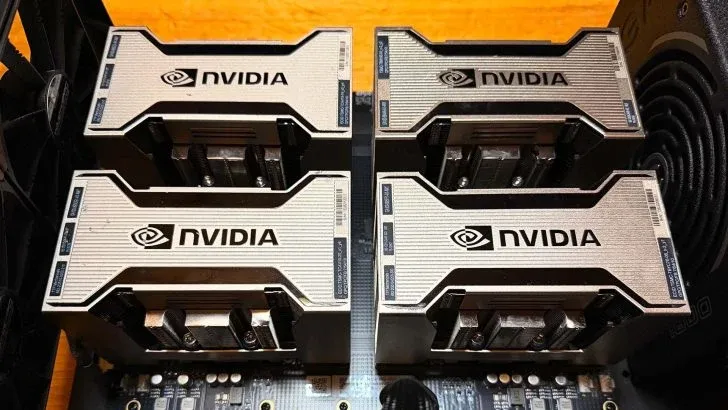
IT Home October 13 news: The YouTube channel Jun Yamog yesterday (October 12) released a video testing 4 Tesla V100 cards mounted on an NVLink carrier board. In the Qwen3.8-Flash-Next benchmark,long-prompt processing was 230% faster than the M5 Ultra and 40% faster than 2 DGX Spark units.
According to IT Home's check of public information, the Tesla V100 is a data center GPU launched by Nvidia in 2017, based on the Volta architecture, commonly used for AI training and inference. Its 32GB version comes with HBM2 memory, and its 900GB/s memory bandwidth can support fast reading of large model parameters and data.
NVLink is Nvidia's high-speed GPU interconnect technology, used to transfer data directly between multiple GPUs. Compared with communication over PCIe, NVLink can reduce interconnect bottlenecks and is commonly used in multi-GPU servers and AI computing clusters.
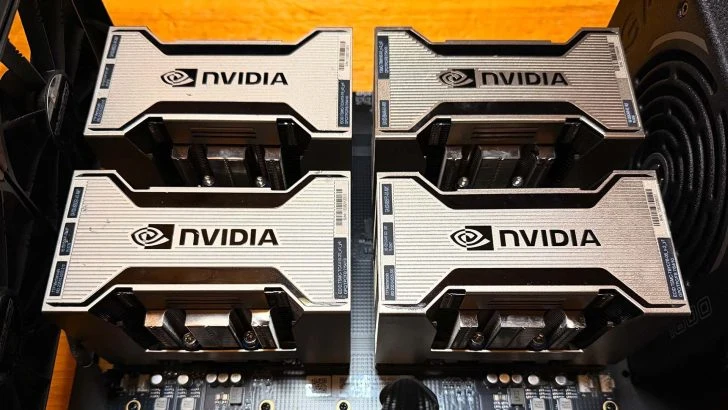
This NVLink carrier board provides 300GB/s bandwidth and is equipped with 6 NVLink 2.0 connections. To accommodate 4 individual GPUs, the tester modified NVIDIA A100 coolers so they could dissipate about 300W of heat per V100, and connected the board via a PCIe x8 interface.
The streamer tested with a 4-bit quantized Qwen3.8-Flash-Next model, comparing against 2 DGX Spark units with 128GB LPDDR5X unified memory and a Mac Studio device equipped with the M5 Ultra chip.
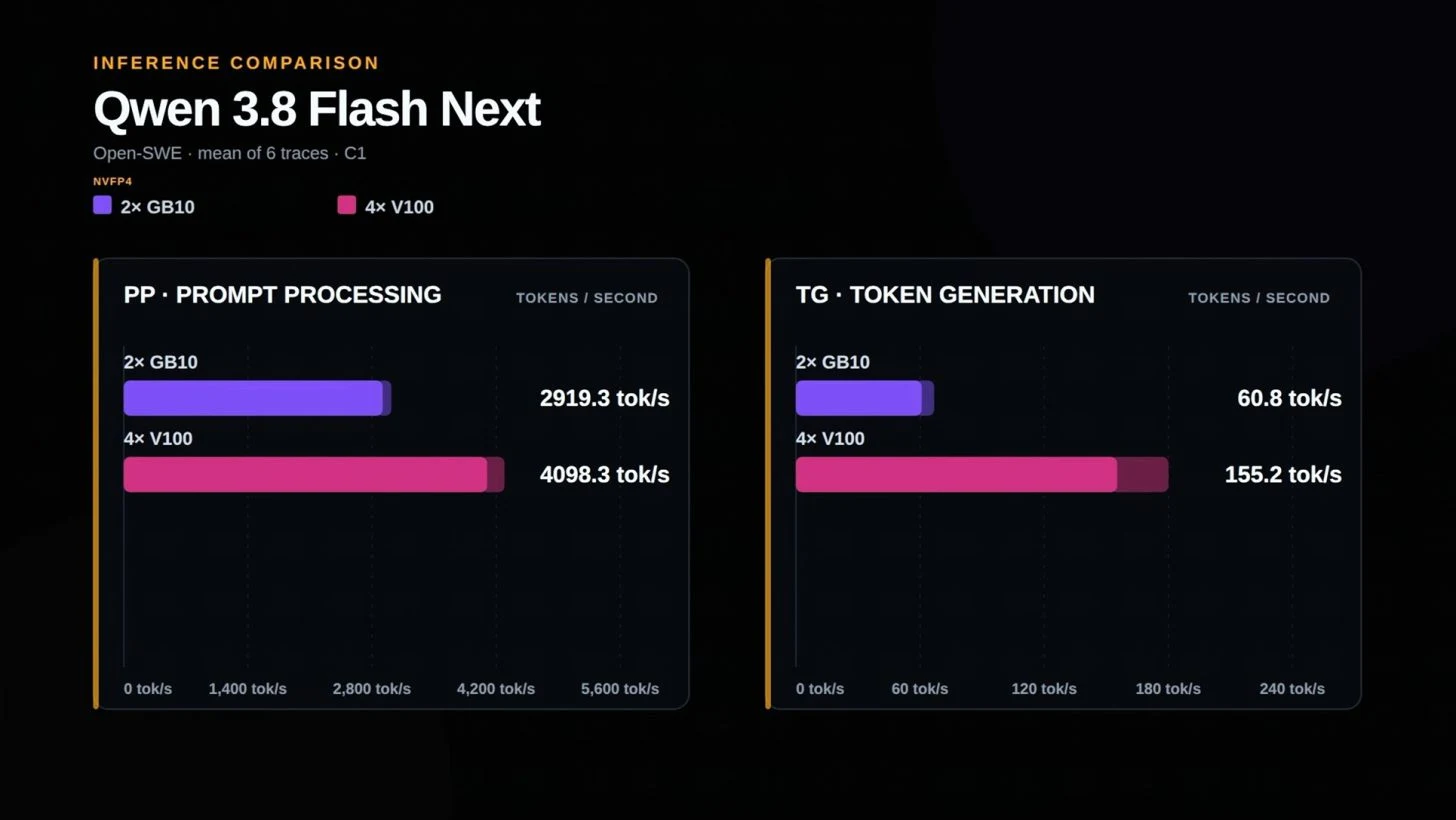
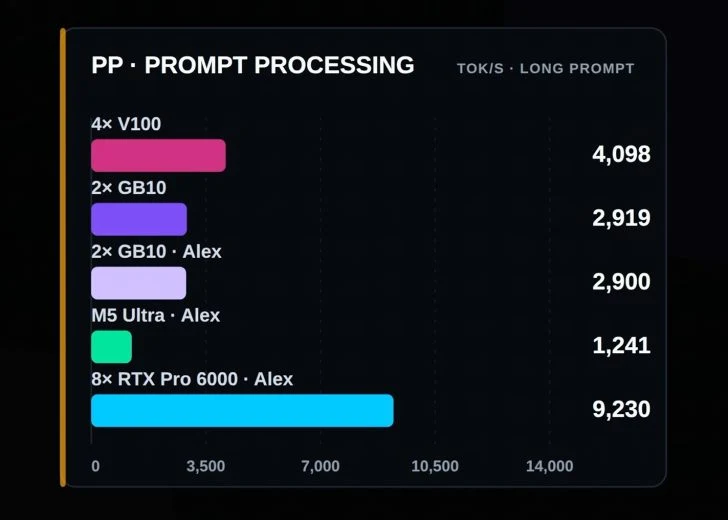
In the long-prompt processing test, the 4 V100s were 40% faster than the DGX Spark cluster and 230% faster than the M5 Ultra. The tester noted that the huge gap with Apple Silicon may be partly due to insufficient software optimization.
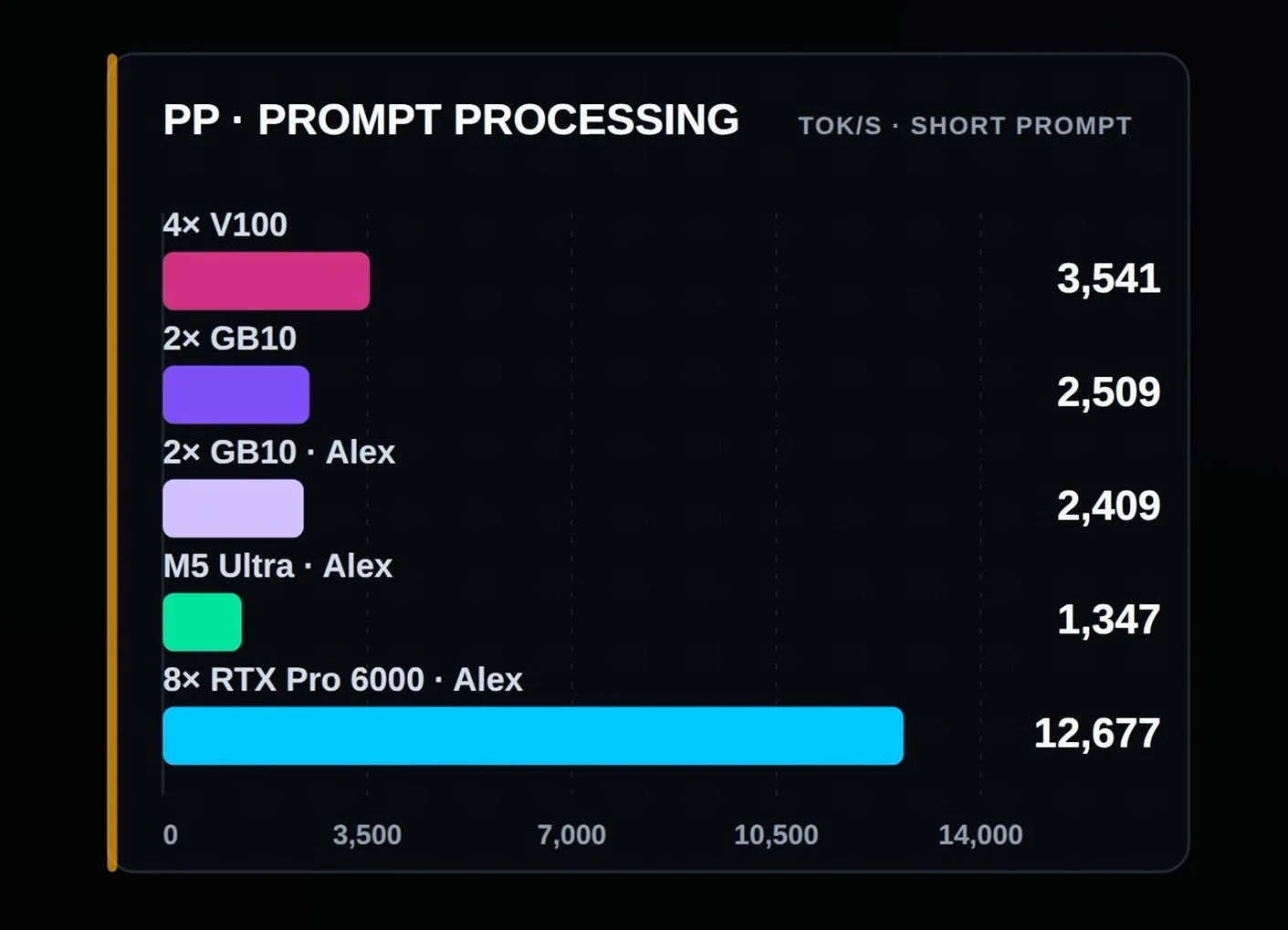
In the short-prompt processing test, the V100 cluster maintained a 40% speed advantage over the DGX Spark and was 163% faster than the M5 Ultra. The results show that older data center GPUs still have high throughput in certain inference workloads.
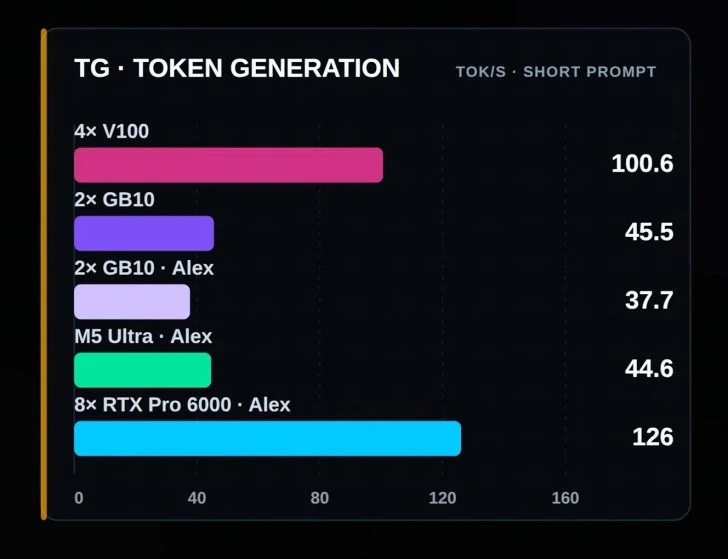
In the short-prompt token generation test, the 4 V100s reached 100.6 tok/s, 121% faster than 2 DGX Sparks; the M5 Ultra scored 44.5 tok/s.