
Jessica from ROBO-car
Quantum Bit ROBO | Public Account AI4ROBO
If I were Lynk & Co, I'd wake up laughing from my dreams...
During that week when car safety became a focus of public opinion, Lingke unexpectedly faced a major safety test, and its performance almost earned a full score.
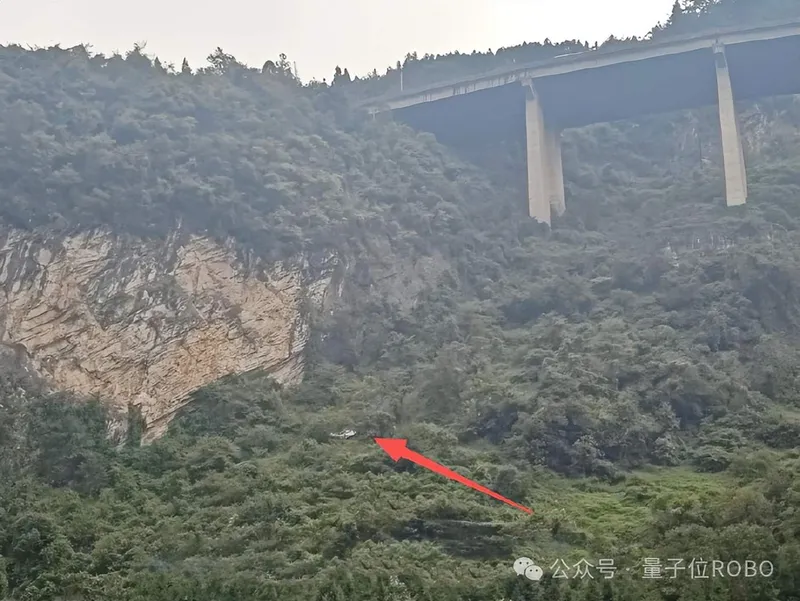
A Lingke 10 EM-P that had just been received 8 days ago, lost control in a mountainous area of Sichuan and rushed off the road. It rolled continuously, hit several times, and finally fell nearly a hundred meters down a cliff, becoming completely destroyed.
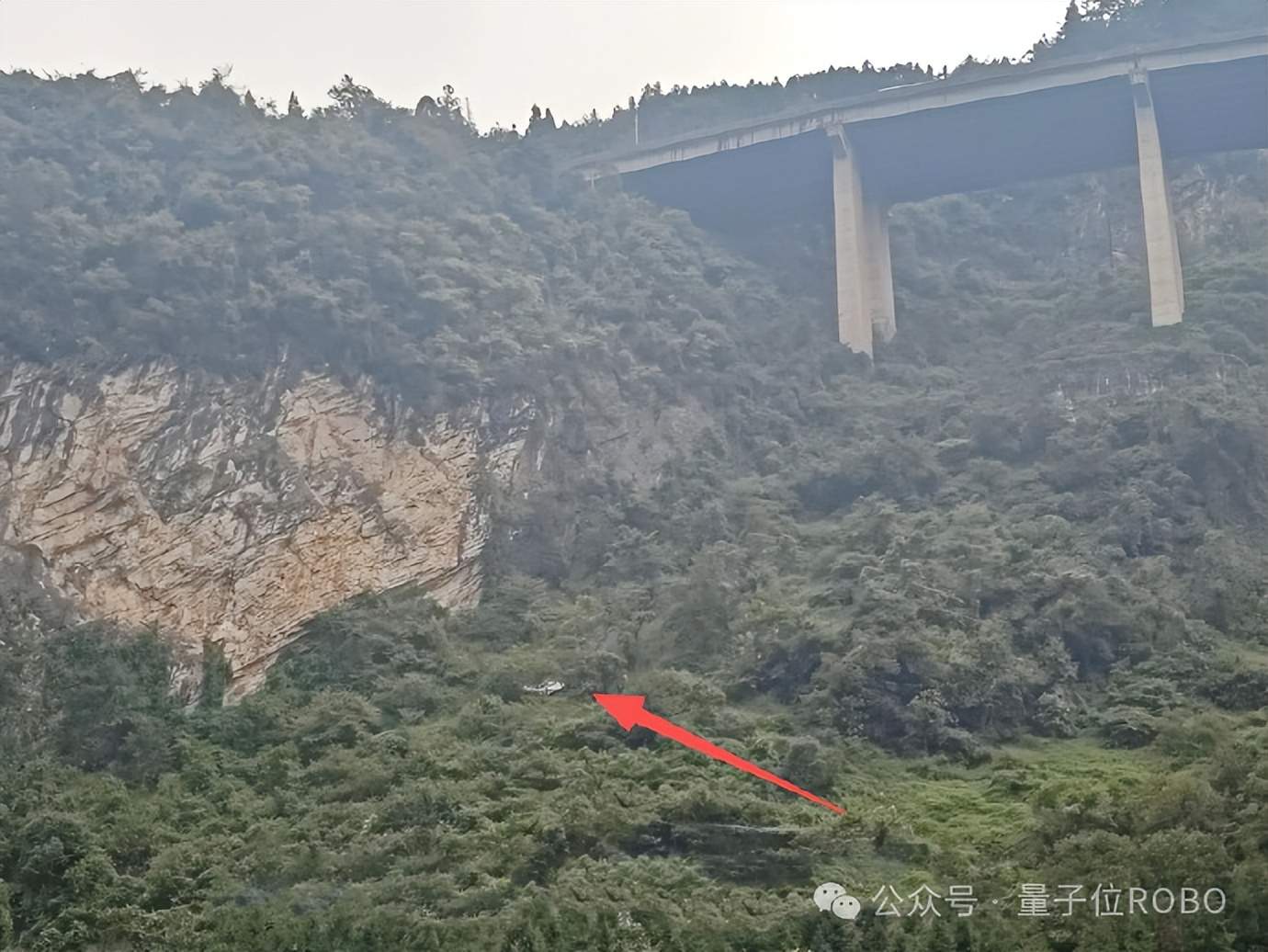
What about the car owner? The corner is slightly dirty; there are only minor scratches and a slight fracture in the thoracic spine. The car owner said he plans to buy another same-model vehicle after leaving the hospital.
The accident that almost led to serious consequences allowed Leapmotor to unexpectedly stay safe.
And in the current era of frenzied smart driving competition, Lync isn’t among the most prominent players. What has attracted widespread attention this time is one of the most fundamental and important capabilities of a car—Collision Safety。
Lingke rolls off a cliff, the driver suffers only minor injuries
The accident occurred in the early morning of October 9th at a mountain road in Luozhou, Sichuan.
According to a media interview, Mr. Liu, the car owner, drove alone that day to apply a film to the just 8 days old Lingke 10 EM-P new car. The speed was approximately 50 km/h at the time of the incident, and it was still dark outside.
Due to the impact of high beam lights on visibility for vehicles, and because he was unfamiliar with the road conditions, he mistook a stone along the roadside for normal road surface, and the vehicle lost control after hitting the stone.
The next scene is enough to scare anyone just by looking at the car video recorder.
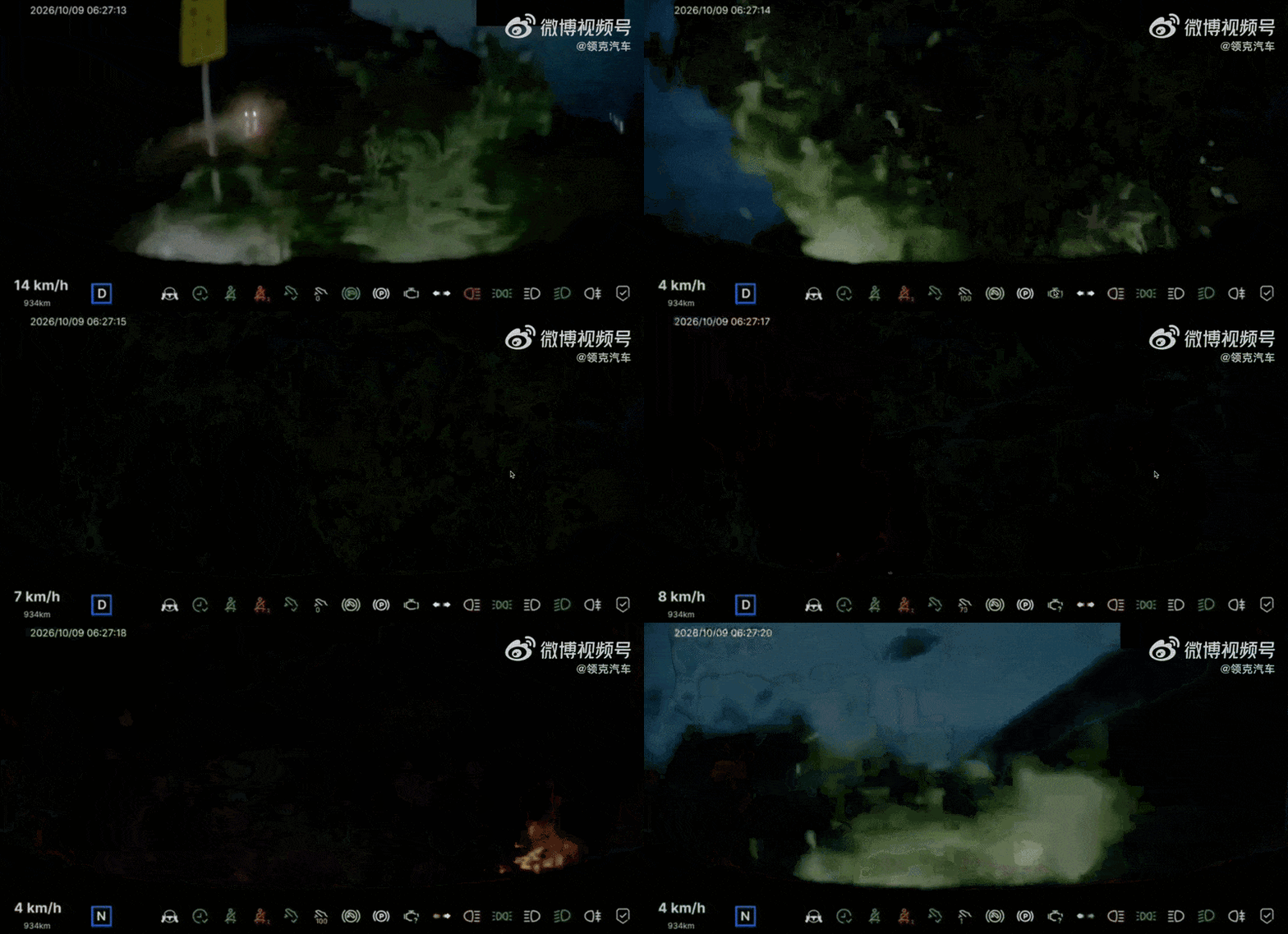
The vehicle rushed off the road, rising into the air, hitting things, and rolling, eventually falling to the bottom of a cliff with a nearly 100-meter drop.
Fortunately, the grass and shrubs on the slope provided some cushioning, so the vehicle did not fall vertically. However, after such a rough experience, the new car was severely damaged, and the owner confirmed that the vehicle is now beyond repair.
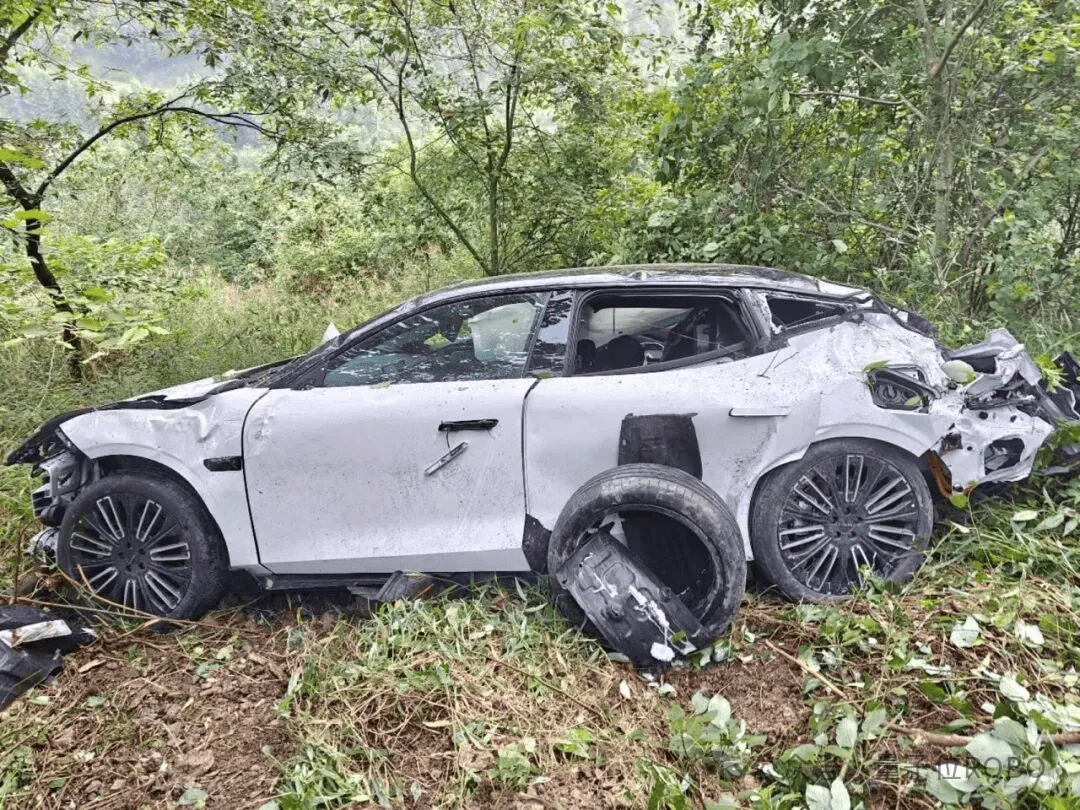
A miraculous result appeared inside the car.
On October 13th, Lingke officially released an accident report, revealing the condition of the vehicle after falling off the cliff: The occupant compartment structure is intact, A/B/C columns show no deformation, and the doors can open normally.
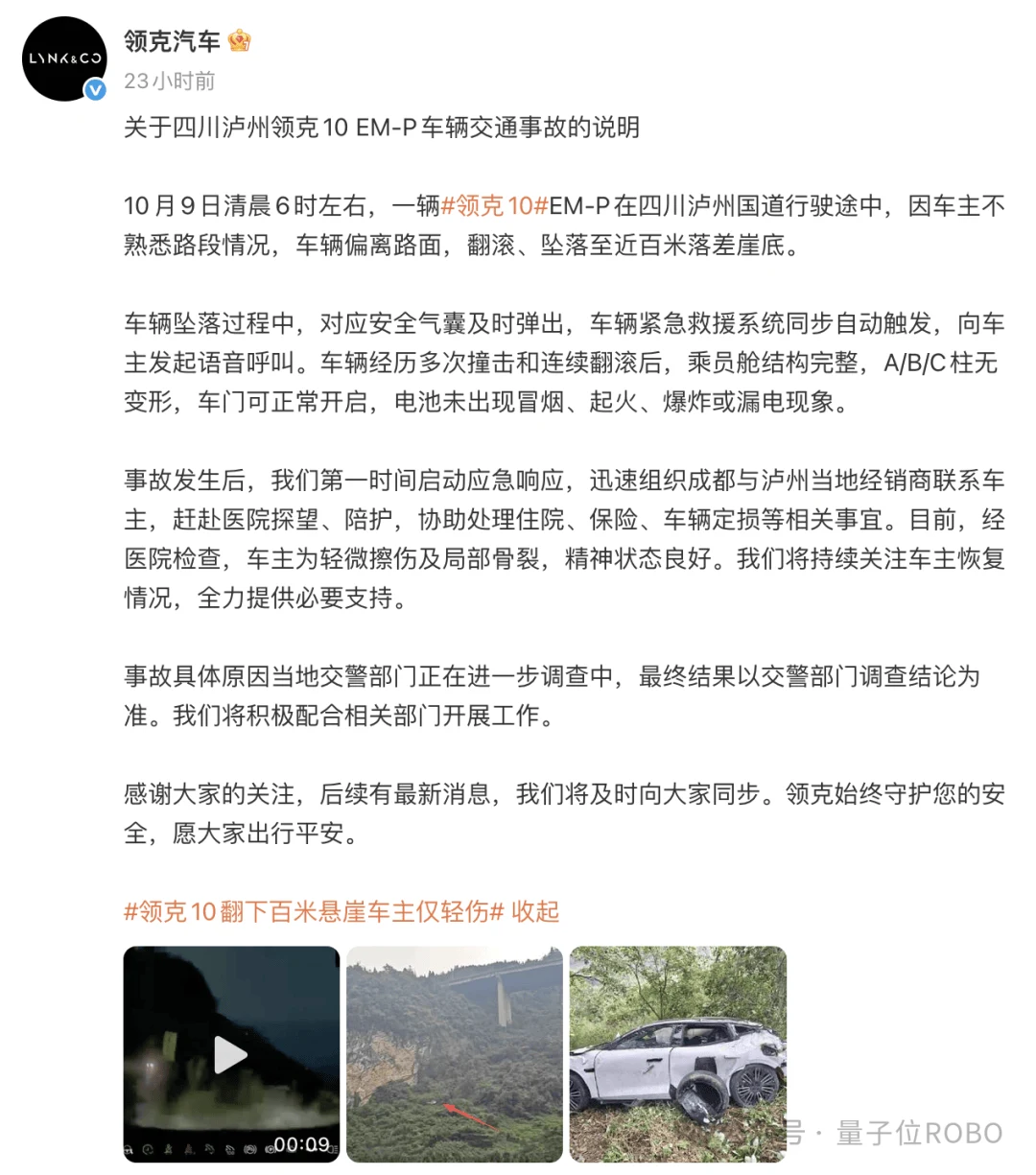
During the rollover process, the corresponding airbag popped up promptly, and the power battery did not smoke, catch fire, explode, or leak electricity.
The vehicle emergency rescue system automatically activates, sending a voice call to the driver directly. Then, staff contact the driver, assist in reporting the incident, and rush to the hospital to provide support.
That is to say, from the vehicle structure and airbag protection, to battery safety and accident rescue, as well as several functions closely related to personnel safety, all played a role in this accident.
In the end, the car owner only had scrapes and a minor fracture in the thoracic spine, and was in good mental condition. After this accident, Mr. Liu, the car owner, became even more determined about his car purchase decision and said that he plans to continue buying the same model.
Such a serious accident ultimately led to a relatively lucky outcome, and Leapmotor also gained unexpected public attention.
Before that, when intelligence was the core highlight and selling point, Lingke once became at a competitive disadvantage due to several weaknesses in its intelligence features.
Intelligentization strives to keep up, but safety has already left the circle
In fact, Lingke’s pursuit of intelligence is no different from its focus on safety.
In recent years, what Lynk has been working hard on, and which is more clearly perceived by the outside world, is actually intelligence-based technology.
Regarding design, performance, and overall vehicle quality, Leapmotor has already established its own reputation in the market. However, in the new round of technological competition in areas such as smart cockpits and assisted driving, its performance has not received as much praise.
On this point, Legank also admitted it.
In September last year, Lin Jie, senior vice president of Geely Automobile Group and general manager of Lyncar Automobile Sales Company, said in an interview that Lyncar was once ahead in the fuel vehicle era. However, after entering the new energy era, especially with the entry of new car manufacturers into the competition, intelligence features gradually became a matter of following others, and they were unable to maintain their lead.
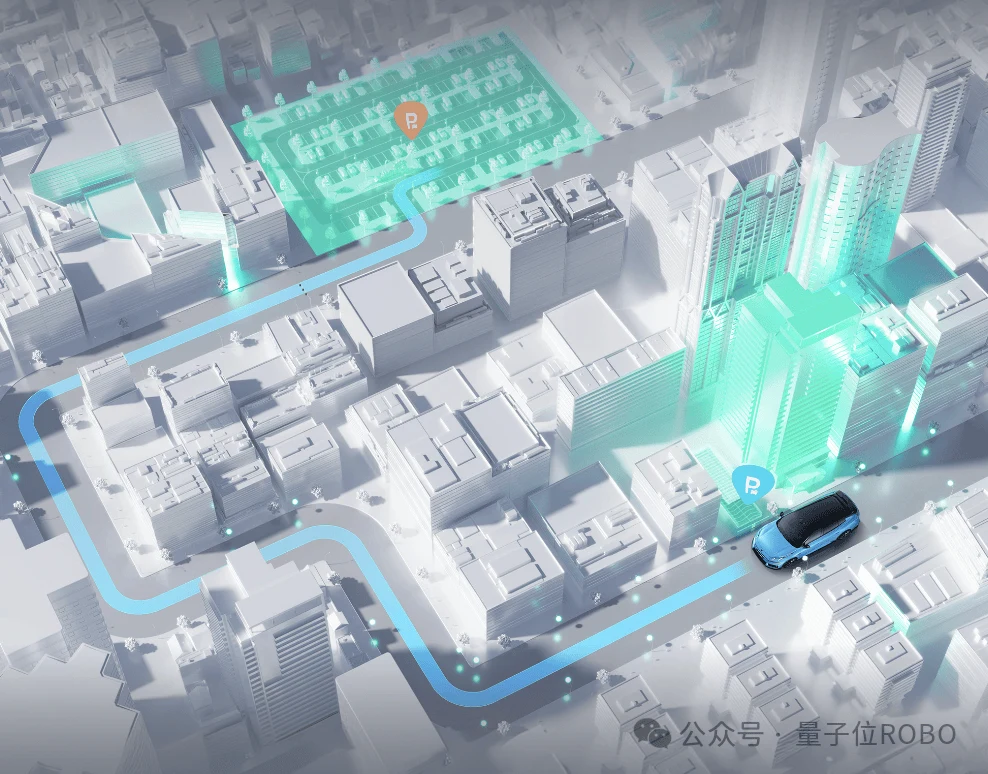
Looking back, Leapmotor actually started at a high level.
In 2016, Lingke was jointly created by Geely and Volvo, entering the market based on the CMA architecture developed jointly by both companies. Lingke 01 gained recognition through its design and quality, while Lingke 03 established itself as a brand known for sports performance. It became a representative example of Chinese brands making significant progress.
It can enter the era of smart electric vehicles, but Leapcar’s original global R&D system has instead caused some problems for technological upgrades.
Lin Jie revealed that the early Lexus electronic architecture was developed in Europe and used a Linux vehicle system, with significant technical investment. However, after entering the Chinese market, it gradually lost its competitiveness due to the rapid evolution of domestic automakers in voice interaction and vehicle system ecosystems.
Lingke later had to adjust its R&D system, and even provided hardware upgrades for early car owners.
In terms of intelligent assisted driving, Lync is also under similar competitive pressure. Around 2024, Lync will gradually offer high-speed NOA on its main models, while players like Huawei, Xpeng, and Li Auto have pushed the competition toward urban NOA and end-to-end large models.
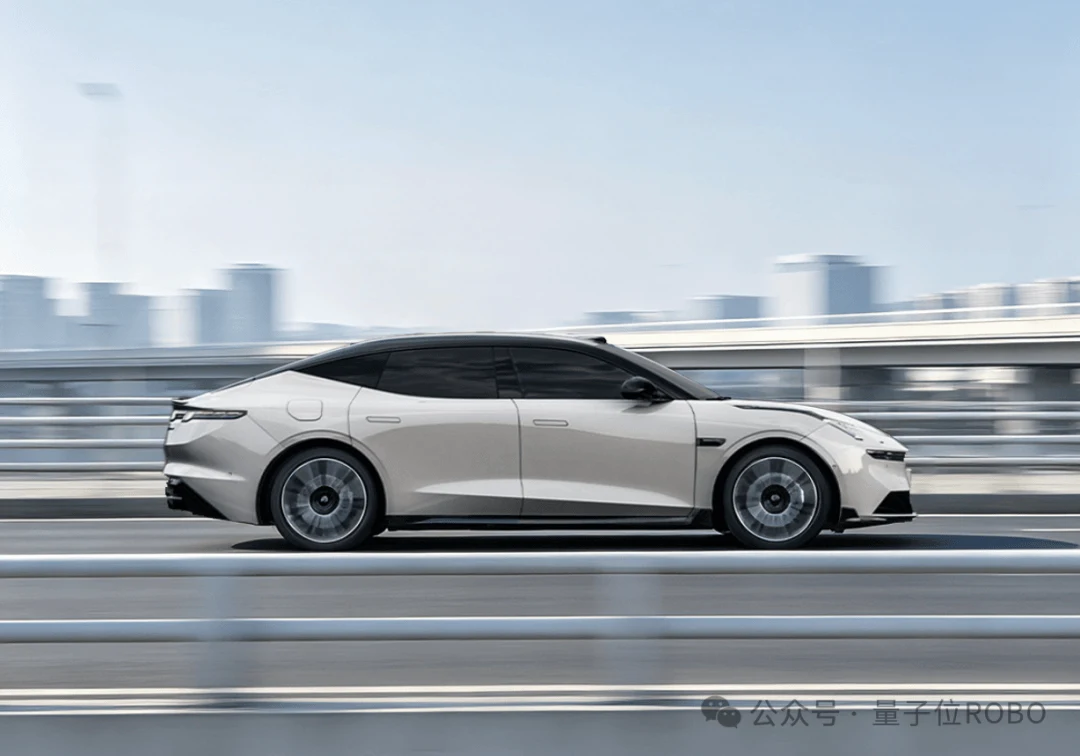
The hard skills in car manufacturing that Landmark is originally good at still exist, but its intelligence features have fallen behind due to a new round of competition. To catch up with the leading level, Landmark needs technology, capital, and R&D resources—and ultimately, it relies on Geely behind the scenes.
In 2024, Geely launched the “Taizhou Declaration” to promote the integration of its brand resources. In February 2025, Zeebo and Lynk & Co completed the equity transfer, and Zeebo Technology Group was officially established.
Jikai has previously invested heavily in fields such as smart driving and three-electric technology, but its technological achievements were mainly used for its own vehicle models. After the integration, the two brands began to share research and development results, and the scale of technology sharing and application also expanded.
Lin Jie once revealed a very interesting detail: the original plan was to give priority to installing the Qingqi model cars such as the Qianli Haohan H7 and NVIDIA Thor chip, and after integration, they were first installed in the Lingke 900.
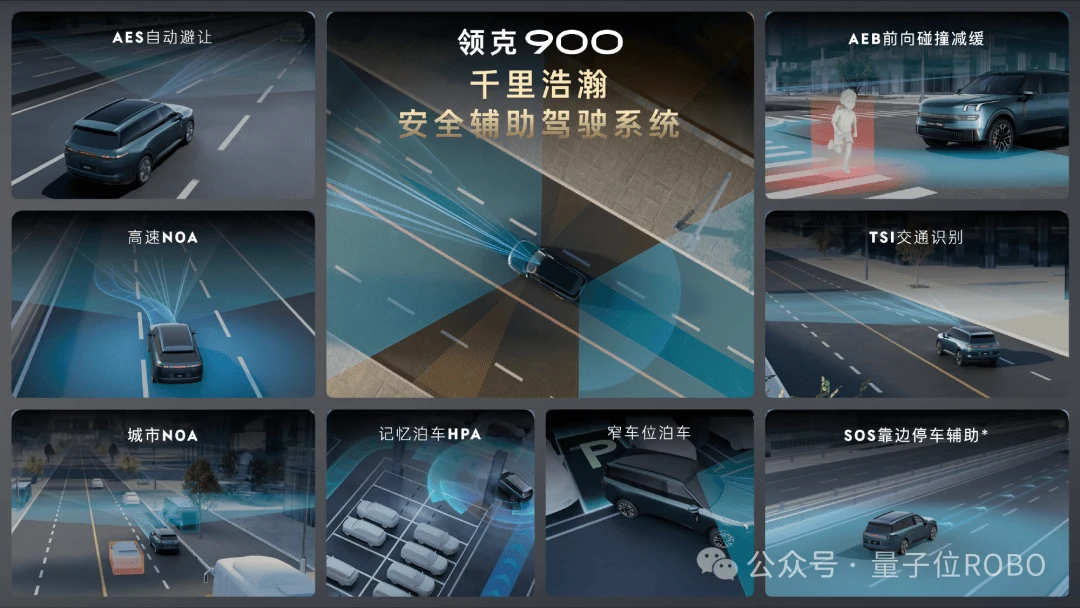
This means that Lingke can finally make full use of the technical resources of Geely Group, and its intelligent upgrade process also accelerates.
Specifically regarding the product, the Lynk & Co 900 launched in April 2025 is equipped with Qingli Haohan H5 and H7 solutions, and features a 700 TOPS computing power NVIDIA Thor chip as its highest configuration.
In September of the same year, Lynk 10 EM-P was launched. The entire range is equipped with laser radar as a standard feature, offering two driving assistance systems: H5 and H7. It supports functions such as urban NOA, and the intelligent cockpit has been upgraded to LYNK Flyme Auto 2.
Immediately afterwards, the new Lynk & Co 07, 08 EM-P, and pure-electric Lynk & Co 10, 10+ were also launched. This intelligent technology system has now been extended to more models.
From early criticism over the vehicle interface experience to the gradual adoption of lidar, high-performance chips, and urban NOA in main models ranging from over a hundred thousand to several hundred thousand yuan, Link’s progress in intelligence is indeed noticeable.
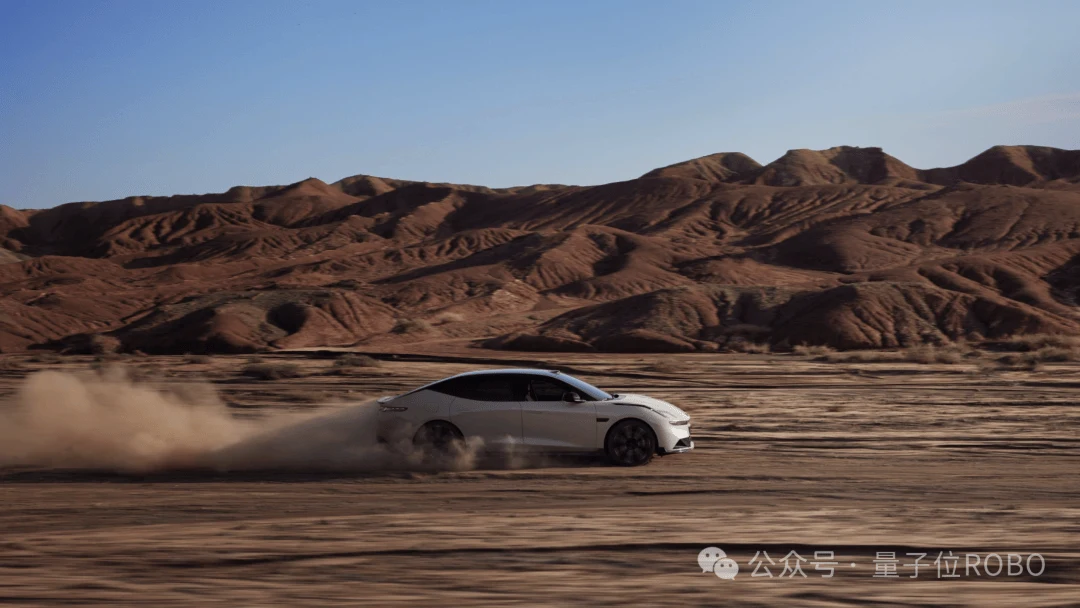
Lingke’s previously relatively weak intelligence technology has started to recover with the support of the Geely Group as a whole.
However, what is really interesting is that while Lynk & Co is striving to catch up in this “soft skill” of intelligence, what has recently helped it gain attention is the “hard skills” it has already accumulated.Car Safety。
The CMA architecture that Lynk & Co initially adopted was developed jointly by Geely and Volvo. The body structure and collision safety are important design priorities.
The Lingke 10 EM-P involved in this incident uses the upgraded CMA Evo architecture. Over 80.5% of the components are high-strength steel and aluminum materials. The A-pillar is made of ultra-high-strength steel with a strength of 2000 MPa. The power battery is also equipped with protective structures such as a ten-plate anti-collision beam.
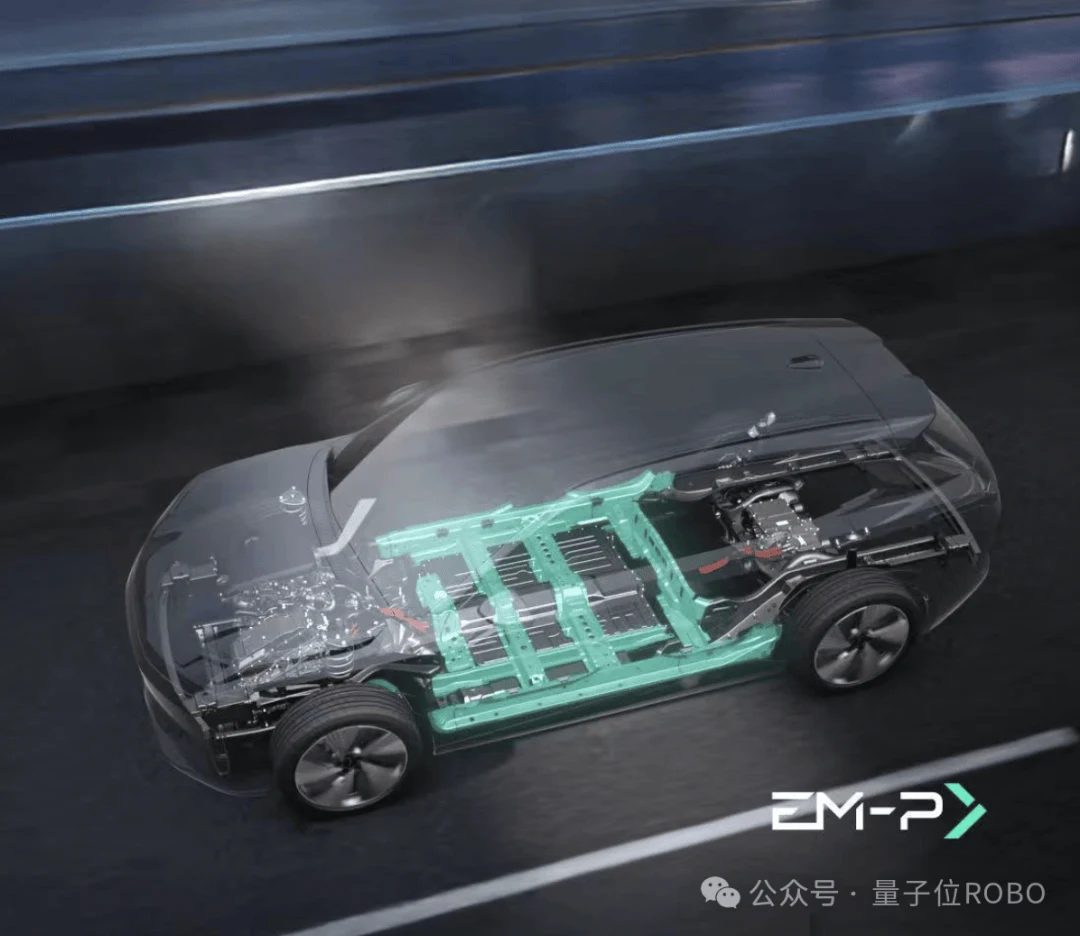
The safety technology that Lenovo has accumulated over the years has finally been shown in a clear and intuitive way during an accident.
In the end, no matter how smart configurations are layered, the overall vehicle engineering capabilities and long-term technical accumulation will still influence consumers' evaluations of a car.
Today, the intelligence level of cars has seen an increasing number of quantifiable indicators. Chip computing power, distance for assisted driving takeovers, and the coverage range of urban NOA systems – automakers are all competing to set new records.
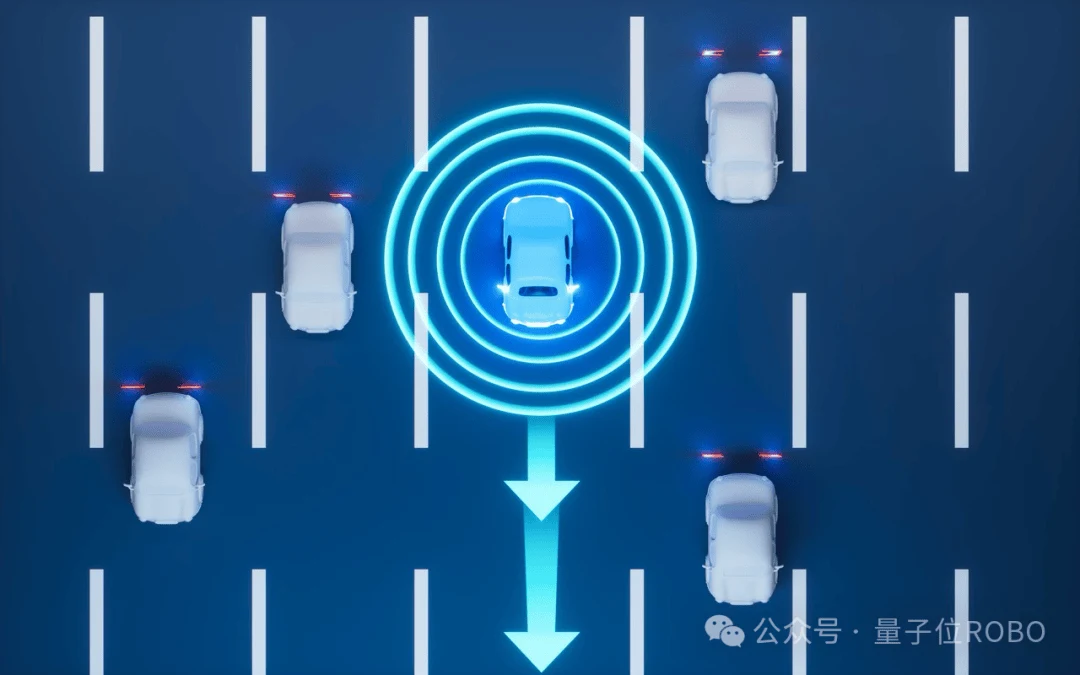
And after intelligent racing enters a new stage, car competition is returning to the cars themselves.
A car is first a car, and only then does it need better intelligent capabilities.