
By Jay, from QbitAI
QbitAI | WeChat Official Account QbitAI
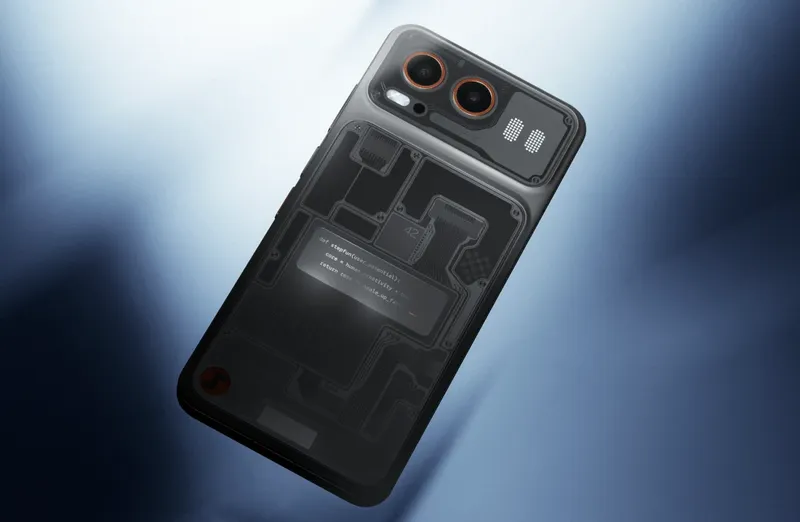
The long-awaited STEPX Neo, the natively agentic phone from StepFun Terminal powered by a large model, has finally made its official debut.
After getting the sample unit half a month ago, I treated it almost as my primary "toy" throughout the National Day holiday and had an absolute blast with it.
The first time I saw it, I froze for two seconds.
This is basically a physical-world Agent!
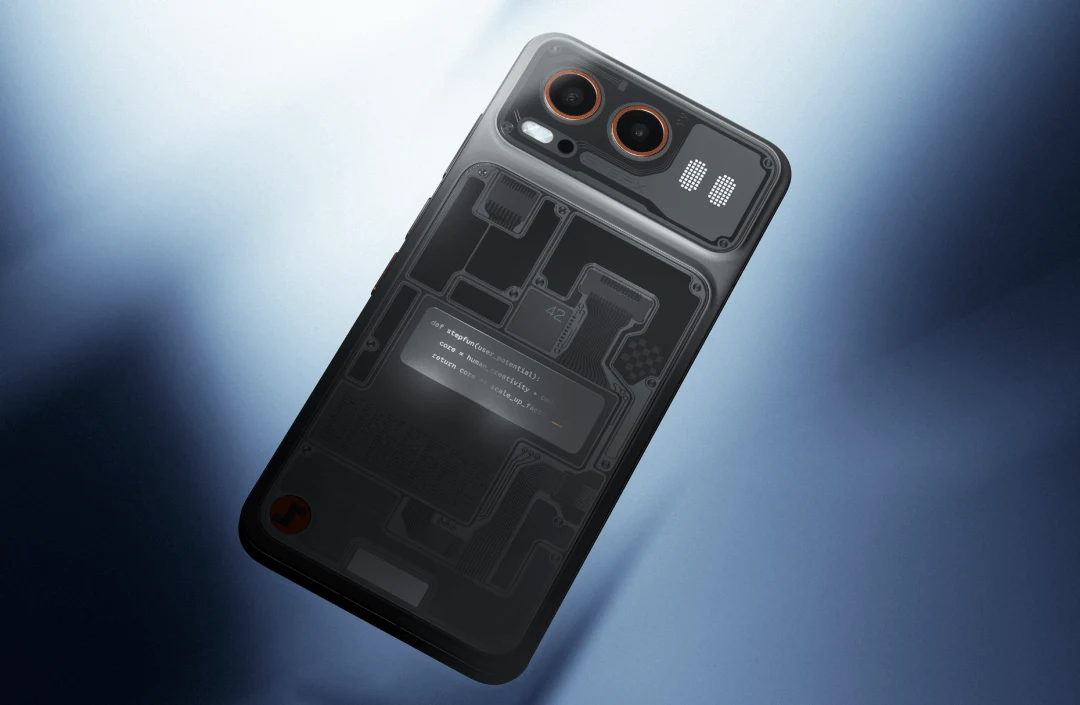
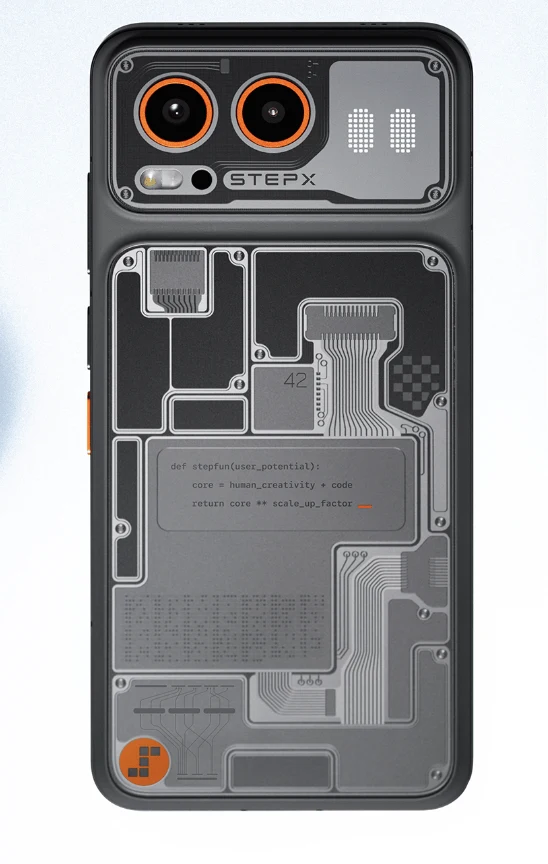
The whole device takes "retro-futuristic aesthetics" as its core design language: the back panel has a frosted glass texture, blending early computers, cyber circuits, symbols of AI civilization, and contemporary consumer electronics craftsmanship all together.
Large areas of film textures represent the reasoning, computing, and memory systems, naturally connected through circuit patterns and transparent layers. Components like the chip and battery, usually sealed tightly under the back cover, are fully displayed before your eyes.
The five easter eggs on the back — the "42", the "user_potential" code, the Turing test binary, the Deep Blue checkerboard, and the Transformer architecture — string together the history of AI exploration, from science fiction imagination to breakthroughs in machine intelligence to the development of large models.
To quote my friend's exact words:
Extremely elaborate, extremely geeky.

But what got me the most was that small screen on the upper right of the back.
This is the status area of the built-in personal agent Step Amoo (I like to call it A-Jai).
From time to time a little eye pops out, various status icons flash by when tasks are running in the background, and custom text is supported — there are more easter eggs than you can count.
It's maxed out on social appeal — now everyone will know I got a new phone!
Of course, for an agent phone, a dedicated AI key on the side is a must, and its color is equally eye-catching.
A light press brings up the input box, a long press starts a voice conversation — no more rummaging through a sea of apps on the home screen.
The exterior is geeky enough, but whether a phone can truly be called a natively agentic phone depends on whether the system has the real goods inside.
So, power on!!
A-Jai, on standby at all times
Voice assistants in phones used to be basically one-way search engines: you ask a question, it gives an answer.
Step AOS, the agent-native operating system shipped on the STEPX Neo Pioneer Edition, completely changes that logic.
At the system level it supports Loop execution, autonomous Tool Call, and can invoke all kinds of Skills and MCP tools — the capability comes very close to using Codex or Claude Code on a computer.
But in everyday experience, it's as simple to use as personal assistants like Muse; it's optimized specifically for the consumer side, A-Jai has a strong personified character, and it actively uses system capabilities to interact with users.
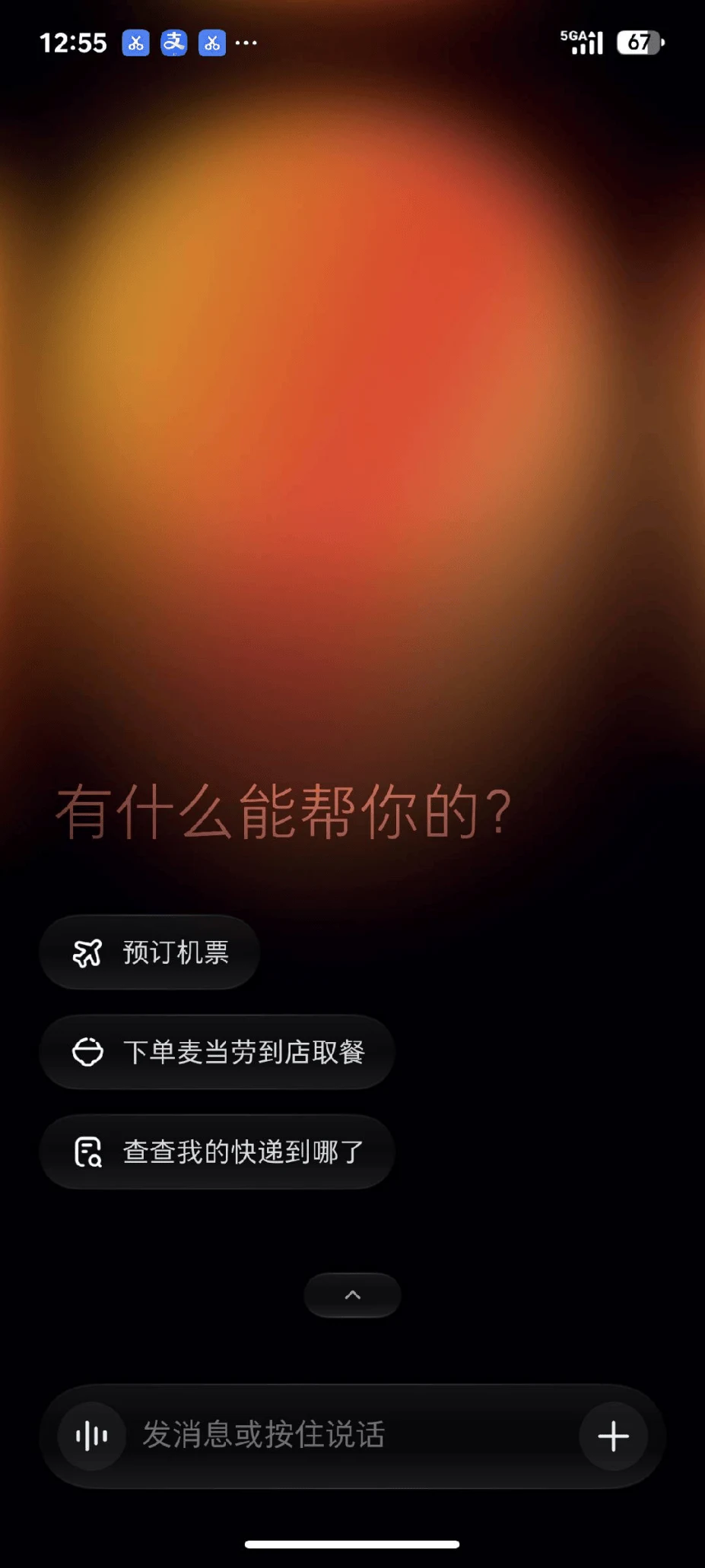
STEPX Neo has dual entry points: swipe right to enter Amoo's dedicated system-level space, swipe left to return to the familiar phone home screen. The fun part is at the bottom of the screen.

iOS tends to make the bottom a search pill or Dock bar, but in Step AOS, a tiny collapsible panel stays resident at the bottom.
Tap it open, and you get a system-levelAgent task navigation barwhere you can see all the long-chain tasks A-Jai is currently pushing forward in the background, as well as previous task history.
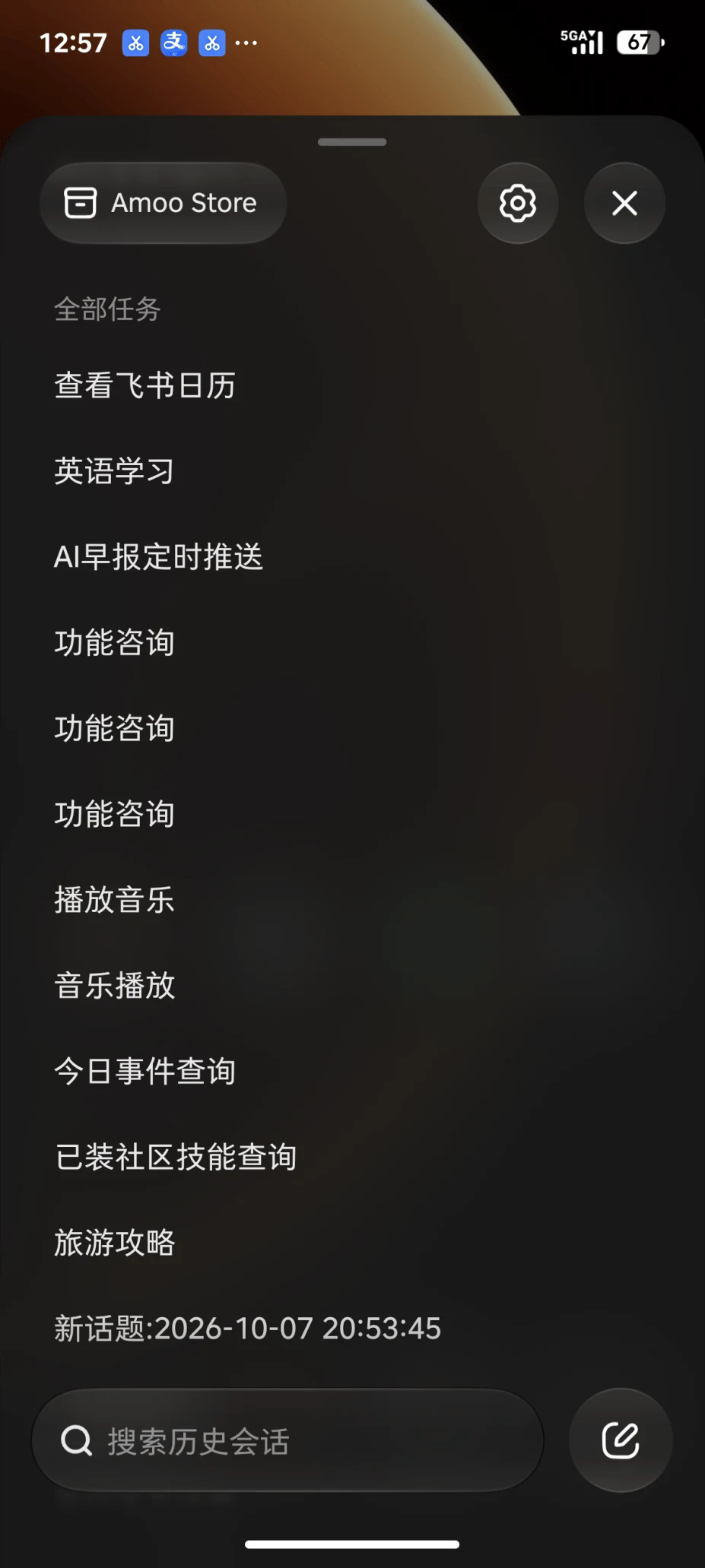
When will A仔 proactively reach out to you?
When it hits a step that needs confirmation, it pops up a window to ask; when a task finishes running, it organizes the results and proactively pushes them in front of you.
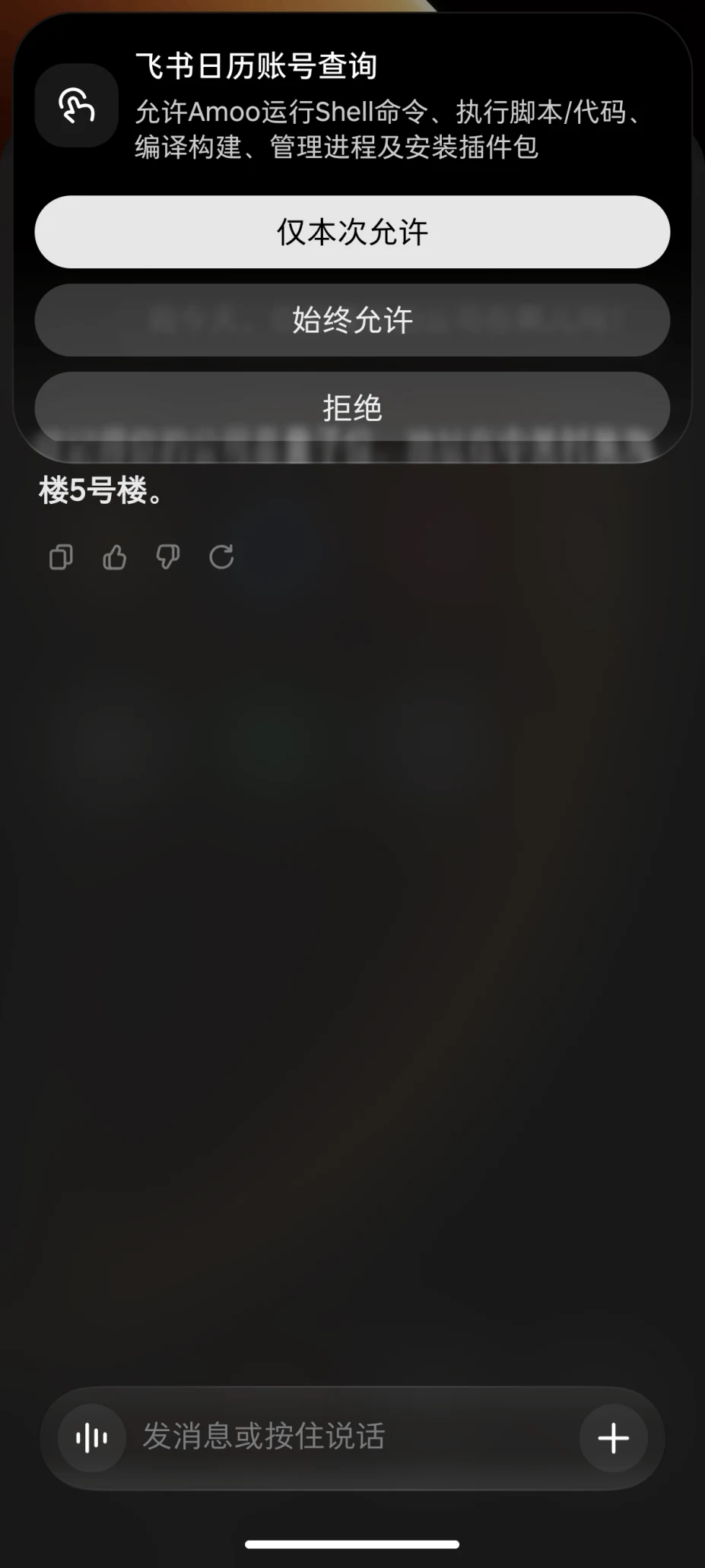
Of course, the coolest part is the rear screen, where you can directly see A仔's working status.
Thinking, Tool Call, output... fields that used to exist only on UI pages have now appeared in the physical world.
So tempting, so tempting—I just have to get my hands on it and play with it.
But then again, I usually do Vibe Coding on the computer, building office-productivity features, so when suddenly switching to the phone scenario, I honestly didn't know what to do.
I was still racking my brain when I turned my head and saw,Huh, how come there are ready-made ones here??
Yes, A-Zai comes with a skills hub containing all kinds of polished Skills that you can install and play with directly.
For example, Skills like resume analysis and data analysis.
But honestly, I've always felt that the phone, as a terminal, isn't really suited for office-productivity tasks—its highest value lies in everyday-life scenarios.
So after wandering around for a bit, I picked one called the "All-Purpose English Assistant" and installed it.
A-Zai instantly upgraded into a dedicated English teacher—looking up words and breaking down long, complex sentences are just the basics, but the most useful thing is—
It can create study plans based on the Ebbinghaus forgetting curve.
I nearly teared up, thrown back to those days of furiously grinding through vocabulary books for the graduate entrance exam—now I finally get the good stuff too.
But then again, honestly, memorizing vocabulary through a chat box is still pretty weird—Who's going to open a chat box and invoke a Skill all day long...
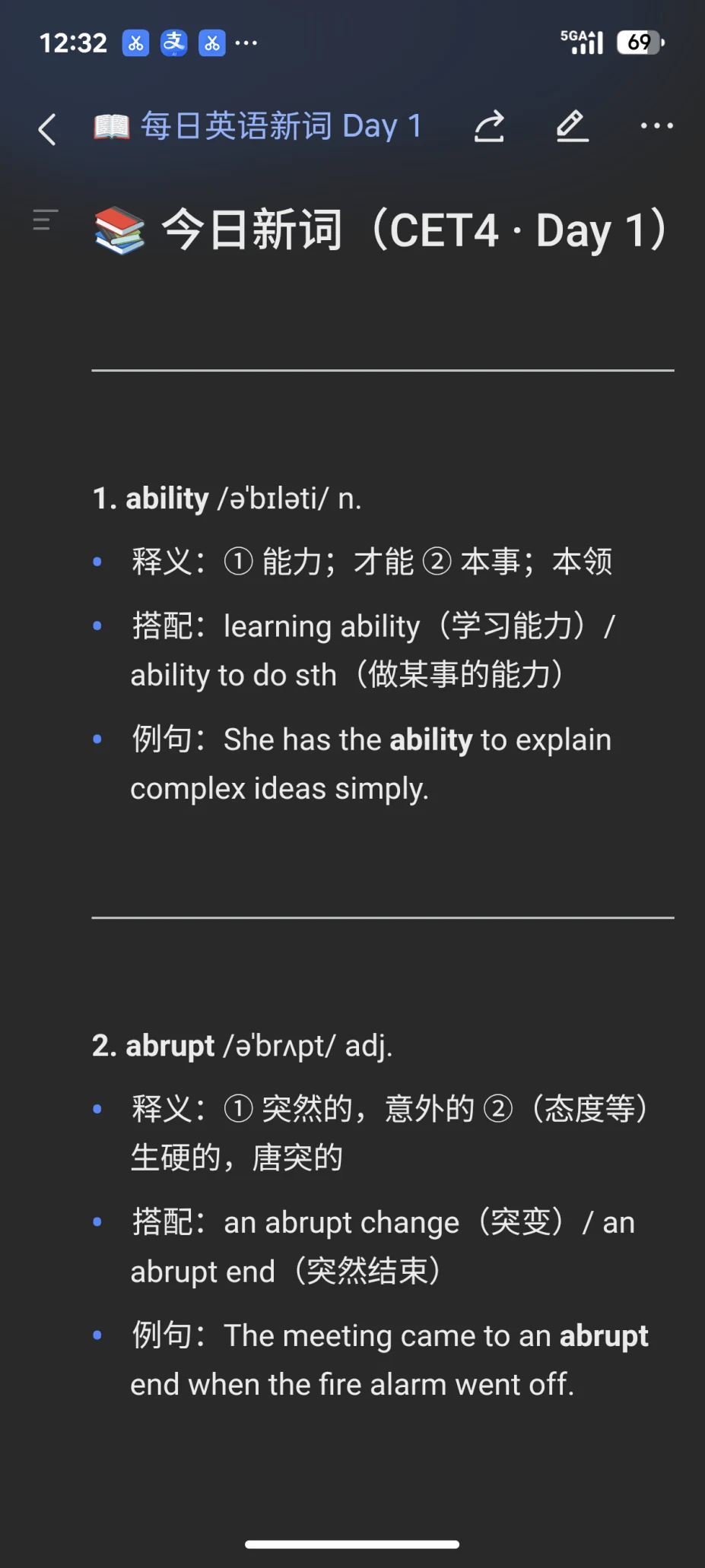
So I installed the Feishu CLI and gave A-Zai a direct instruction: generate a scheduled task for the new words to learn each day, automatically sync it to my Feishu calendar, and write the details of the new words in as notes.
After all that, the system, tools, and third-party interfaces were all connected, and it was all done through background Tool Calls and scripts—no simulated clicking, and extremely fast.
It fits perfectly into my existing SOP; from now on, when I check my daily to-dos in the morning, I'll memorize my vocabulary along the way.
Oh right, besides Skills, you can also install Agents directly from the community.
Compared to standalone Skills, they're packaged a bit better; the package includes files like SOUL and AGENTS, can run autonomously, and can even combine and invoke SKILLs.
My favorite is this guy,the "DJ Disc-Spinning Agent"。
It's so absurd—once installed, the phone instantly becomes a pocket DJ booth. Whip it out at any dinner gathering and you're guaranteed to become the center of attention (jk).
The Maker's Building Blocks for AI Creators
Why are Agents so powerful on computers, but on traditional phones they still seem unable to do anything?
The core lies in a different first principle: the underlying layer of phone OSes is built around "humans tapping graphical interfaces."
For an Agent to get things done across apps, it relies entirely on clumsy visual recognition and simulated clicks on the GUI. Once a page undergoes even a slight redesign, or a permission popup blocks the way, the entire task chain breaks instantly.
STEPX Neo takes a different path,A-Zai is a native resident of the Step AOS。
The model, the operating system, and hardware sensing collaborate at a low level, so the Agent can directly invoke system capabilities instead of floating blindly on top of the screen.
Of course, having low-level channels alone is definitely not enough.
Consumer-side everyday needs are extremely long-tailed. No matter how strong an Agent is, it can't possibly cover scenarios like booking tickets, hailing rides, payments, and video editing out of thin air—without ecosystem support, you can't get the Tools.
What kind of intelligent agent is that? It's not intelligent at all.
But STEPX Neo seems a bit different.
When you open your phone, you'll find that the ecosystems of various commonly used services are already in place. During A-zai's execution process, Tool Calls can directly invoke corresponding functions in various ways such as Skills, for example hailing a ride or claiming coupons.
Yes, STEPX Neo has already packaged many high-frequency scenarios into system-level tools for you in advance.
And the apps, as service providers, also support A-zai.
The Step endpoint connects with third-party ecosystems through a variety of agent connection protocols such as H2A2A (Agent-to-Agent) and MCP.
With this foundation layer, external ecosystems can connect directly, opening up professional services for endpoint orchestration.
At this point, we have to mention another heavyweight killer feature brought by Step on the device side —Step Studio。
It is an AI-endpoint-native development tool that provides a software workspace dedicated to writing, testing, and managing code, with powerful built-in AI features that help developers work faster and smarter.
In the past, adding a new capability to a phone meant developing a huge App from scratch; the emergence of Agents like Codex lowered the barrier to feature creation, but they were ultimately confined to the computer side, and many tasks still had to revolve around the Web.
Now, with Step Studio and Step AOS, the phone can finally be played with by makers.
Various connectors are natively built in; developers only need to write a SKILL.MD todirectly glue Agents, external APIs, and phone system capabilities together like glue.
This instantly solved my constipation during testing (jk).
Remember when I browsed the community and discovered that on an agent phone, surprisingly, nobody cared about AI news!
Such a shame, so I just went ahead and built a"Daily Chair Explosion" APP(jk).
It's just a simple vertical information feed APP. Using Step 5 Preview in Step Studio, it was done very quickly.
A preview page is built into the right side, where you can try it out directly or comment to make changes — WYSIWYG for the code.
After testing with no issues, just push it directly to a real device for testing.
It's very convenient — you don't even need to scan a QR code; as long as you're logged into the same account, the STEPX Neo can see anything you built in Step Studio.
Just download the APK installer directly.
The APP icon is also hilarious, perfectly matching my "nuclear bomb" design concept.
Duang — it works as soon as you open it, exactly the same as the preview in Step Studio; tap to view the original article.
Tearing up — from now on I won't even have to scroll through official accounts in the morning;I can watch the "atomic bomb explosion" lying in bed, conveniently sprawled outo(╥﹏╥)o.
But if you want, Step Studio can also build Agents and Skills, which can likewise call the phone-side connectors; once built on the cloud model, they can be pushed directly to the endpoint for use.
So, how much does such an Agent-native phone cost?
3999 yuan.
A full-stack hardware-software bundle price. For 3999 yuan, you get an Agent phone plus an annual Token Plan.
Yes, users who buy the STEPX Neo early edition enjoy the STEPX Token Plan, with a usage quota of tens of billions of Tokens per month for 12 consecutive months.
Meanwhile, STEPX has also launched a "Step Amoo Growth Plan," which is quite interesting too.
The first 10,000 users who complete the tasks will receive a "Starship Ticket"; over the next five years, with the STEPX Neo, they can trade in for any new STEPX endpoint at 0 yuan.
The foundation must be "secure and bounded"
However, at this point in the experience, an unavoidable question popped up—
With permissions this high, what happens if it goes out of control...
Will it secretly buy things behind my back? Will it send my private photos and chat records to the internet?
The personal assistant thing is actually quite dangerous. The OpenClaw wave earlier this year was unbelievable—tons of instances running around the internet naked with APIs and personal information.
The key is that there really are a lot of "bad uncles" online! All kinds of prompt poisoning, and the open-source Skill community has fallen too—it's like playing Minesweeper; you never know which one will turn out to be a trojan once installed.
How does STEPX Neo solve this problem?
The answer is —System-level native security。
Open up the system settings of STEPX Neo, and you'll find a dedicated module listed there, called Agent Security.
On this page, you can directly manage the permissions related to A-Zai and view visualized Tool Call records.
What can this feature do?
Specifically, Step Terminal has built, within Step AOS, atrustworthy, visible, controllable, reversiblesecurity foundation:
Trustworthy: all data uploaded to the cloud is desensitized; phone numbers, precise locations, and sensitive multimodal imagery are not fed raw into models without limits.
Visible: all tool calls, permission requests, and execution chains are logged throughout, so exactly which data A-Zai touched is clear at a glance in the task panel.
Controllable: at high-risk steps such as deletion, payments, or cross-app operations, the system never acts on its own — a pop-up always triggers user re-confirmation, and authorization boundaries can be revoked with one click at any time.
Reversible: the ultimate undo remedy for beginners — photos, files, notes, or contacts mistakenly deleted by the agent can be restored step by step or all at once.
The ecosystem is also natively secure.
To let you use community Skills and Agents with peace of mind, Step Terminal has officially stepped in and set the rules at the source:
All publishers must complete real-name verification matching their phone number; all Skills and Agents are under a real-name system;
In addition, as soon as the system detects that a package contains .env files, various key files, databases, logs, or files like USER.md that contain runtime privacy data, it immediately blocks the upload.
This may also be why STEPX Neo has been able to go this far in building an ecosystem.
The deeper the security foundation is laid, the wider the ecosystem's gates can open.
Precisely because every call has clear permission isolation and audit boundaries, all ecosystem parties dare to open their real service capabilities through H2A2A to Step Amoo; and ordinary makers dare to put their hand-built Agents into a phone to run daily tasks.
In the era of Personal Agents, the industry's focus of competition is shifting.
In the past, everyone fought over model parameters and benchmark scores; but at the stage of landing on devices, users' willingness to entrust is the biggest bottleneck to scale.
Without a security foundation, even the smartest Agent can only stay locked in a sandbox playing word games.
Only whoever can establish security boundaries with a native architecture can claim to have secured an entry ticket to the era of personal agents.
Time to make hardware
In every technology explosion cycle, cloud software always runs at the front, and large models and all kinds of Agents are no exception.
But to push the experience to its extreme, software-hardware integration has always been an unavoidable, yet also the most solid, path.
As computing pioneer Alan Kay famously said in 1982:
Those who are truly serious about software should create their own hardware.
(People who are really serious about software should make their own hardware.)
This remark later deeply inspired Steve Jobs.
Jobs once stated bluntly:
Apple's biggest secret is that we see ourselves as a software company.
The iPod is software—it's software on the computer, software in the cloud, and still software inside that beautiful box.
What is the Mac? The Mac is OS X. It lives in a beautiful box, but at its core it's OS X.
At a time when cloud Agents are flying everywhere, the choice by Step Terminal to build STEPX Neo and Step AOS may likewise be putting this product philosophy into practice:
Use the certainty of integrated software-hardware modules to put agents full of infinite possibilities yet accompanied by uncertainty into a safe, controllable box.