
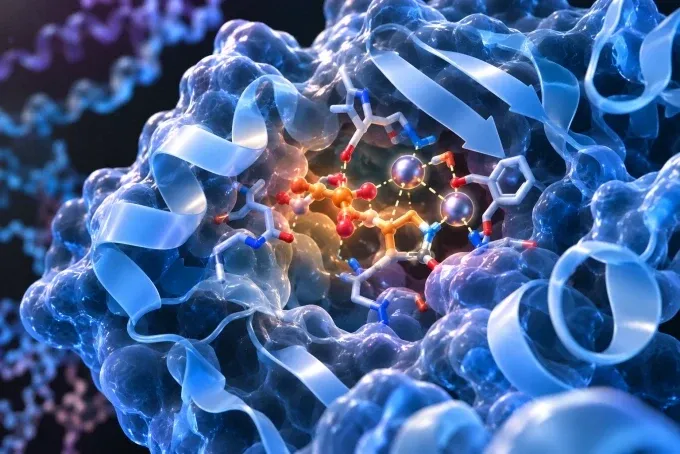
IT Home On October 19, a generative artificial intelligence system for protein and nucleic acid synthesis named RFdiffusion3, designed using individual atoms, has been officially released. With the proteins newly designed by RFdiffusion3, they can perform the intended functions in real chemical reactions.
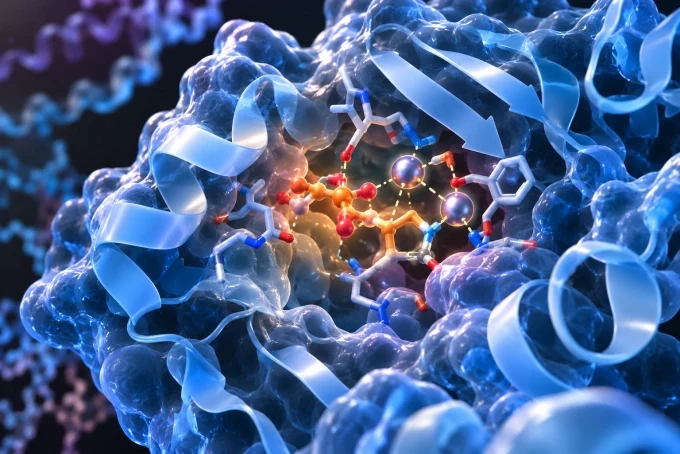
An international joint research team composed of institutions such as the University of Washington in the US, the University of Oxford in the UK, and NVIDIA has developed a system that can model individual atoms and is used for designing proteins and nucleic acids. The relevant research findings were published in the international journal Science on the 16th local time.
IT Home noticed that the research team opened up RFdiffusion3 as open source on December 3, 2025. The paper published in Science detailed the design principles of RFdiffusion3.
Protein research based on artificial intelligence has evolved from predicting the three-dimensional structure of existing proteins to designing entirely new proteins with specific structures and functions.
Washington University professor David Baker is the corresponding author of this RFdiffusion3 study. He received the 2024 Nobel Prize in Chemistry for his contributions to using computers to predict protein structures. One of Baker’s landmark achievements is the development of the artificial intelligence system RosettaFold for predicting protein structures.
RosettaFold learns the spatial relationships between the amino acids that make up proteins, and uses this information to predict the three-dimensional structure of proteins. RFdiffusion1, released in 2023, and RFdiffusion2, released in 2025, are both developed based on the structural prediction network used by RosettaFold.
RFdiffusion uses a diffusion model to determine the positions of amino acids, thereby completing protein design. The diffusion model is a type of artificial intelligence model that learns the distribution patterns of existing data and then generates new data.
RFdiffusion3 was developed by referring to the network architecture of another protein structure prediction program, AlphaFold3. RFdiffusion3 can represent a single amino acid with up to 14 atoms, and design new protein structures by directly adjusting the three-dimensional coordinates of each atom.
The research team used this system to precisely design the active site of enzymes, and the enzymes can catalyze various chemical reactions. Enzymes are proteins and biological catalysts that increase the reaction rate of various chemical reactions within organisms.
When researchers not only specify the positions of the atoms required for the reaction, but also set the conditions for hydrogen bonding and the distribution range of specific atoms within the protein, RFdiffusion3 can generate a protein structure that satisfies all the constraints.
The researchers selected 41 active sites of existing enzymes to compare with the design effect. The results showed that in 37 sets of tests, RFdiffusion3 performed better than RFdiffusion2. Its speed of generating protein structures is approximately ten times that of RFdiffusion2.
The oxygenase phosphodiesterase and peptide cleaving enzyme designed by RFdiffusion3 successfully completed the expected chemical reactions in real experiments. The research team said, “In the future, RFdiffusion3 will be widely used in various biomolecule design tasks and related application fields.”
Reference material:
Advertising notice: The text contains external link references (including but not limited to hyperlinks, QR codes, passwords, etc.) designed to provide more information, save selection time, and the results are for reference only. Articles on IT Home that include external links all include this notice.