
IT Home On October 20, it was reported that since the inception of the video game industry, there has been a phenomenon where developers create “cloned games” by imitating competitors. The originality of these works varies greatly, and the level of regulation imposed by various gaming platforms on such works also differs. However, today, AI programming tools have significantly reduced the production barrier for cloned games, offering high efficiency. As a result, many developers are becoming more cautious when releasing their early works publicly.
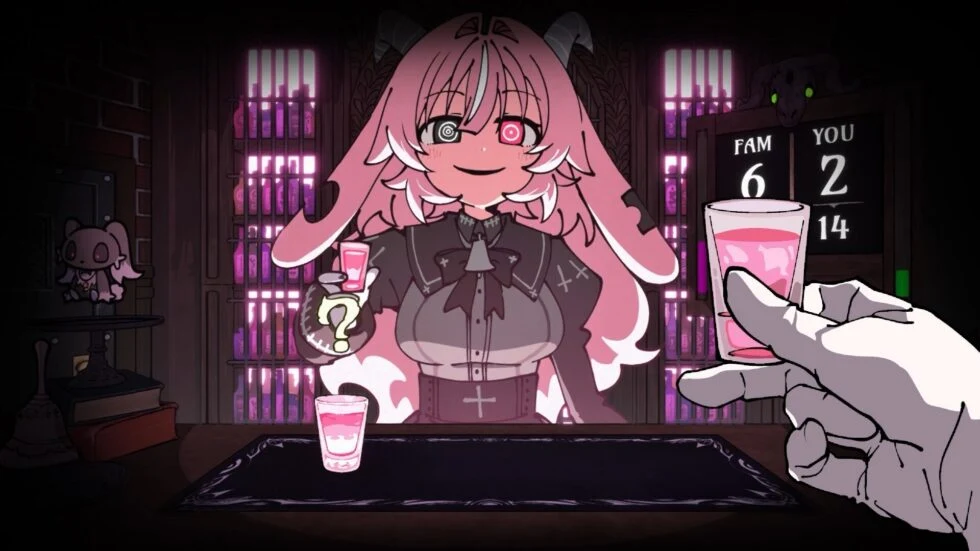
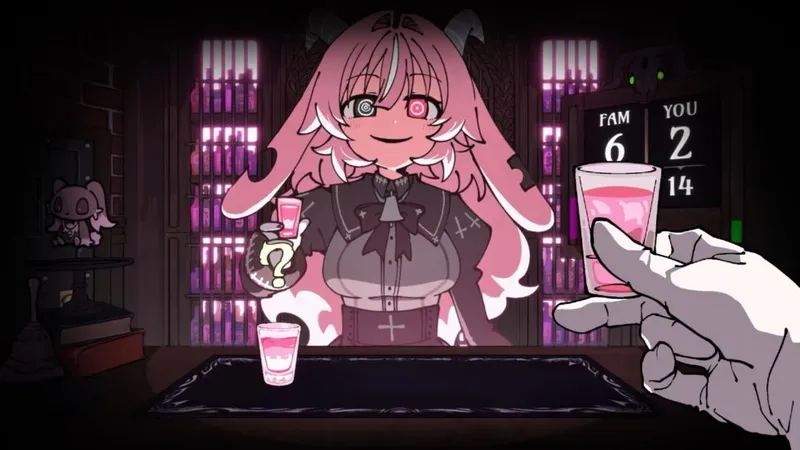
IT Home noticed that last weekend, the demon-themed Russian roulette game “Drunken Goddess Reflux”, which was scheduled to be released alongside the Steam New Product Event and made available for public trial, announced a delay in the release of the public demo.
The studio wrote in a social media post on last Friday evening local time that, in addition to concerns regarding live streaming content control, “we are worried that the materials in the Demo might be used by others with AI or other tools to quickly imitate and replicate the art style and gameplay of this game, and even such imitations might be released before we officially launch.”
Therefore, developers are now planning to distribute the Demo only during closed trial sessions, and participants must comply with the relevant agreements regarding game video recordings and live streaming content.
More than just Alliance Arts studio, other studios are also adopting this conservative approach to protect their creativity. Lucas Pope, the creator of *Papers, Please*, said in a podcast episode in April that, generally speaking: “I don’t easily talk about the project during the development phase because I’m not sure whether the content will be captured by AI or copied by others... When it comes to the work I’m currently developing, I always feel uneasy.”
Who actually belongs to the game?
In recent months, the concern that creativity is “stolen” by AI is no longer just a theoretical idea for many independent developers. In March this year, developer Freya Holmér shared a prototype game video: a Tetris-like game played using a rotating pivot point, which quickly became popular on social platforms. However, just a few days later, Holmér discovered a large number of imitations quickly cloned by AI. Before her own version went live, this basic gameplay had already been turned into a playable version and spread everywhere.
Faced with a large number of early clones, Holmer wrote: “There are all kinds of shoddy copycats everywhere, whether they use AI or human effort. This makes me not want to share my development progress anymore. Fortunately, these people don’t have the ability to create original work, so they can’t add anything new to the existing approach.”
Sos Sosowski, the developer of 《McPixel》, has been documenting the complaints of numerous independent developers: AI-generated clones of games directly copy their development work. Sos believes this situation puts independent developers in a difficult promotion dilemma: “If you don’t show the game, you can’t sell it; once you reveal it, your creativity is stolen.” He wrote, “In today’s environment, how can independent developers survive? This is absurd.”
In an interview with 404 Media, Charlie Greenman, the developer who released the Holmer-style AI clone of Tet earlier this year, did not believe there was anything wrong with his actions. “I think it’s a completely new creation,” Greenman said. “At this level, how can we define plagiarism? Is one piece of music considered plagiarism by another? Is a game considered plagiarism by another? Did the person who created Blox and Jenga plagiarize Tet?”
Some people believe that increasing the complexity and originality of works is the best way to resist cloning in such a environment. Ivan Lago from Howltide Games wrote on social media: “If AI can replicate your game overnight, it isn’t a truly complete game at all. It’s just a product designed to make quick money with a single gameplay style, without any core or creative vision. AI isn’t trying to replicate real games; it’s just creating cheap imitations of works that are already made up of material.”
But even if your game concept is cloned by a clumsy AI creator, it doesn’t mean you can’t refine it into a high-quality version as you envisioned. Holmer said in an interview with 404 Media this summer: “In the first week after the project was released, almost every day there was an AI clone of a spinning Russian puzzle. At that time, I thought, it’s over. But now, the popularity of these clones has dropped significantly. I can now focus on refining it slowly and creating a high-quality piece that I can be proud of, instead of releasing it hastily.”