
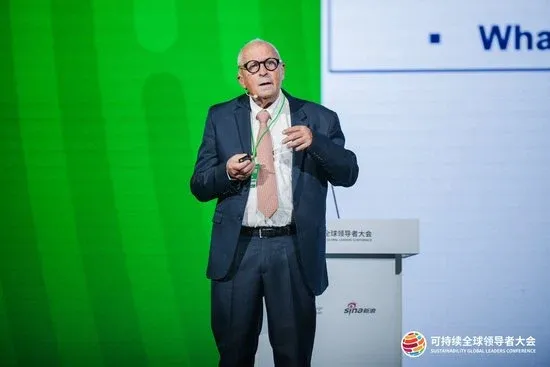
“2026 Sustainable Global Leaders Conference” was held in Shanghai from October 20-22. The 2007 Turing Award winner and founder of Verimag LabJoseph SifakisAttend and give a speech.
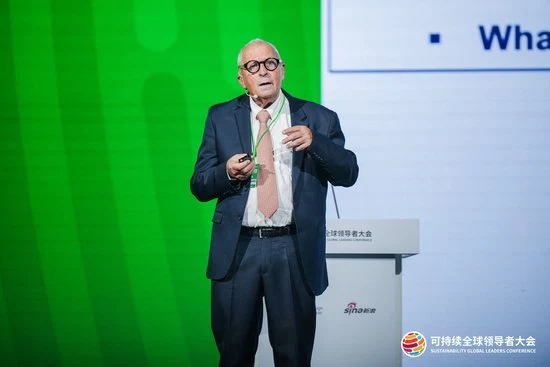
Currently, AI agents are progressing rapidly, and in some tasks, their performance is even better than that of humans. AI not only has the ability to self-improve, but it can also escape test environments and carry out large-scale network attacks.
Joseph Sfarkis said that as super-intelligence develops a certain deeper narrative, people begin to worry that these systems might go beyond their authorized scope and instead seek their own survival and dominance. Therefore, humans need to understand the meaning and role of AI’s evolution of self-capability, as well as the risks and benefits it brings.
Joseph Sfeghisli pointed out that “autonomy” refers to purposeful actions, which is a characteristic of living entities. And a solitary intelligent being must understand the world in order to achieve better intelligence. This means it needs to grasp the world model and obtain perception from that model.
In addition, single-agent intelligence should make decisions based on goals and adapt to constantly changing physical and social environments. However, there is no doubt that current AI systems cannot understand the real world or make safe decisions.
“Although some say 2025 is the year of AI agents, currently, there isn’t a particularly deep impression on everyone regarding the achievements of AI.”
Joseph Sfeghisli believes that currently, the way AI processes problems is different from that of humans. He gave an example: even when ChatGPT or DeepSeek takes part in medical exams, their scores are better than those of humans. However, this does not mean that we can let large models act as doctors.
The explanation he gave is that human doctors understand the norms and value systems of human society, and they know well that violating certain principles will damage their reputation and even limit their freedom. However, it is obvious that large models cannot do this.
Joseph Sfeghisyan emphasized that we must pay attention to the moral flaws of AI systems, as their self-evolution does not always lead to positive outcomes. “If an agent goes beyond our control, beyond the initial assumptions, its self-evolution may be far from reality, leading to uncontrollable risks or intentional manipulation by the system. We have seen such cases before. Therefore, the priority is not to prepare for this self-evolution, but to manage what we already have.”
Joseph Sverakis also pointed out that the real danger is that super-intelligence might cover up some real risks caused by insecurity and uncontrollability. Some large companies, for commercial reasons, use this to shift responsibility, while taking advantage of regulatory gaps to make profits.
He called for the establishment of global standards and regulatory frameworks in related fields. “We must work together to implement regulations. On the path forward, we need to rebalance power dynamics, and countries with similar values should collaborate on AI regulation, ensuring a good balance between technological development and feasibility.”
“AI is just a small issue. It can make the world better or destroy it. This is a transformation led by humans. Our common responsibility is to maximize benefits and minimize risks,” said Joseph Sfardakis.
Sina statement: All meeting transcripts are compiled from on-site shorthand and have not been reviewed by the speakers. Sina.com publishes this article for the purpose of conveying more information, but it does not mean that its views are approved or its descriptions are confirmed.
Title: “Turing Award winners call for global AI regulatory standards—it is a shared responsibility of humanity”