IT之家 AI

マイクロソフトが「AI学生」を開発:実際の人間に授業を試行し、学生を模倣してAI指導者を最適化する

IT之家…

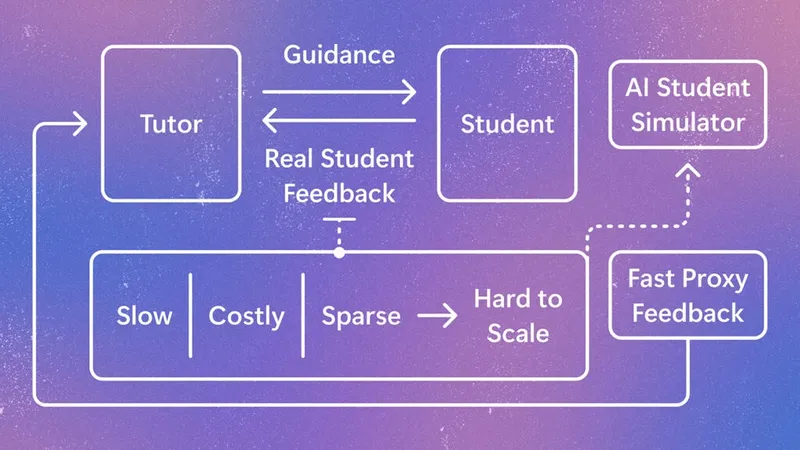
A conceptual diagram of the feedback loop required to improve an AI tutor. The middle part of the figure shows that a human teacher gives guidance to a real student and receives the student’s feedback, but this feedback is slow, costly, sparse, and hard to scale. On the right panel of the figure, an AI student simulator is trained from real student feedback and serves as a fast proxy for the student during tutor development.
画像の出典 · IT之家 AI
IT之家のネットユーザー LeoFize の手がかりの提供に感謝!

IT之家 10月17日の報道によると、マイクロソフト研究所は10月12日に研究システムStudentSimを公開し、大規模な実際の人間実験がない状況で、説明やヒント、質問が実際に生徒の成長に役立つかどうかを判断するという、AI指導ツール開発における重要な課題を解決しようと試みている。

伝統的なAI指導者はしばしば「答えが正しいかどうか」だけを見ますが、教育効果は生徒が理解しているか、間違いを訂正できるか、そして異なる生徒にどのような解答支援が必要かにも依存します。真実の学習者はこれらの問題に答えることができますが、時間がかかり、費用が高く、規模化が難しく、モデルの迅速な改善を支えることは困難です。
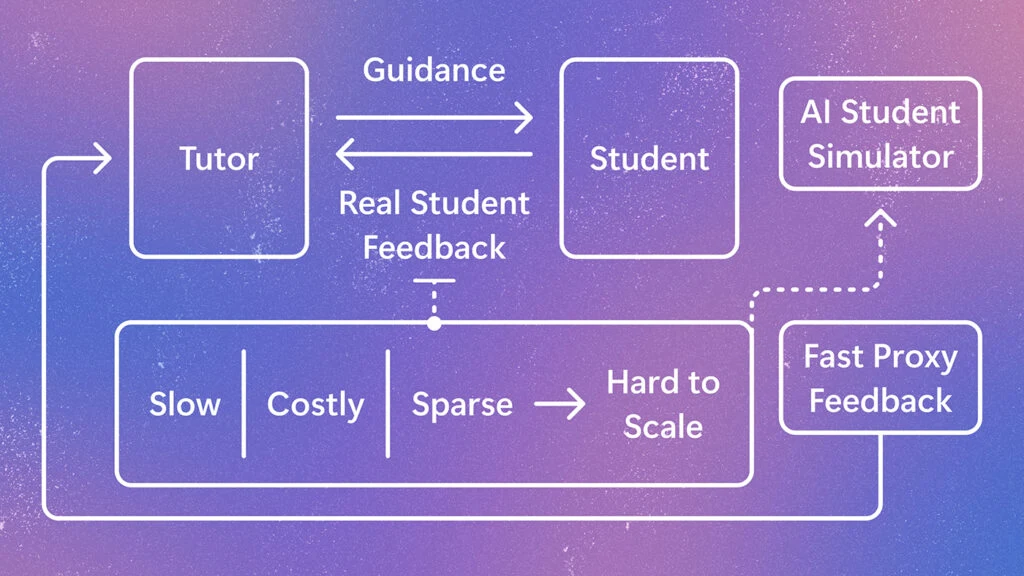
A conceptual diagram of the feedback loop required to improve an AI tutor. The middle part of the figure shows that a human teacher gives guidance to a real student and receives the student’s feedback, but this feedback is slow, costly, sparse, and hard to scale. On the right panel of the figure, an AI student simulator is trained from real student feedback and serves as a fast proxy for the student during tutor development.

マイクロソフトはこれに対してStudentSimシステムを導入しました。公開され、識別情報が除去された学習者の記録に基づき、各学生に合わせた個別化された「AI学習者シミュレーター」を構築します。このシステムは、学生が独立して解答する様子だけでなく、指導員の説明を受けた後の反応の変化もシミュレートします。
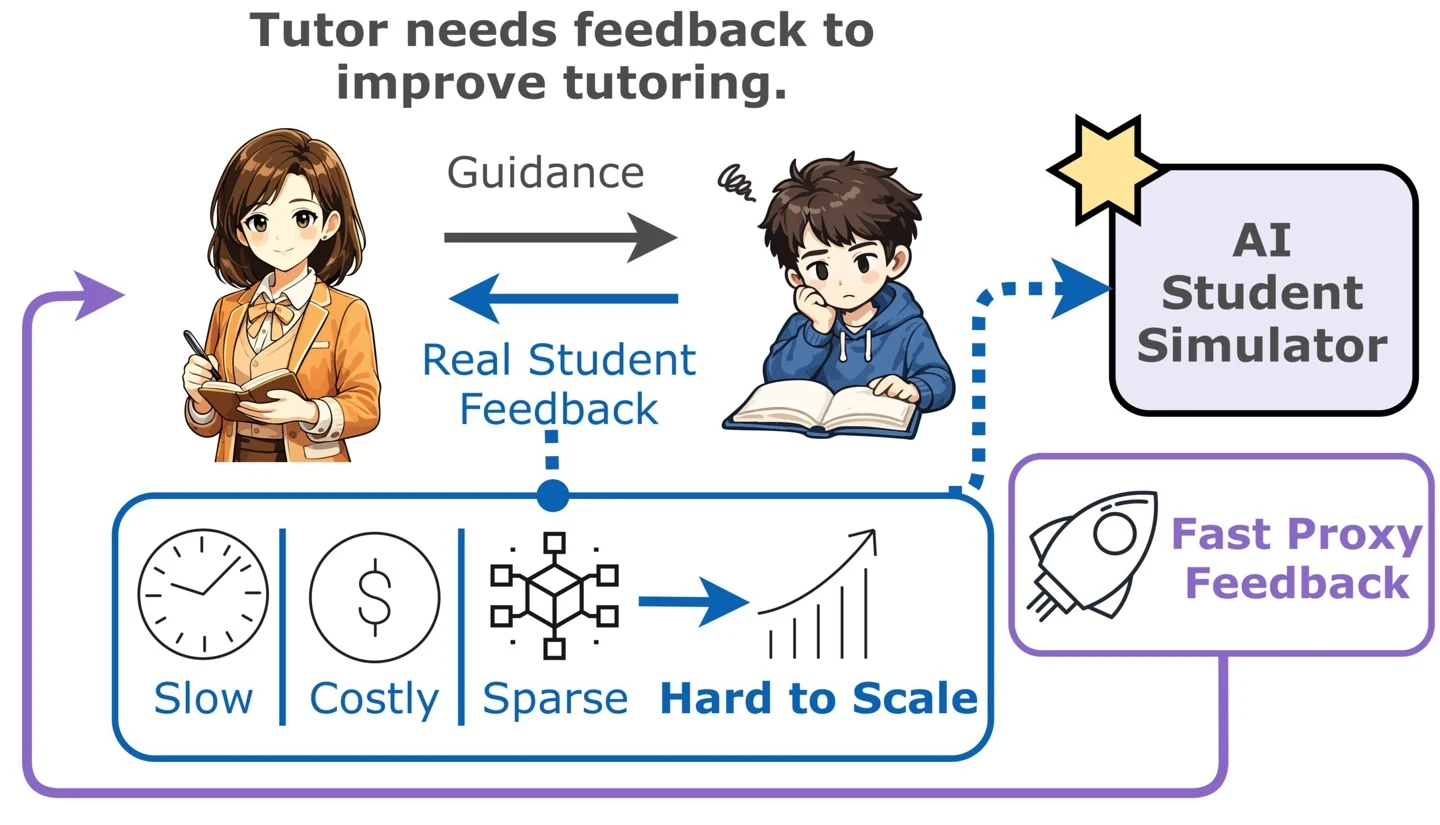
**Alt text:** A conceptual diagram of the feedback loop required to improve an AI tutor. The middle part of the figure shows that a human teacher gives guidance to a real student and receives the student’s feedback, but this feedback is slow, costly, sparse, and hard to scale. On the right panel of the figure, an AI student simulator is trained from real student feedback and serves as a fast proxy for the student during tutor development.

研究チームは「行動の真実性」と「指導に対する反応性」という2つの指標でシミュレーターを評価した。前者は、特定の学生のように答えを出すかどうかを検証し、後者は、指導の後に答えを適切に更新できるかどうかを検証する。
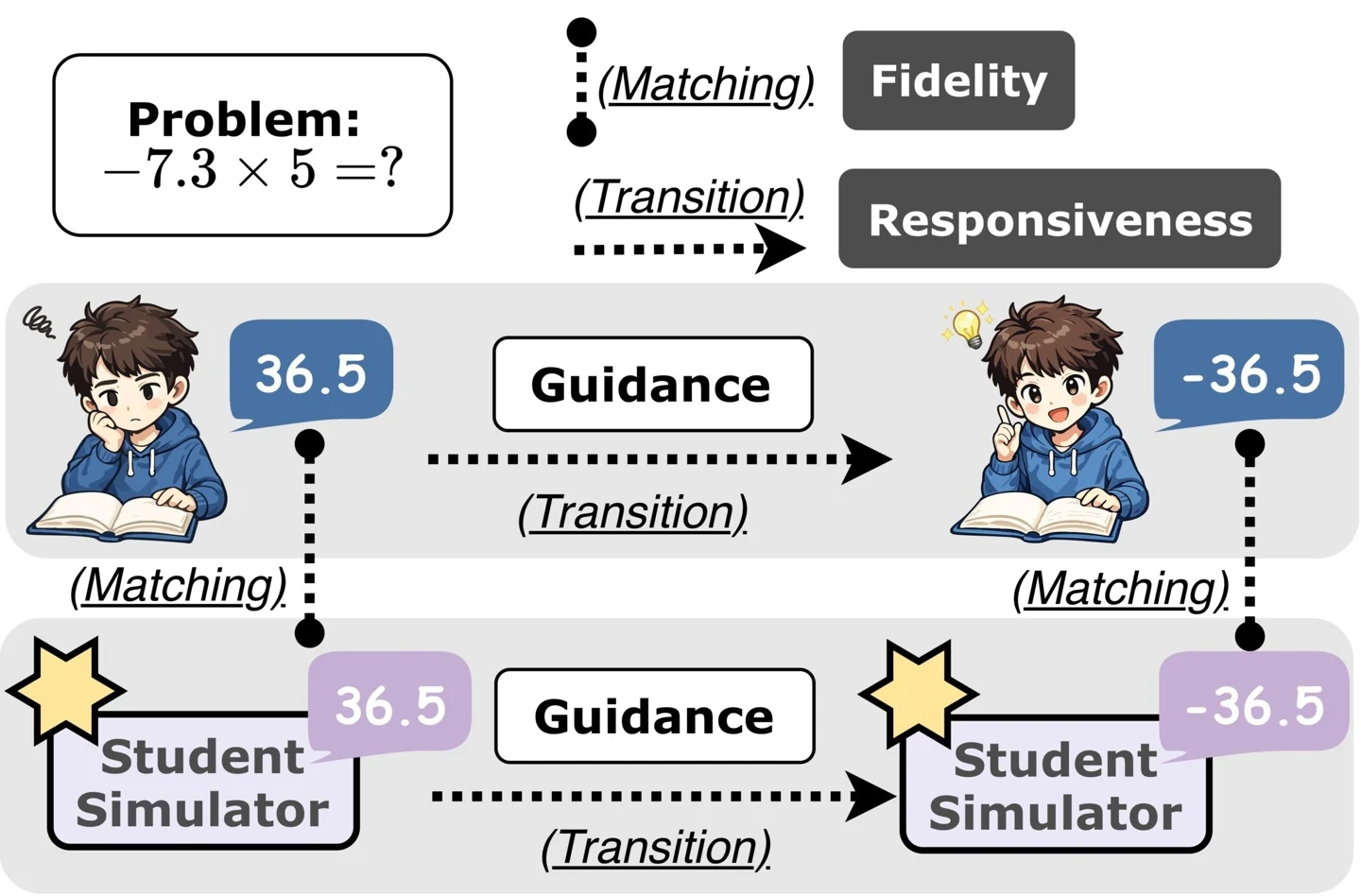
**Alt text:** Diagram defining the two evaluation criteria used for student simulators. The upper portion shows a problem, “minus 7.3 times 5 equals what.” The lower portion compares a real student and an AI simulator. Both initially answer 36.5, then receive guidance and revise their answer to negative 36.5. Asking whether a simulator’s responses match the recorded student answers is behavioral fidelity. Matching the guidance-induced change is guidance responsiveness.

このシステムは二段階の訓練を採用している。まず、同じ分野の多数の学生の匿名データから一般的な回答方法、誤りの種類、指導後の修正パターンを学習し、次に個々の学生の限定的な記録に基づいて個別化された適応を行う。研究対象はチェス、第二言語の英語の作文、数学の3つのタスクであり、StudentSimEvalという評価基準も開発されている。
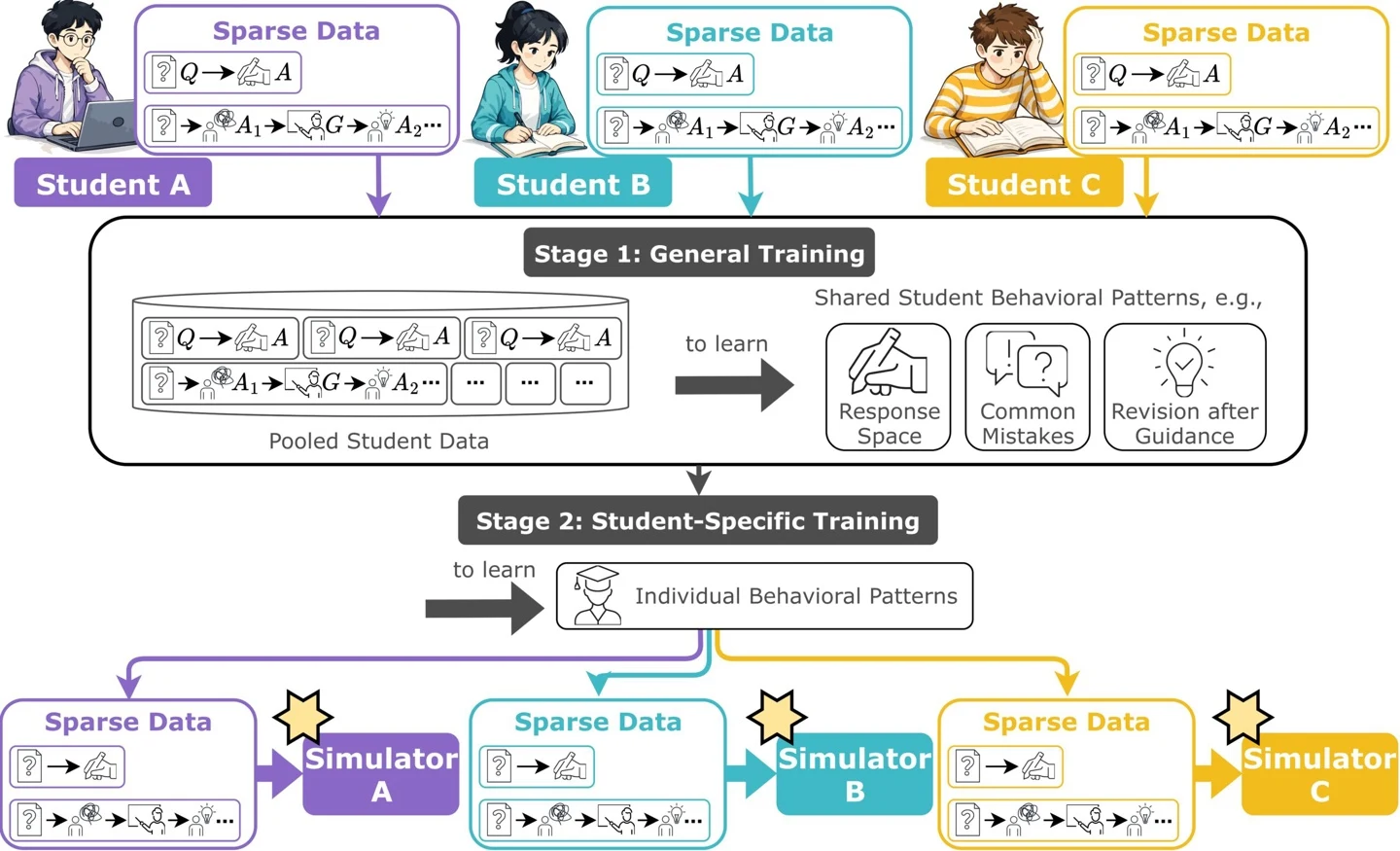
**Alt text:** A two-stage pipeline for training personalized StudentSim models from sparse student records. At the top, several students each have limited examples of question-answer interactions and answer revisions following tutor guidance. In the middle, stage one training, records from all students are pooled to learn shared behavioral patterns, including the space of possible responses, common mistakes, and typical revisions after guidance. At the bottom, stage two training, the model is ad

結果によると、StudentSimは3つの分野で主要な基線よりも優れています。チェスを例にとると、その行動の真実性は0.5150に達し、指導応答性は0.9067に達し、これらはGPT-5.4や専用チェスモデルMaia2よりも高い値です。
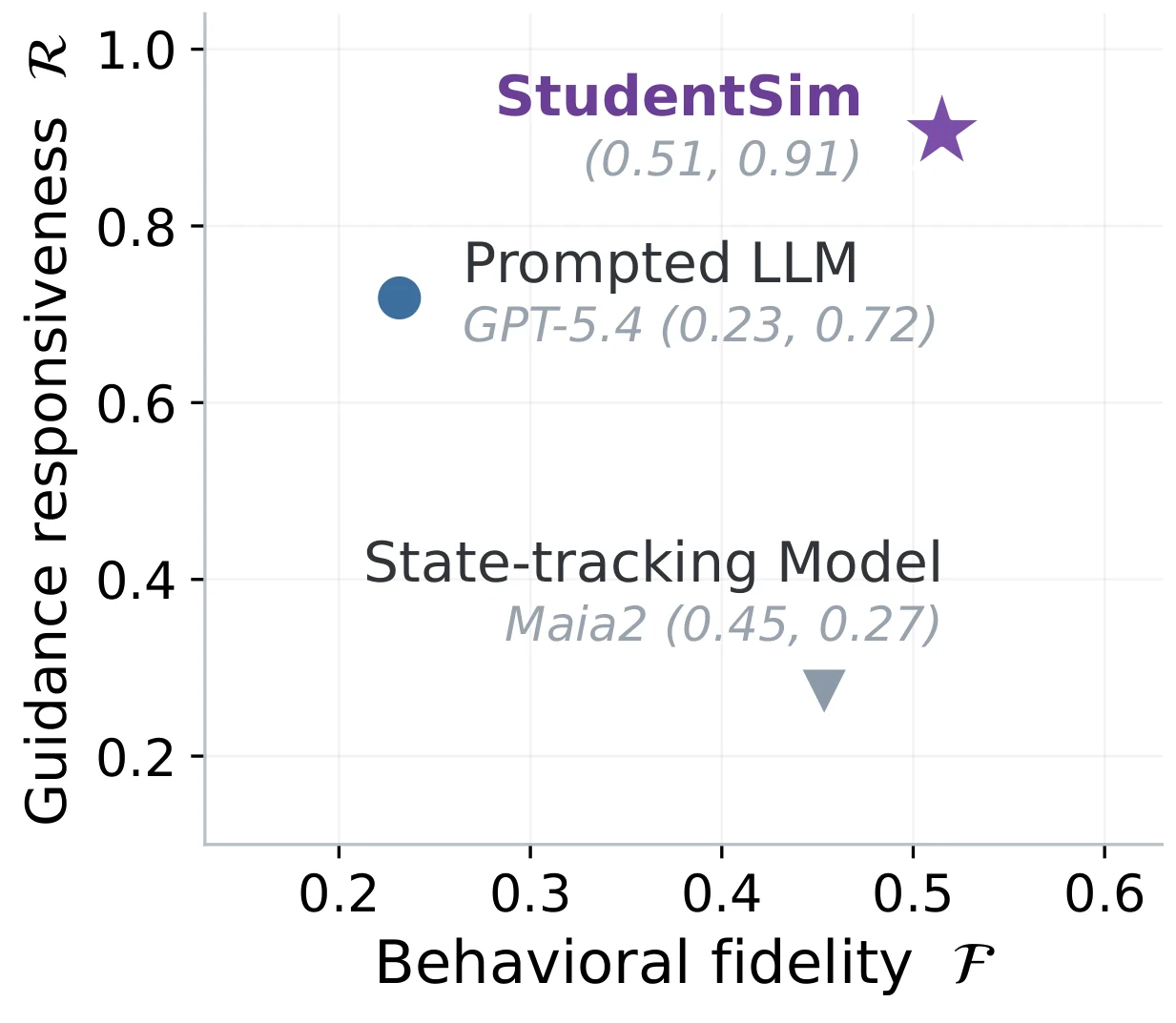
**Alt text:** Scatter plot comparing three student simulation approaches on behavioral fidelity, shown on the horizontal axis, and guidance responsiveness, shown on the vertical axis. StudentSim is positioned in the upper-right at approximately 0.51 fidelity and 0.91 responsiveness. A prompted GPT-5.4 model has lower fidelity, approximately 0.23, and moderate responsiveness, approximately 0.72. Maia2, a state-tracking model, has moderate fidelity, approximately 0.45, but low responsiveness, appr

AI将棋指導者の強化学習実験において、StudentSimによるフィードバック訓練で指導者の正確率は90.5%に達し、強化学習なしの基準である75.7%やGPT-5.4によるシミュレーションフィードバックを用いた71.6%よりも高い値であった。
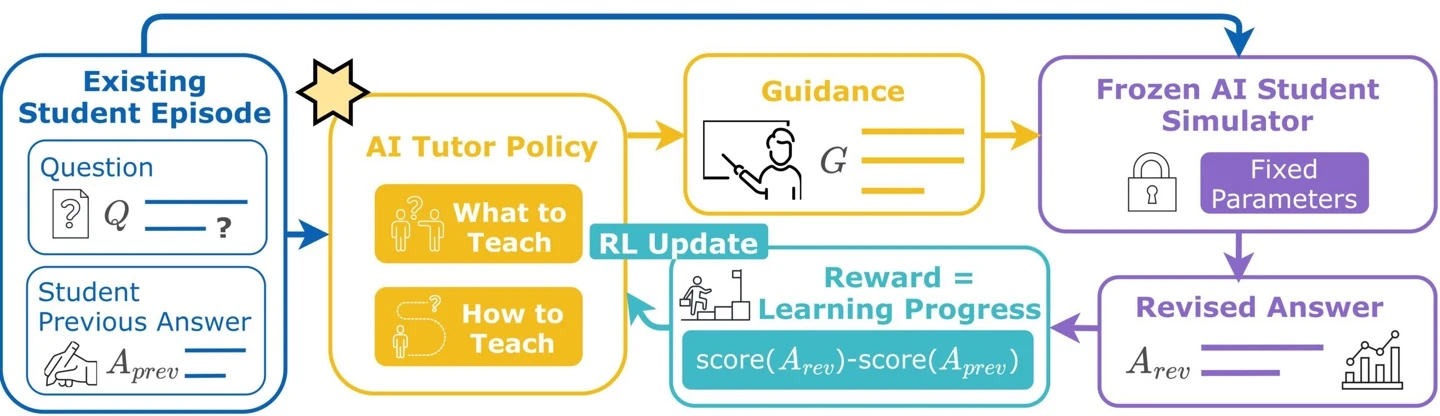
**Alt text:** Diagram of reinforcement learning for an AI chess tutor using StudentSim as the feedback source. Each episode begins with a real student’s chess position and previous incorrect move. The AI tutor receives this context and generates guidance describing what and how to teach. A frozen, personalized AI student simulator reads the guidance and produces a revised move. The reward equals the improvement in chess evaluation from the student’s original move to the revised move, and this re

マイクロソフトは、StudentSimは授業用製品ではなく、教師の代わりになることを目的としていないと強調しています。これは、実際の学生をテストする前に、研究者が低コストで拡張可能な初期フィードバック信号を得るためのものです。

IT之家に参考のアドレスを掲載

広告声明:本文中に含まれる外部サイトへのリンク(ハイパーリンク、QRコード、パスワードなどを含む)は、より多くの情報を提供し、選択時間を節約するためのものです。結果は参考値であり、IT之家で外部リンクを含む記事にはこの声明が適用されます。

原文の出典

IT之家 AI

内容について

原文の公開と権利は出典元に帰属します。

機械翻訳 · 原文をご参照ください