IT之家 AI

마이크로소프트가 “AI 학생”을 만들었습니다: 실제 사람을 대신해 수업을 시도하고, 학생을 모방하여 AI 멘토를 최적화합니다.

IT之家 10월 17일 소식에 따르면, 마이크로소프트 연구소는 10월 12일 연구 시스템 StudentSim을 발표했습니다. 이 시스템은 대규모 실제 사람 실험 없이도 설명, 지시 또는 질문이 학생의 성장에 실제로 도움이 되는지 판단하는 AI 교육 도구 개발의 핵심 문제를 해결하고자 합니다. 전통적인 AI 튜터는 "정답인지 아닌지"만 확인하지만, 교육 효과는 학생이 이해하는지, 오류를…

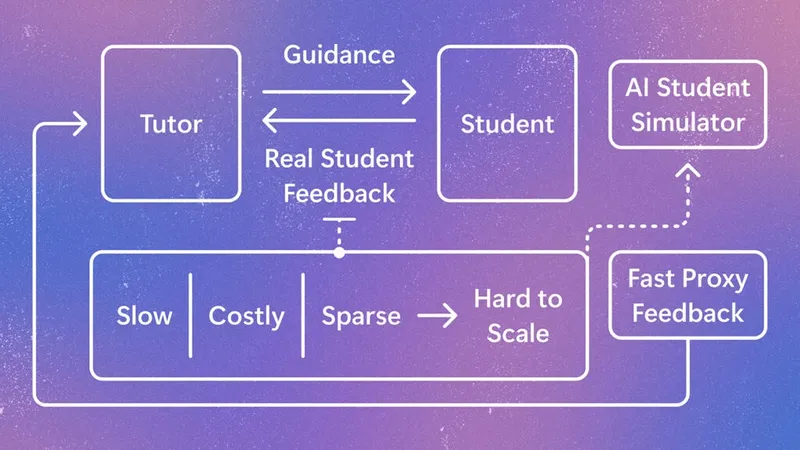
A conceptual diagram of the feedback loop required to improve an AI tutor. The middle part of the figure shows that a human teacher gives guidance to a real student and receives the student’s feedback, but this feedback is slow, costly, sparse, and hard to scale. On the right panel of the figure, an AI student simulator is trained from real student feedback and serves as a fast proxy for the student during tutor development.
이미지 출처 · IT之家 AI
IT之家 네티즌 LeoFize의 단서 전달에 감사합니다!

IT之家 10월 17일 소식에 따르면, 마이크로소프트 연구소는 10월 12일 연구 시스템 StudentSim을 발표했습니다. 이 시스템은 대규모 실제 사람 실험 없이도, 설명, 팁 또는 질문이 학생의 성장에 실제로 도움이 되는지 판단하는 AI 튜토리얼 도구 개발의 핵심 문제를 해결하려고 합니다.

전통적인 AI 멘토는 대개 “정답인지”만 확인하지만, 교육 효과는 학생이 오류를 이해하고 수정할 수 있는지, 그리고 각 학생에게 다른 설명 지원이 필요한지에 달려 있습니다. 진정한 학습자는 이러한 질문들에 답할 수 있지만, 시간이 많이 걸리고 비용이 높으며 대규모로 실행하기 어렵기 때문에 모델의 빠른 업데이트를 지원하기 어렵습니다.
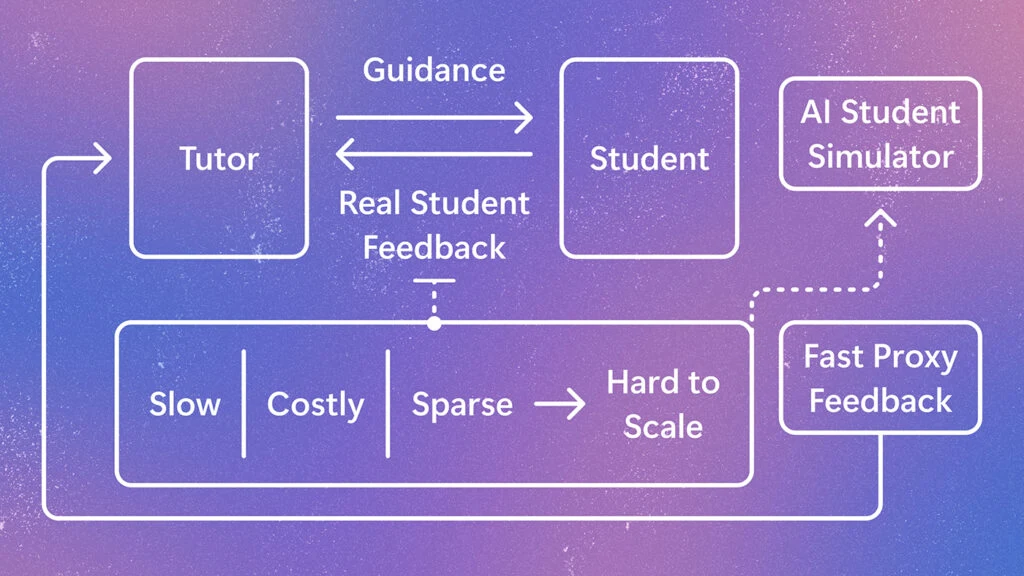
A conceptual diagram of the feedback loop required to improve an AI tutor. The middle part of the figure shows that a human teacher gives guidance to a real student and receives the student’s feedback, but this feedback is slow, costly, sparse, and hard to scale. On the right panel of the figure, an AI student simulator is trained from real student feedback and serves as a fast proxy for the student during tutor development.

마이크로소프트는 이를 위해 공개된 비식별화된 학습자 기록을 기반으로 StudentSim 시스템을 출시했으며, 각 학생에게 맞춤형 “AI 학습자 시뮬레이터”를 제공합니다. 이 시스템은 학생이 독립적으로 답변하는 모습뿐만 아니라, 지도교수의 설명을 받은 후의 반응 변화도 시뮬레이션합니다.
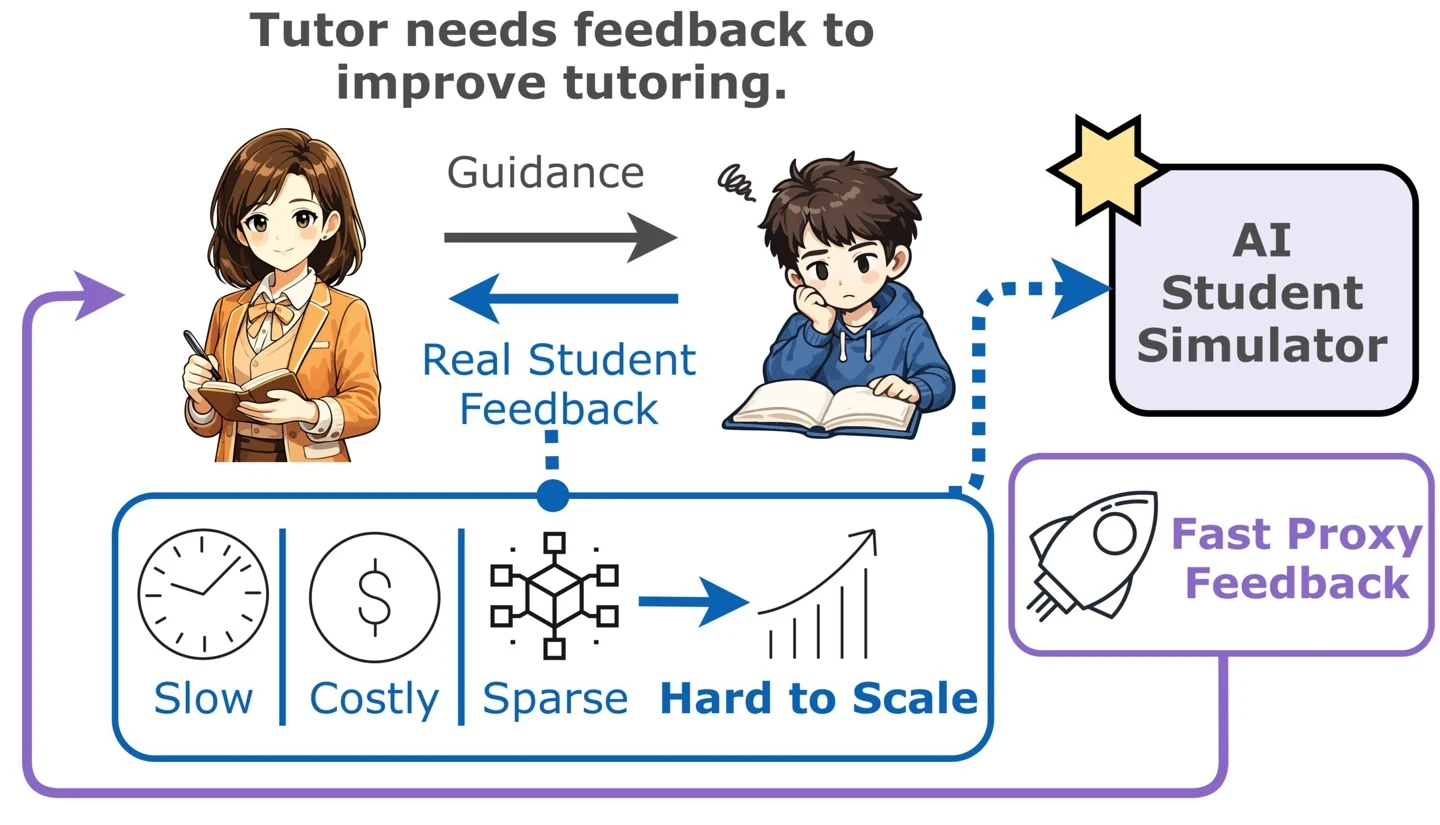
**Alt text:** A conceptual diagram of the feedback loop required to improve an AI tutor. The middle part of the figure shows that a human teacher gives guidance to a real student and receives the student’s feedback, but this feedback is slow, costly, sparse, and hard to scale. On the right panel of the figure, an AI student simulator is trained from real student feedback and serves as a fast proxy for the student during tutor development.

연구팀은 “행동 진실성”과 “지도에 대한 반응성”이라는 두 가지 지표로 시뮬레이터를 평가했습니다. 첫 번째 지표는 특정 학생처럼 답을 내는지 확인하고, 두 번째 지표는 상담 후에 답을 적절하게 업데이트할 수 있는지 검증합니다.
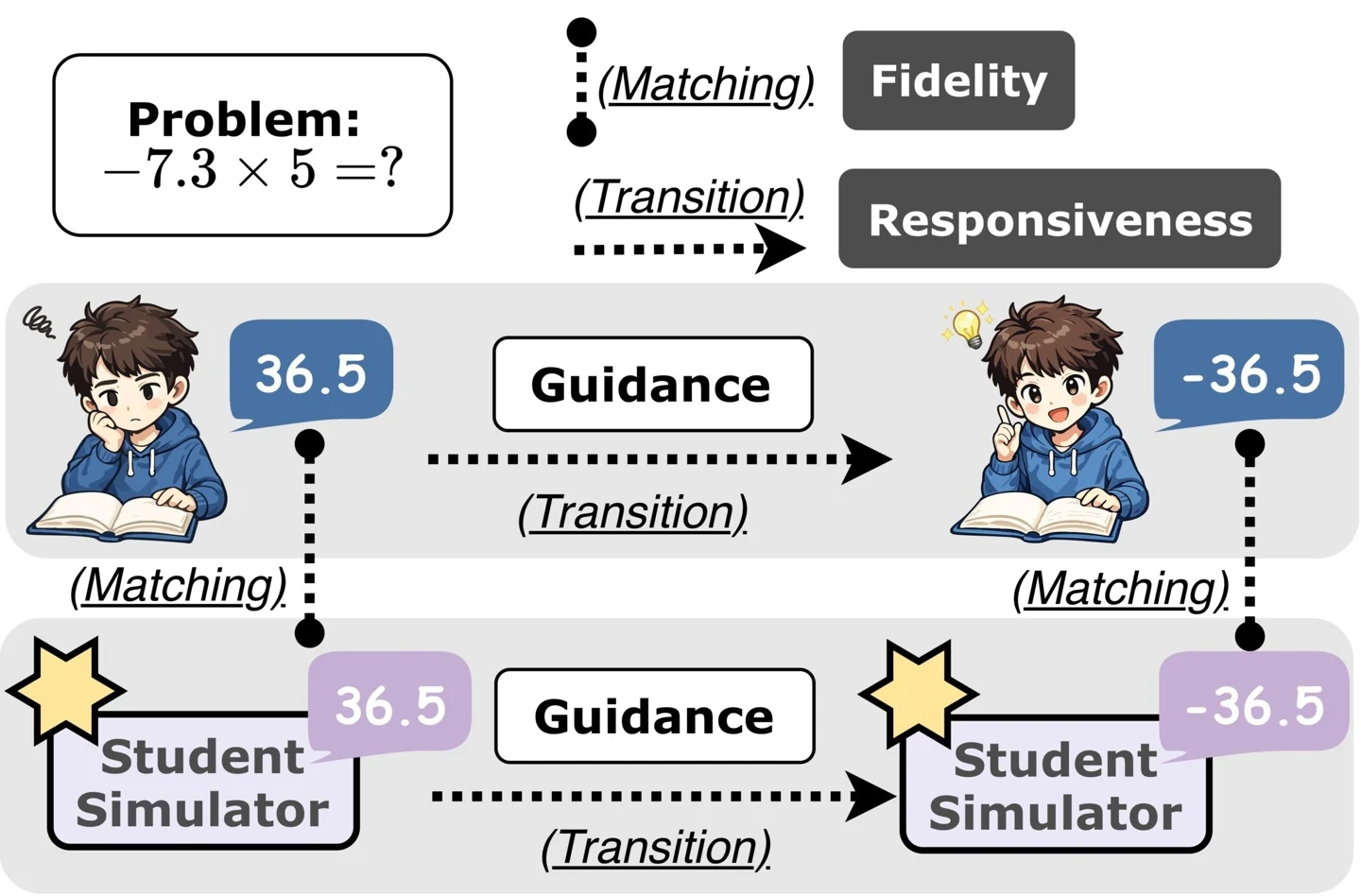
**Alt text:** Diagram defining the two evaluation criteria used for student simulators. The upper portion shows a problem, “minus 7.3 times 5 equals what.” The lower portion compares a real student and an AI simulator. Both initially answer 36.5, then receive guidance and revise their answer to negative 36.5. Asking whether a simulator’s responses match the recorded student answers is behavioral fidelity. Matching the guidance-induced change is guidance responsiveness.

이 시스템은 두 단계의 훈련을 사용합니다. 먼저 동일 분야의 대규모 학생들의 익명 데이터에서 일반적인 답변 방식, 오류 유형 및 지도 후의 수정 패턴을 학습한 다음, 개별 학생의 제한된 기록에 맞게 개인화된 조정을 진행합니다. 연구는 체스, 제2언어 영어 작문, 수학 등 세 가지 과제를 포함하며, StudentSimEval 평가 기준도 개발되었습니다.
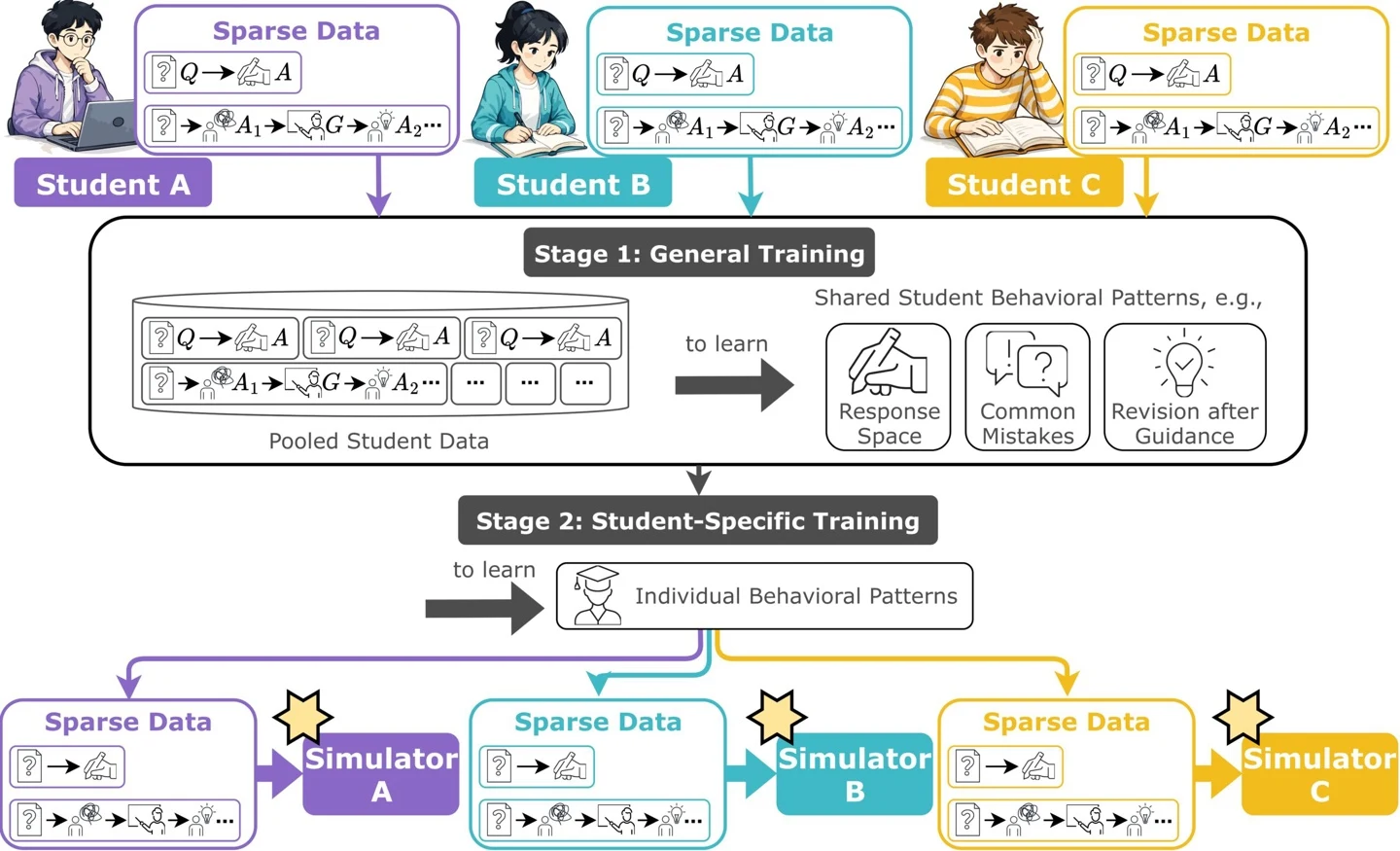
**Alt text:** A two-stage pipeline for training personalized StudentSim models from sparse student records. At the top, several students each have limited examples of question-answer interactions and answer revisions following tutor guidance. In the middle, stage one training, records from all students are pooled to learn shared behavioral patterns, including the space of possible responses, common mistakes, and typical revisions after guidance. At the bottom, stage two training, the model is ad

결과에 따르면, StudentSim은 세 가지 분야 모두에서 주요 기준 모델보다 우수합니다. 체스를 예로 들면, 그 행동 보존도는 0.5150에 달하며, 지시 반응성은 0.9067으로, GPT-5.4와 전용 체스 모델 Maia2보다 모두 높습니다.
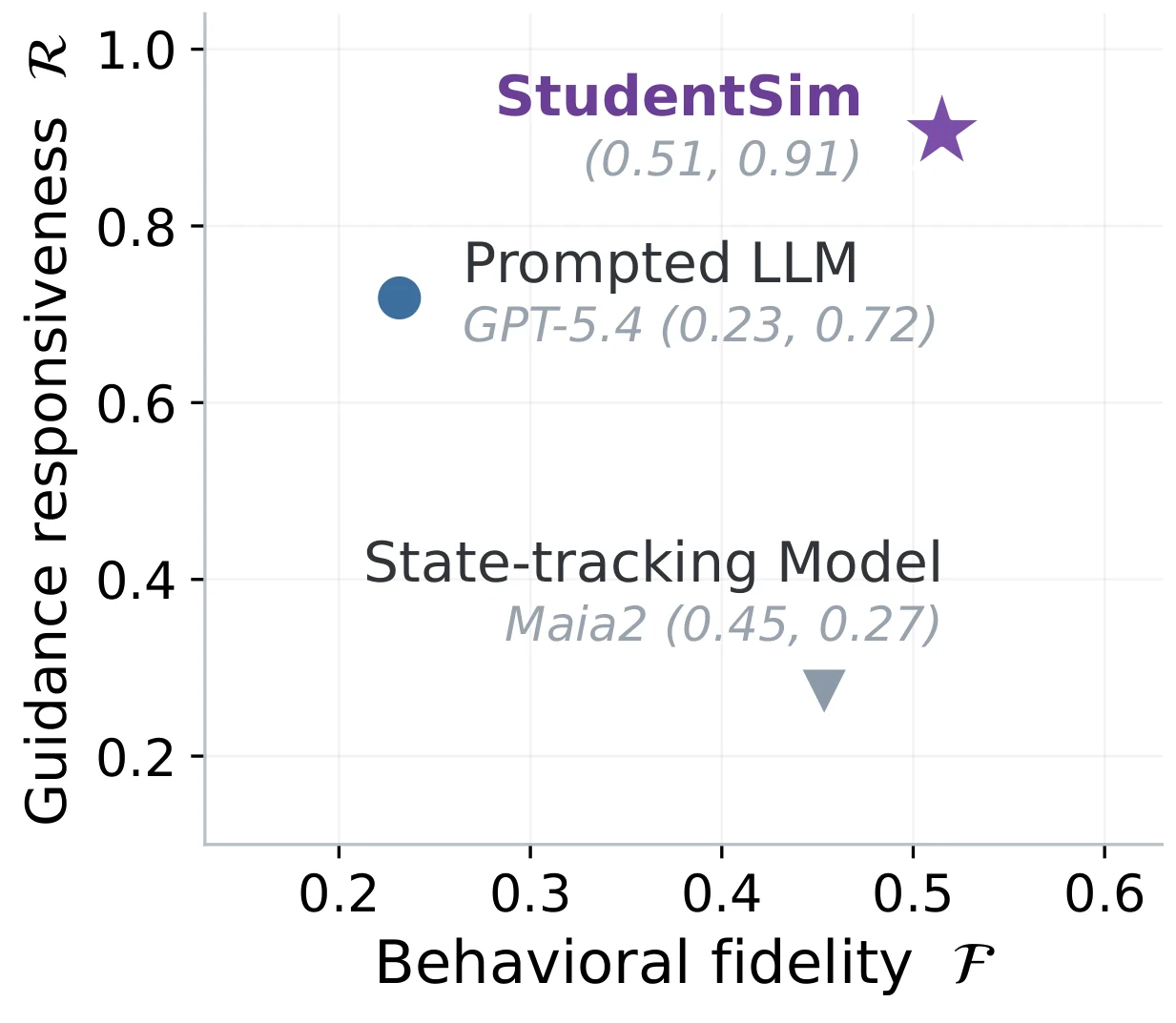
**Alt text:** Scatter plot comparing three student simulation approaches on behavioral fidelity, shown on the horizontal axis, and guidance responsiveness, shown on the vertical axis. StudentSim is positioned in the upper-right at approximately 0.51 fidelity and 0.91 responsiveness. A prompted GPT-5.4 model has lower fidelity, approximately 0.23, and moderate responsiveness, approximately 0.72. Maia2, a state-tracking model, has moderate fidelity, approximately 0.45, but low responsiveness, appr

AI 체스 멘토의 강화 학습 실험에서, StudentSim 피드백 훈련을 통한 멘토의 정확도는 90.5%에 달했으며, 강화 학습이 없는 기준인 75.7%나 GPT-5.4 시뮬레이션 피드백을 사용한 71.6%보다 높았습니다.
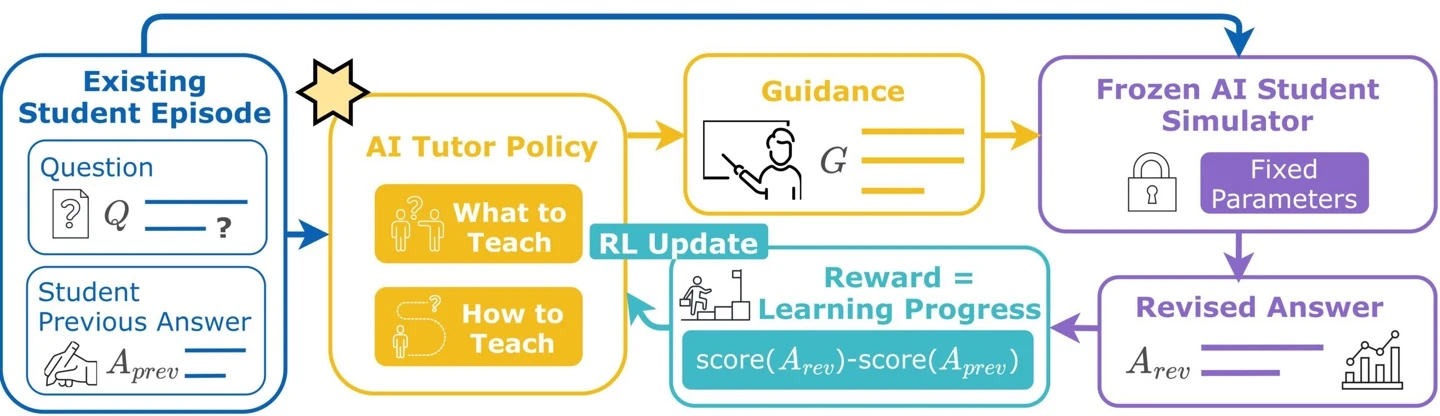
**Alt text:** Diagram of reinforcement learning for an AI chess tutor using StudentSim as the feedback source. Each episode begins with a real student’s chess position and previous incorrect move. The AI tutor receives this context and generates guidance describing what and how to teach. A frozen, personalized AI student simulator reads the guidance and produces a revised move. The reward equals the improvement in chess evaluation from the student’s original move to the revised move, and this re

마이크로소프트는 StudentSim이 교실용 제품이 아니며 교사를 대체하는 것을 목적으로 하지도 않는다고 강조했습니다. 이는 실제 학생 테스트 전에 연구자들에게 저비용으로 확장 가능한 초기 피드백 신호를 제공하기 위한 것입니다.

IT之家 참고 주소

광고 문구: 이 글에 포함된 외부 링크(하이퍼링크, QR 코드, 비밀번호 등의 형태를 포함함)는 더 많은 정보를 전달하고 선정 시간을 절약하기 위한 용도로 사용되며, 결과는 참고용일 뿐입니다. IT之家에서 외부 링크가 포함된 기사는 모두 이 문구를 포함합니다.

원문 출처

IT之家 AI

내용 안내

원문 발행 및 권리는 출처에 있습니다.

기계 번역 · 원문을 참고하세요