Google · XOriginal · English

Today, at our Research@ event, we shared research breakthroughs that can help amplify human ingenuity. From agents that can help solve…

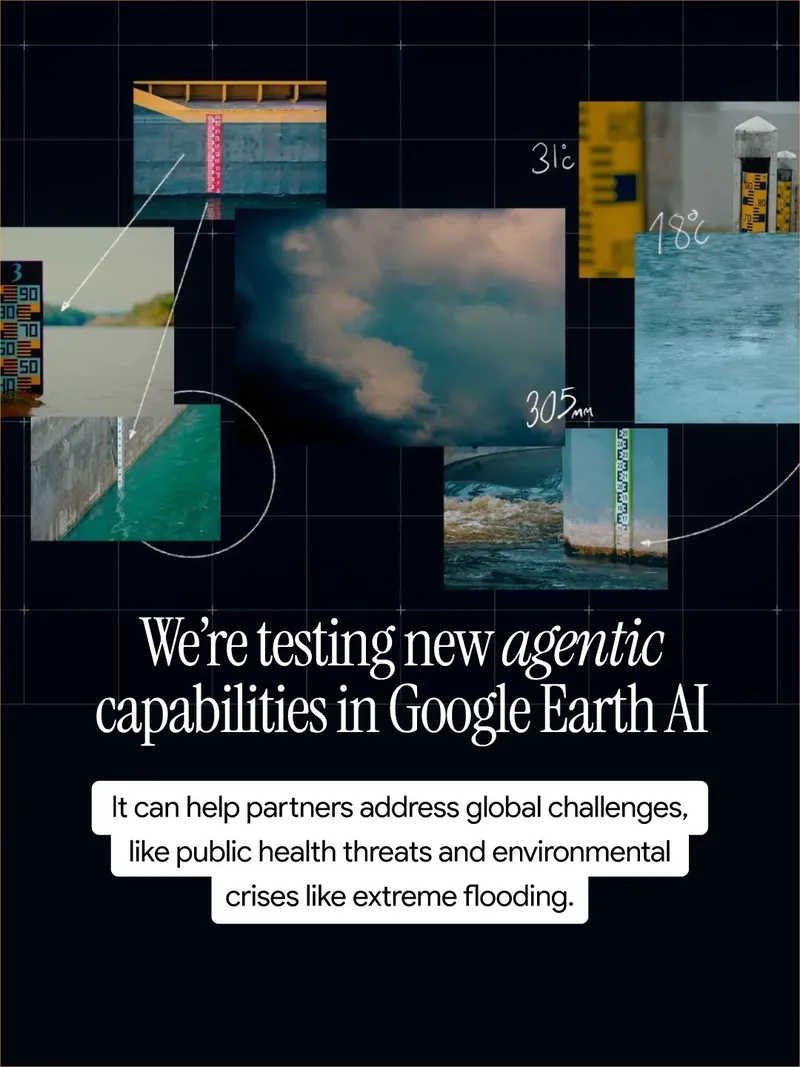
A collage of images on a dark, gridded background featuring water depth gauges, dark storm clouds, and turbulent floodwater, annotated with white lines and handwritten measurements like "31°C" and "305mm". Text below reads: "We’re testing new agentic capabilities in Google Earth AI. It can help partners address global challenges, like public health threats and environmental crises like extreme flooding."
Image source · Google · X

Today, at our Research@ event, we shared research breakthroughs that can help amplify human ingenuity. From agents that can help solve real-world problems, like public health threats and environmental crises like extreme flooding, to models that can aid advanced medical workflows and improve doctor-patient relations, our latest updates will help advance science and technology.

Here are some recent highlights.
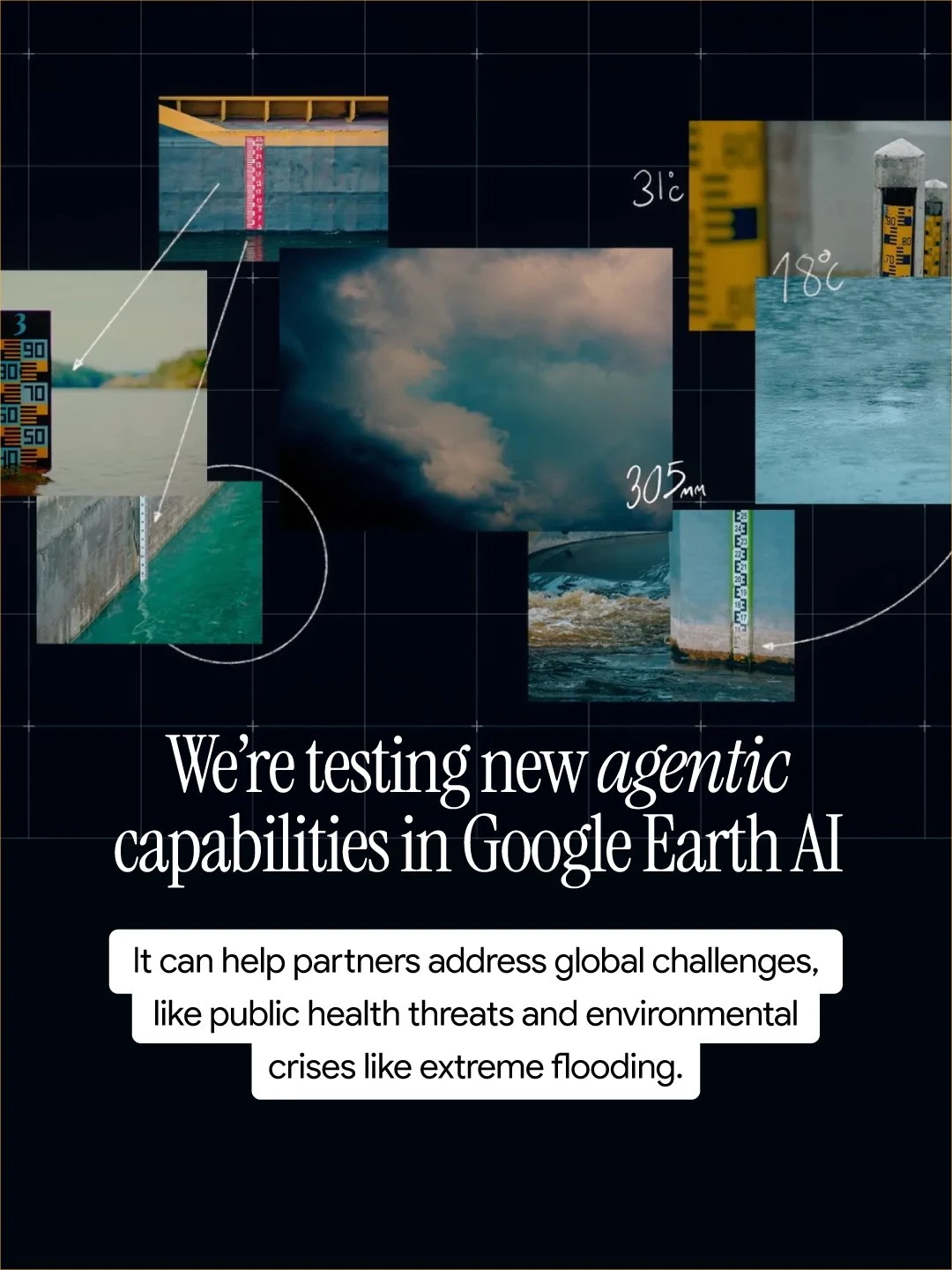
A collage of images on a dark, gridded background featuring water depth gauges, dark storm clouds, and turbulent floodwater, annotated with white lines and handwritten measurements like "31°C" and "305mm". Text below reads: "We’re testing new agentic capabilities in Google Earth AI. It can help partners address global challenges, like public health threats and environmental crises like extreme flooding."
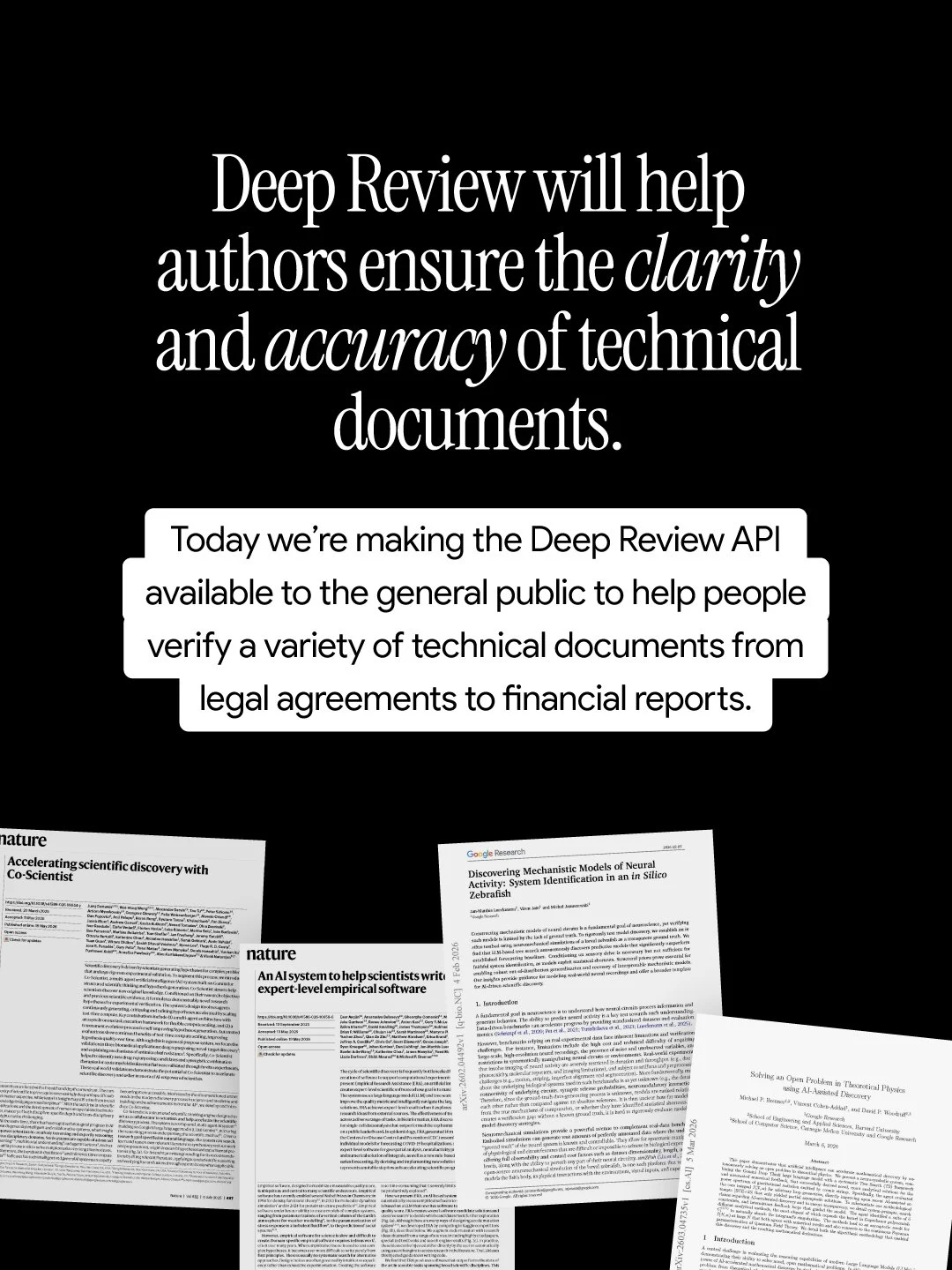
White serif text on a black background states: "Deep Review will help authors ensure the clarity and accuracy of technical documents." A white callout box below states: "Today we’re making the Deep Review API available to the general public to help people verify a variety of technical documents from legal agreements to financial reports." The bottom third of the image features four overlapping scientific and technical research papers from publications such as Nature and Google Research.
Text on a black background defines MedGemma as a collection of open-weight AI models optimized for medical text and images, with plans to expand into modalities like mammography and ultrasound. The lower half of the image features a darkened photo of people working at computer monitors in an office setting.
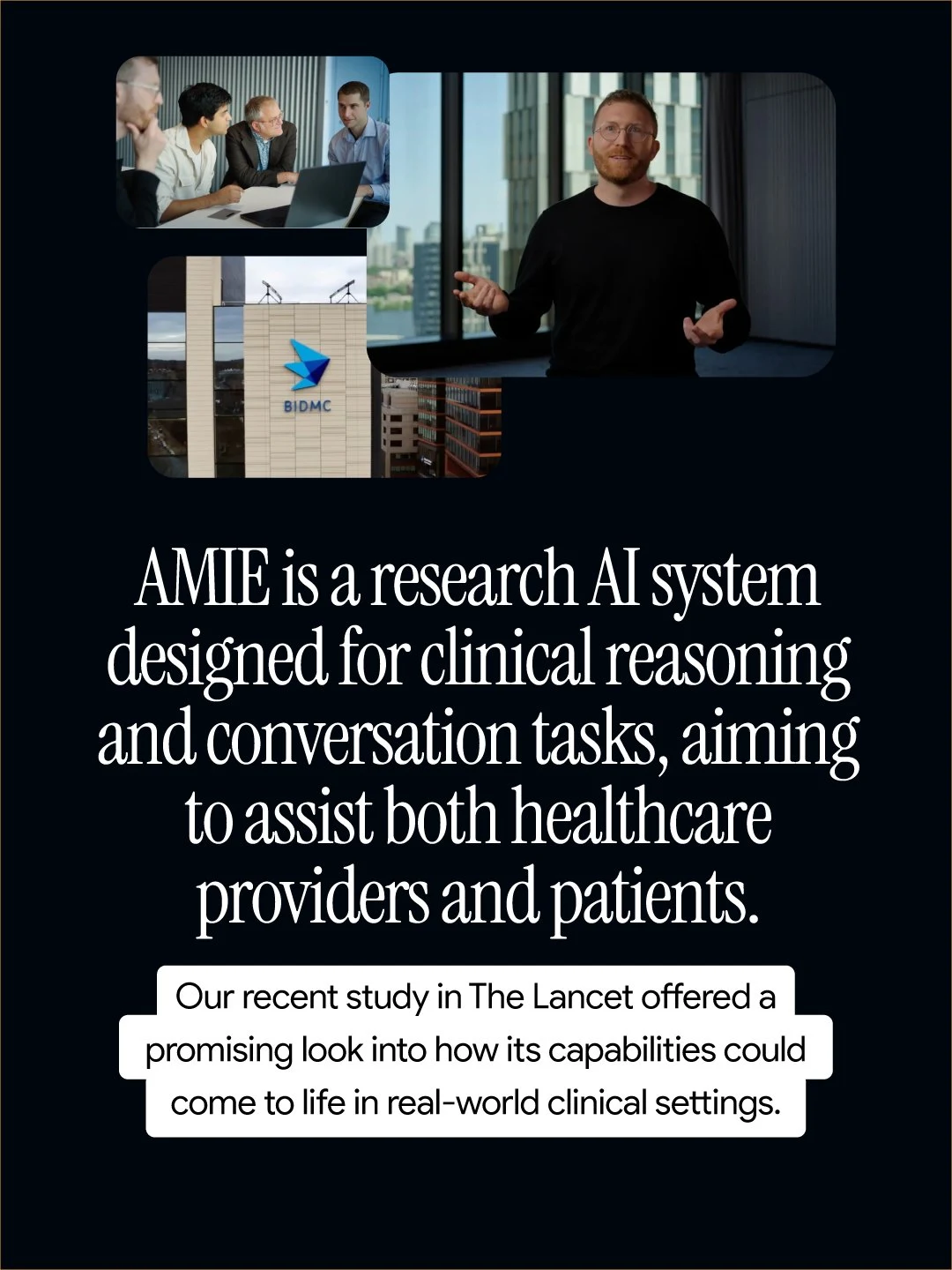
A collection of images shows a group of professionals in a meeting, a man speaking with hand gestures, and a building with the BIDMC logo. Below the images, large text reads: "AMIE is a research AI system designed for clinical reasoning and conversation tasks, aiming to assist both healthcare providers and patients." At the bottom, a white text box states: "Our recent study in The Lancet offered a promising look into how its capabilities could come to life in real-world clinical settings."
Original source

Google · X

Content notes

Original publication and rights belong to the source.