
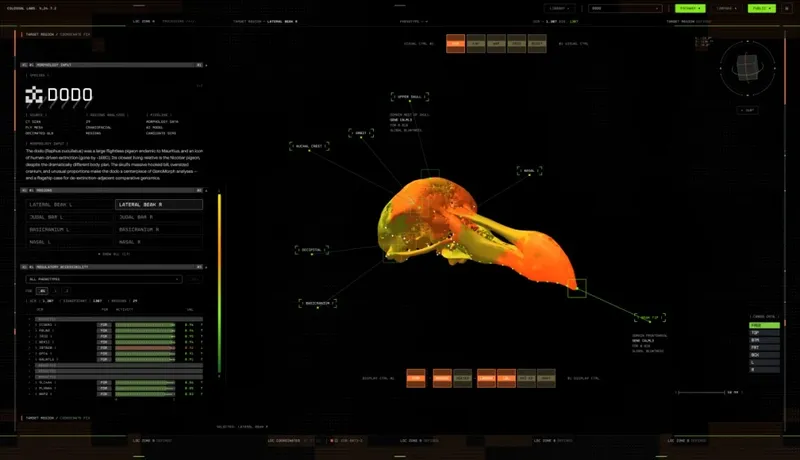
ITHome News on October 15: According to TechCrunch, Colossal Biosciences released a brand-new artificial intelligence platform locally on Wednesday to help accelerate research related to resurrecting extinct species.
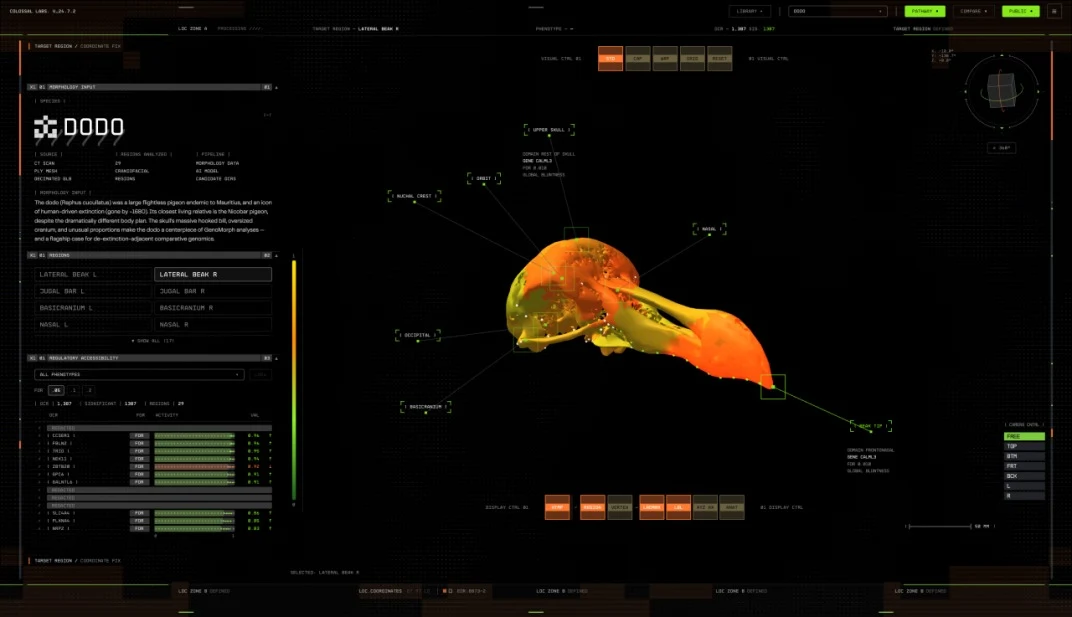
According to IT Home, this platform, named GenoMorph, combines advanced three-dimensional morphology, comparative genomics, and developmental biology techniques. In resurrection projects with limited genetic data,Screen for target genes suitable for gene editing. The company is using this platform to advance its dodo de-extinction project, even though genomic data available for the dodo is extremely scarce.
For example, the company obtained 100 genomic samples for its mammoth de-extinction project, but only one genome is available for the dodo project. The company said that the cold environment where mammoths lived was more favorable for preserving DNA, while dodos lived in tropical regions, which is why far more mammoth DNA has survived.
Ben Lamm, CEO and co-founder of Colossal Biosciences, said in an interview: "Usually scientists can compare large numbers of genomes to identify the gene differences that determine specific traits. But with ancient DNA of extinct species, we don't have that option; such species have very little DNA available, and only a small number of complete genomes can be obtained."
Lamm explained that to build the GenoMorph platform, the team collected large amounts of developmental data from chickens, quails, ducks and pigeons, and integrated genetic information from more than 70 bird species along with three-dimensional skull measurement data. The platform took more than a year to develop, and also draws on the research the company has accumulated over years in the field of de-extinction.
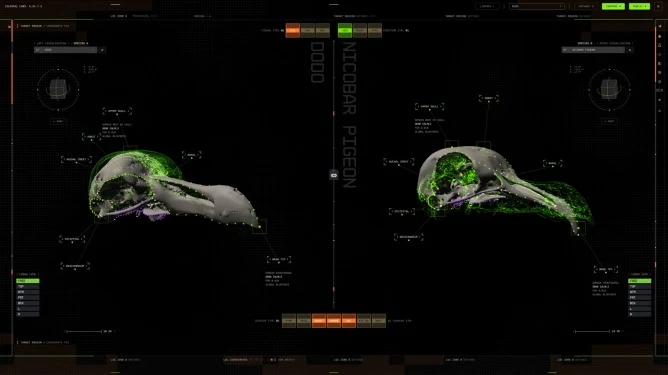
"This AI can learn which DNA segments are active during the development of birds' beaks and facial structures, and use that information to predict which gene regulatory mechanisms created the dodo's iconic appearance." He likened the platform to "a treasure map of the dodo genome": the team no longer needs to sift through massive numbers of potential gene differences, as GenoMorph can directly screen out the gene variant sites that truly matter.
He went on to say: "We have so far identified around 2300 DNA editing targets that could be used to modify dodo craniofacial morphology, which can next be validated in the laboratory." Lamm said GenoMorph will help the company overcome one of the biggest bottlenecks in de-extinction research: figuring out exactly which gene changes created the unique traits of extinct species. However, scientists still need to verify whether these edits can produce the target physical traits.
"We have developed a new system that uses lipid nanoparticles to deliver gene-editing tools directly into developing bird embryos." This approach allows the team to observe how specific genetic changes affect bird development, "without having to wait for the birds to complete their entire breeding cycle until sexual maturity."
The company also announced on Wednesday that its Nicobar pigeon population has now reached 36 birds, and that it has successfully cultivated the key cells that can develop into eggs and sperm.
"The Nicobar pigeon is the dodo's closest living relative, and these cells are a core element in our effort to breed individuals with dodo traits." He said the team's next step is to validate GenoMorph's predictions in the laboratory. Lamm continued: "What is most exciting is that the various technologies we have developed are gradually converging, and can also support research projects on other entirely different groups on the tree of life."
Asked whether this kind of gene editing is safe, Lamm said the purpose of developing technologies like GenoMorph is to make genetic engineering "more precise, controllable and testable." The platform itself does not perform gene-editing operations; it only helps research teams screen gene modification proposals worth studying in depth.
"Finding a potential editing target does not mean we will immediately implant it into an animal, nor does it assume it is safe by default." He added, "The more precisely we identify and validate these genetic changes, the more reliable the decisions throughout the research process will be."
Meanwhile, this new technology from Colossal Biosciences has already won the endorsement of XPRIZE founder Peter Diamandis. Diamandis, an investor in Colossal Biosciences, announced on Wednesday the founding of a new venture capital firm, NeoGenesis Capital, dedicated to supporting companies that use Colossal Biosciences' programmable biology platform to operate in healthcare, agriculture and species conservation.