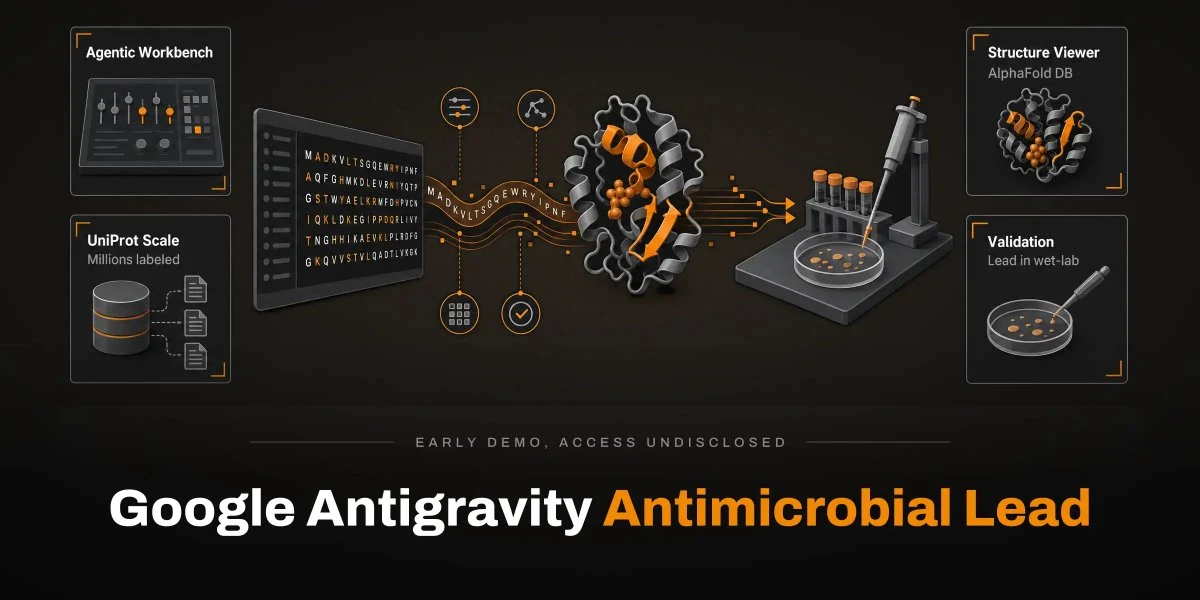
IT Home On October 16, it was reported that the problem of antibiotic resistance is worsening. There is a urgent need for new types of antibiotics worldwide, but the development of new drugs is often slow and complicated. The Google Antigravity intelligent development platform launched by Google can effectively simplify this process.
Google Antigravity provides a smart science workspace that enables biologists to quickly discover, evaluate structures, and screen potential targets. It integrates scattered searches across multiple databases into a single session. The platform also utilizes the ProtNLM model to help researchers scan millions of uncharacterized proteins in the UniProt database, as this model can directly predict biological functions from amino acid sequences.
Researchers have identified a new type of antibacterial peptide candidate molecule through Google Antigravity. It is predicted to be active against respiratory tract pathogens, and the candidate molecule is currently being verified in a wet lab.
According to the blog post cited by IT Home, antimicrobial peptides, especially bacteriins, are a promising alternative to traditional antibiotics. These substances have naturally evolved the ability to target the weaknesses of bacteria, making it difficult for pathogens to develop resistance. Currently, billions of natural amino acid sequences have been collected in global databases, but many of these sequences lack functional annotations and remain in a “dark matter” state.
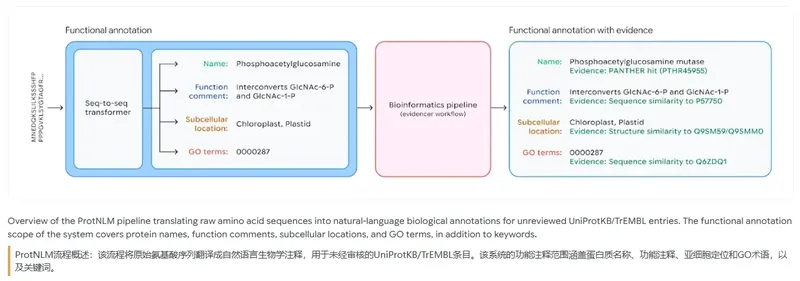
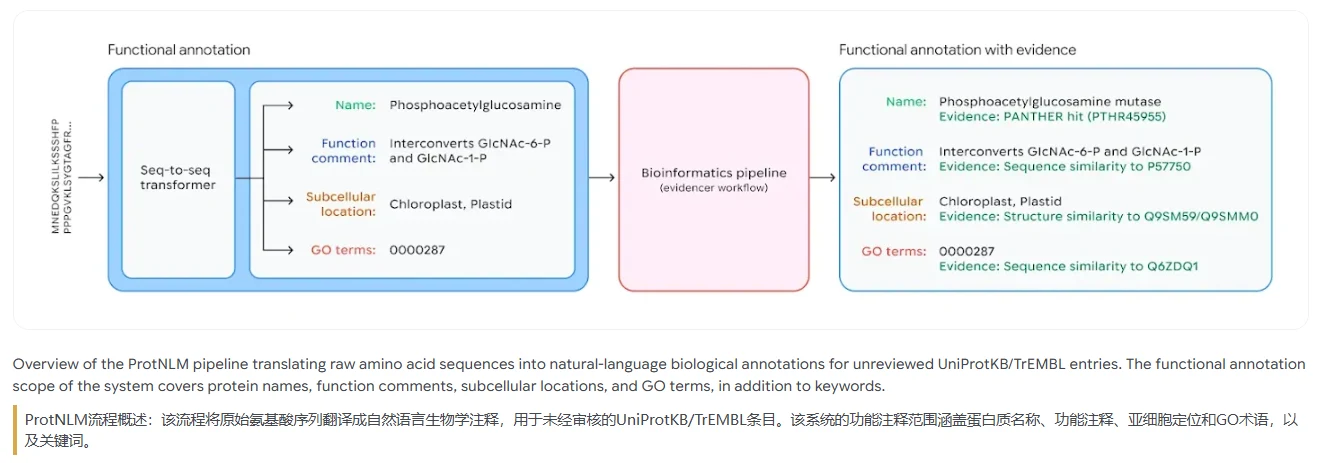
The ProtNLM deep learning model developed by Google can directly read the "grammar" of amino acid sequence evolution, and predict biological functions from the original protein sequences. It has added high-confidence functional annotations to a large number of UniProt entries.
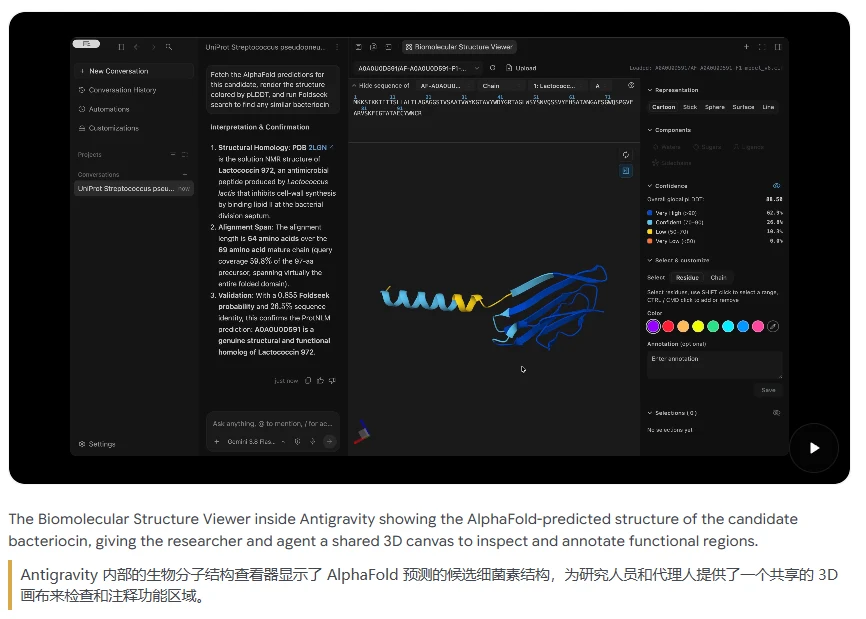
On the Antigravity platform, researchers collaborate with AI agents to conduct research: the researchers set biological goals and control research strategies, while the agents handle the heavy tasks such as cross-database coordination, structural analysis, and literature synthesis. This approach compresses the days-long process of filtering scattered databases into a single collaborative session, significantly reducing the barriers to biological research.
The platform also includes the Biomolecular Structure Viewer 3D visualization tool, allowing researchers and agents to collaborate on a shared 3D canvas. The agent can obtain structures from the AlphaFold database, dynamically drive the visualization, and highlight key functional areas; researchers can also mark areas of interest in 3D space, ask questions to the agent, and conduct interactive research based on the structure.
In the past, such R&D work had to rely on scattered professional software, but Google Antigravity integrates the entire scientific reasoning process into one place, helping researchers explore the vast biological search space more efficiently and filter out high-confidence candidate molecules, allowing scientists to spend more time on high-quality hypothesis verification and experimental research.