
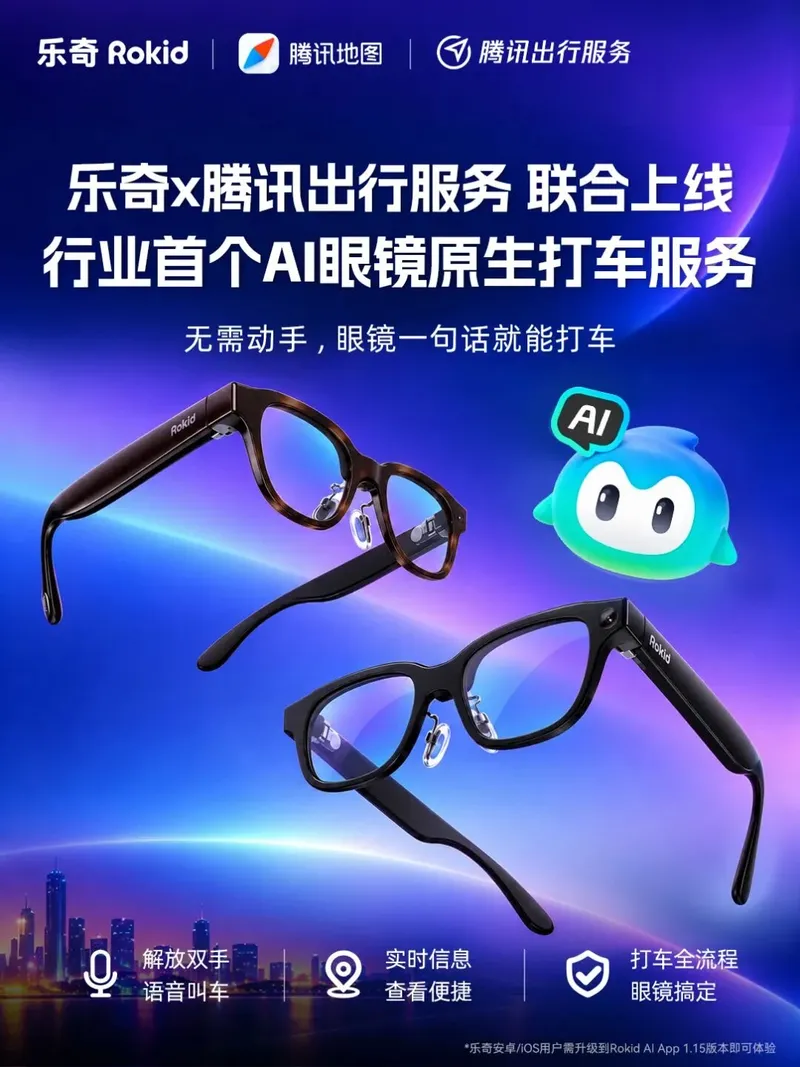
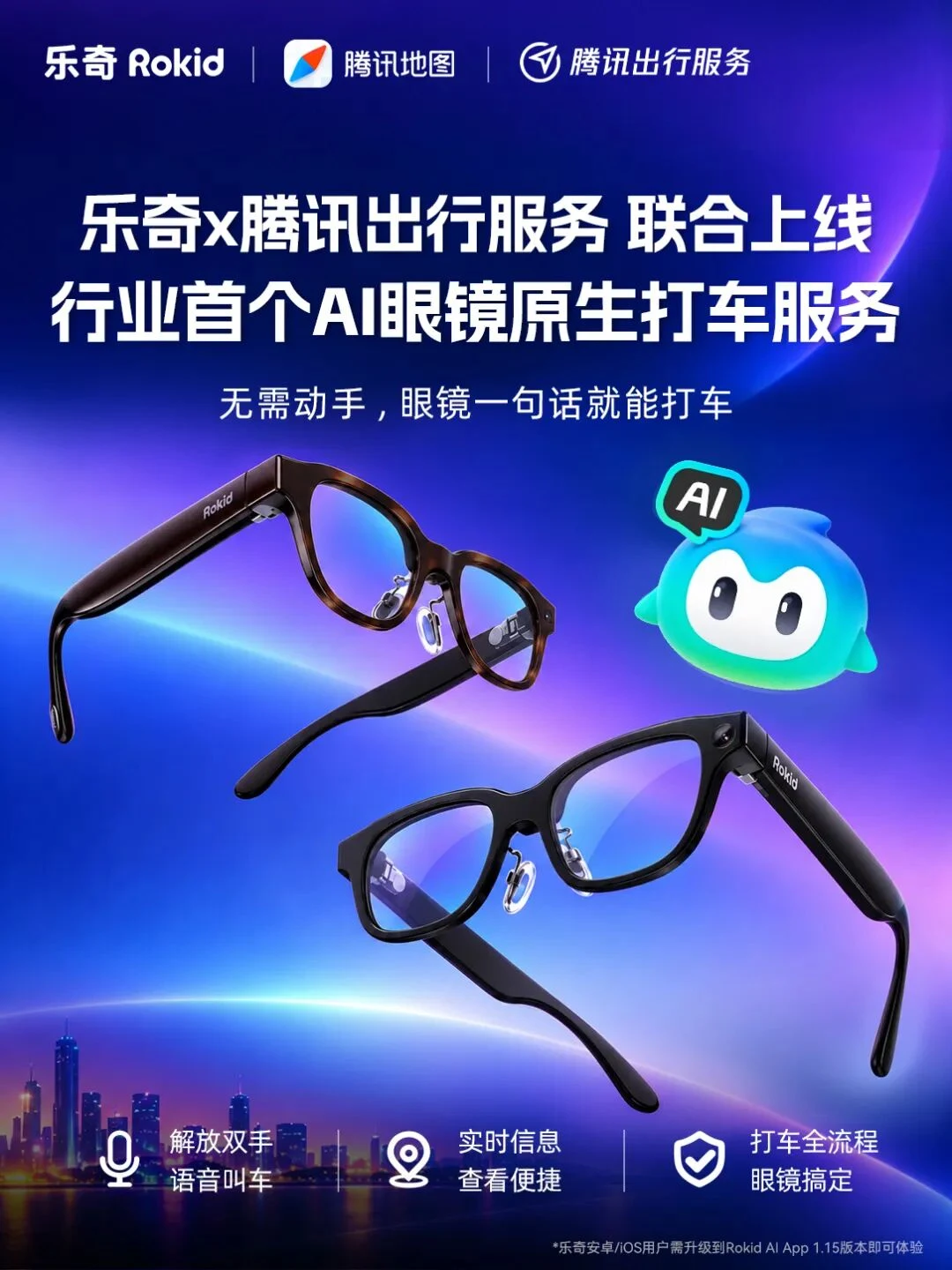
IT Home On October 16, Rokid announced today its collaboration with Tencent Travel Services to launche the first native AI glasses ride-hailing service in the industry, allowing people to hail a ride through their glasses.
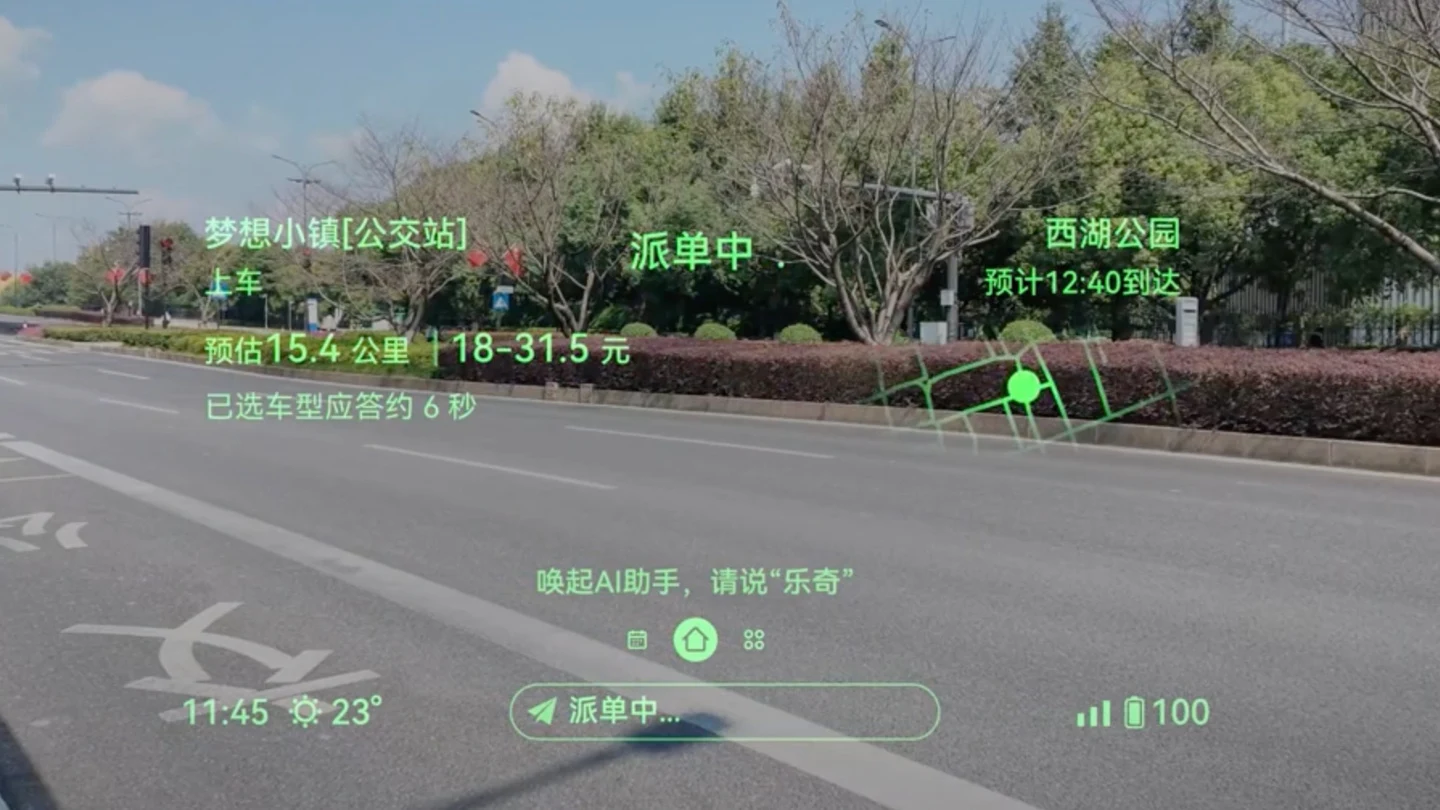
After connecting to Tencent Mobility Service Agent, the user only needs to state the destination, and the glasses will complete the entire process of hailing a car—from identifying the request, initiating the call, to selecting the order and paying for the fare—and can also display vehicle information and estimated arrival time.
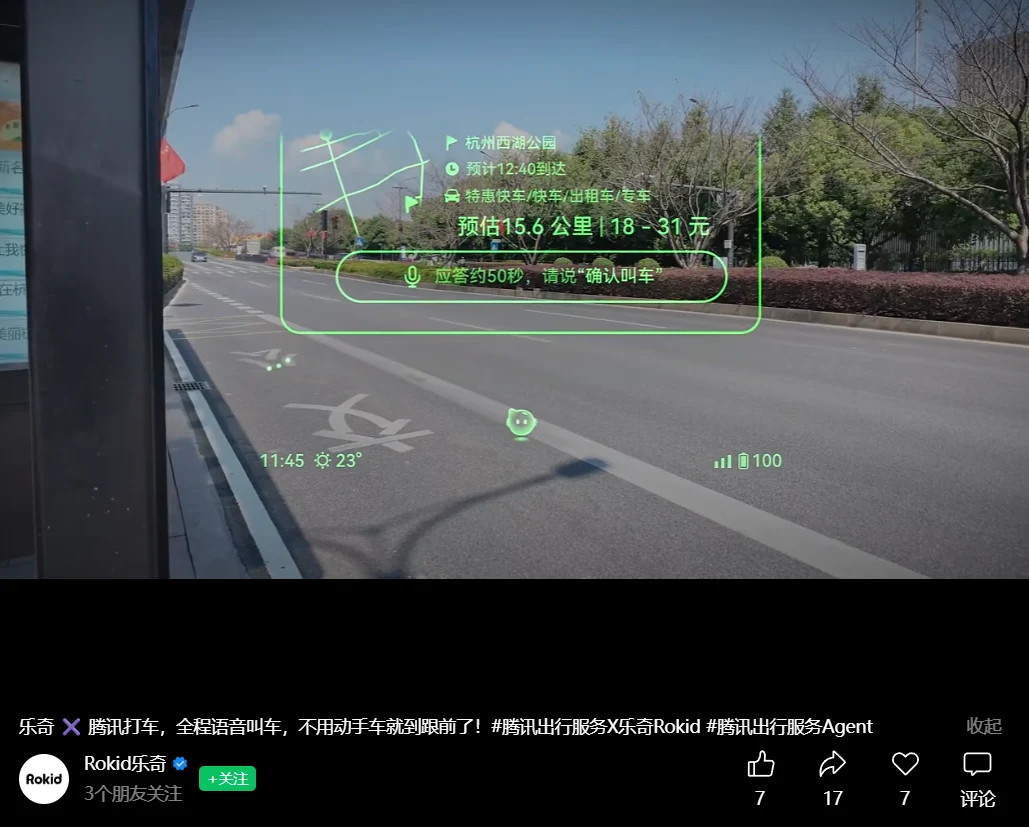
According to Rokid’s official statement, in the past when waiting for a vehicle, users had to repeatedly look down to check the vehicle’s location, license plate, and estimated arrival time. If these details remained visible in the field of view, there was no need to frequently take out their phones, and it would be easier to find the vehicle in complex environments such as stations, shopping malls, and roadside areas.
For elderly people, children, and those who are not familiar with mobile phone operations,Voice-based ride-hailing can also reduce the barrier to use. The device no longer requires users to be familiar with complex interfaces; instead, it directly transforms “where I want to go” into “what I need help with”.
IT Home has learned that the Rokid glasses Agent and the Tencent Travel Service Agent have achieved collaborative cooperation: Rokid is responsible for understanding requirements and perceiving interactions, while the Tencent Travel Service Agent provides an AI one-stop taxi service that covers the entire taxi booking process.
The two parties achieve direct collaboration between agents through the A2A (Agent-to-Agent) standard protocol — Tencent Travel Services’ open full-stack AI taxi service for various smart wearable devices encapsulates capabilities such as location recommendations, boarding point selection, nearby vehicle queries, estimated prices and multi-model comparisons, one-click ordering, real-time order status synchronization, and password-free payment into standardized services. These are used by Rokid glasses to be invoked as needed, allowing users to “only speak and not touch” throughout the process.
In addition, when it comes to payments, changing the destination, and canceling orders, a mobile phone remains a more reliable backup option. Rokid officially states that the ideal form of glasses-based transportation is not to replace mobile phones, but to let the glasses initiate requests, provide real-time reminders, and interact with the environment, while letting the mobile phone handle complex confirmations, payments, and exception handling.
Ad statement: The text contains external link references (including but not limited to hyperlinks, QR codes, passwords, etc.) designed to provide more information, save selection time, and the results are for reference only. Articles on IT Home that include external links all include this statement.