
IT Home On October 16, according to a report by TechCrunch yesterday, the Australian startup Apate was established in 2024. Instead of using AI to improve work efficiency, they chose to let AI and scammers “compete in intelligence battles”.
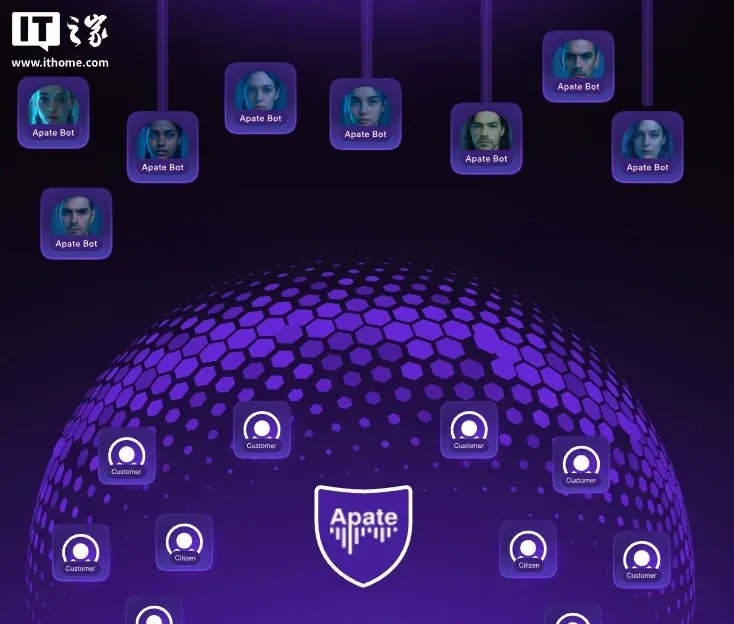
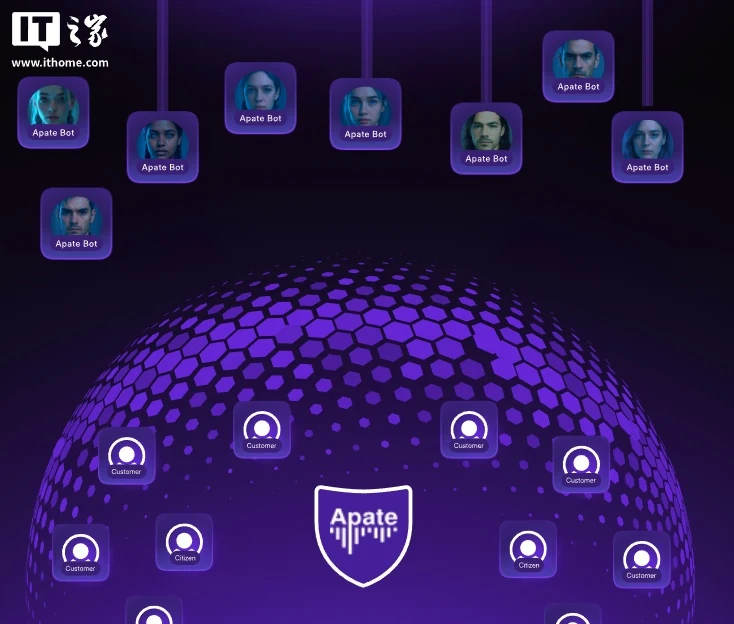
Based on research by Sydney Macquarie University, Apate deployed thousands of AI agents disguised as innocent victims of fraud. These agents can answer scam calls, respond to suspicious messages and emails, track phishing links, and join social media groups to trick scammers.
The agent can pretend to be various people, with different ages, genders, and accents, and speak various languages. The purpose is to consume as much time as possible from the imposter.
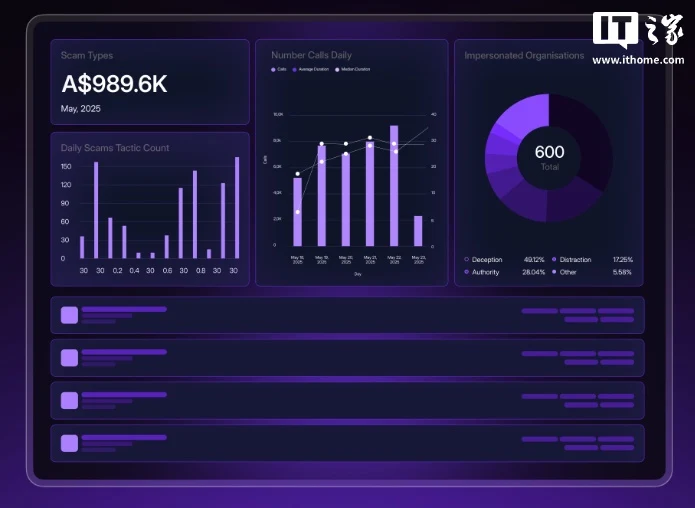
The company said that its AI team has, so far, wasted 17 years of time for scammers in 2.5 million conversations. More importantly, for Apate’s customer base — banks, telecom companies, government agencies, and utility providers — “undercover AI agents” allow scammers to reveal personal information that usually only the victims know after being deceived: bank accounts, encrypted wallets, phone numbers, malicious websites, the brands they impersonate, and other details of the fraud.
With the development of AI, scammers can also use AI to continuously upgrade their scams. In 2025, the Federal Bureau of Investigation in the United States received over 22,000 AI-related crime complaints, and these frauds caused losses of approximately $893 million (IT Home note: at current exchange rates, this is roughly 5.986 billion RMB). The Federal Bureau of Investigation said that scammers use AI to control conversations and deeply fabricate the voices and images of celebrities, executives, and credible figures.
Interestingly, Apate’s idea originated from a real scam call. A few years ago, Apate’s founder and CEO, Dali Kaafar, received a call from an unknown number during a family picnic. He realized that the caller was a scammer, so he decided to act like a fool and spent 44 minutes with the scammers.
Kaafar then thought that during those 44 minutes, the scammer did not call the real victims. So, could this process be automated?
This idea ultimately led to Kaafar’s work at McCombery University. He and his colleagues used machine learning and natural language processing techniques to reveal the content of scam calls, and they developed better methods for detecting and preventing scams.
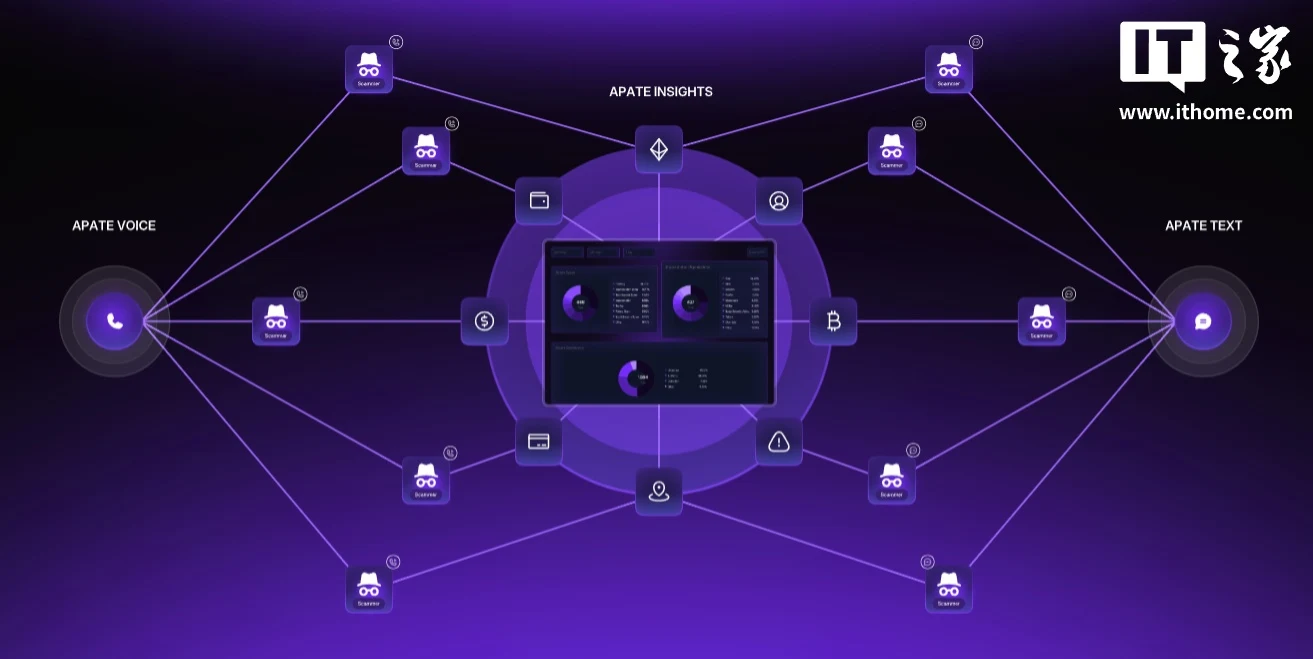
“Most industries fix problems after they occur. Telecom companies block numbers, but scammers just get new ones. Banks monitor transactions, but by then the scammers have already contacted the customers. We, on the other hand, directly contact the scammers to gather information before others are deceived,” said Brad Joffe, co-founder and chief business officer of Apate, to TechCrunch. “Our AI agent communicates with thousands of scammers every day through phone calls, messages, emails, and the internet.” What we provide to our clients are the results generated from these conversations, as well as what they can do with them.
Joffe said that Apate will use both cutting-edge models and its own finely tuned models to drive agents and analysis.
Apate not only provides AI services, but also offers clients fraud-related intelligence and analysis for their end users, employees, brands, and products. Clients can even assign these AI agents to perform specific tasks, such as obtaining the bank account numbers or encrypted wallet addresses of scammers. Its SMS AI agent can search forums, investment groups, and social platforms to identify potential fraud activities, then enter conversations under a fake identity to reveal the detailed fraud steps of the scammers.
Apate’s clients include Commonwealth Bank of Australia, TPG Telecom, and other utility and telecom companies and government agencies. Joffe said that TPG has forwarded nearly 590,000 calls to Apate’s AI, the fraud losses reported by Commonwealth Bank of Australia have decreased by 76%, and an unnamed Australian bank also used its outbound AI to disrupt 22 fraud operations.
In August this year, Apate raised a seed round financing of $8.15 million (approx. 54.629 million RMB at current exchange rate). The company has 20 employees.The total fundraising amount is approaching $10 million.(The current exchange rate is approximately 67.03 million RMB), with plans to invest in products and expand international business in the latest round of funding, including opening an office in London and increasing influence in the United States.
Joffe said: “The name Apate comes from the Greek goddess of deception in mythology, which fits perfectly with our work.”