
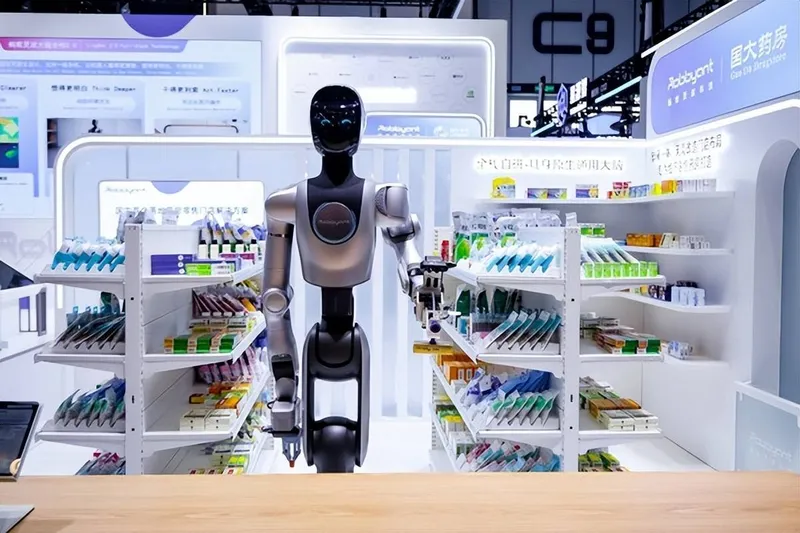
During the morning peak time for medication pickups, orders keep coming in at the pharmacy stores. A robot receives an online order and moves accurately to the shelf—the medicine boxes are of similar size and packed tightly, with the transparent packaging reflecting the light. It gently extends its robotic arm, picks up a box precisely, and delivers it to the medication pickup window.
Commanded by the “Lingbo General Brain” of Antie Lingpo, a company in Zhangjiang AI Innovation Town. This “brain” was pre-trained to adapt to 17 mainstream robot brands and 20 robot configurations, allowing the same “brain” to operate across different robots and tasks. Robots equipped with this brain have also been officially deployed in several stores of Shanghai Guoda Pharmacy.
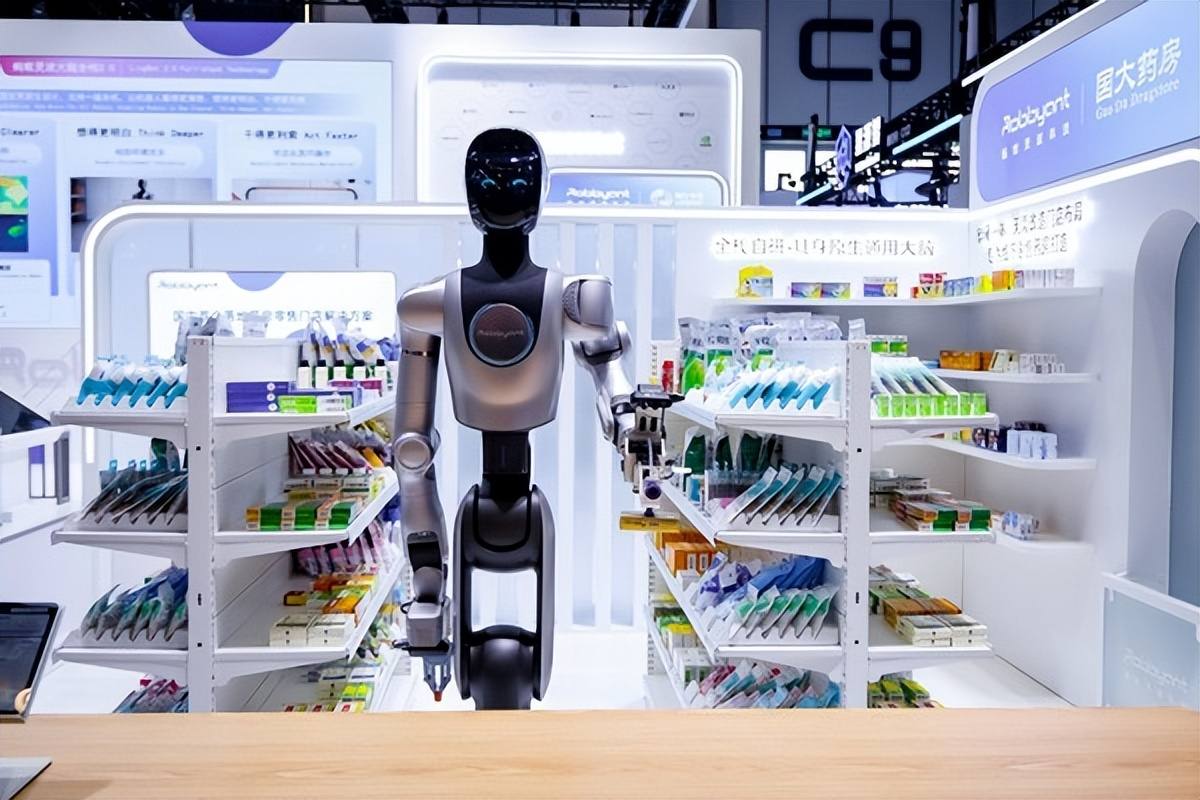
Figure 1: Ant Lingbo Robot Smart Pharmacy
In addition to seeing, hearing, and acting, robots need another skill: predicting the future before taking action. “What will happen if we do this?” This is precisely the core task of the world model—predicting future evolution based on current conditions and actions. How these two work together and whether they can be integrated remains an area of ongoing exploration in the industry. In Shanghai Zhangjiang, VLA has been implemented on a large scale, while the world model has just entered the trial operation phase. VLA addresses “ability to act,” and the world model addresses “thinking clearly before acting.” The integration of both has already formed an industry consensus. In Shanghai, multiple technical approaches are being verified simultaneously, with planning, standards, and testing following suit.
1. VLA at the pharmacy and work station: In service, continuously optimized
The capabilities of “embodied brain” go far beyond taking medicine; it can also drive – robots that sort packages in warehouses and load and unload parts on production lines are all capable of this. In January 2025, the country’s first heterogeneous humanoid robot training center was launched in Zhangjiang. The National and Local Joint Humanoid Robot Innovation Center and Huawei jointly established a model site for embodied intelligence training. VLA based on domestic Ascend computing power is being developed, and efficient training of world models and VLA models is being promoted simultaneously. Two technical lines are advancing parallelly within the same training center.
The capabilities developed need to be tested in real industrial environments such as workshops. The “Linglong” series of robots from Guodi Center have been deployed in auto parts company Yanfeng. They carry out real-world data collection and autonomous operation verification at workstations such as part flame treatment, complete set sorting, and laser weakening, completing the migration path of “training in a simulation lab — model iteration — deployment on an industrial site”.
Moving from a single scenario to more stores and workstations requires overcoming the challenge of capability migration. A robot completing medication pickup in a pharmacy does not mean it can operate smoothly in another store: shelf layout, drug packaging, and placement methods may change; entering an industrial site also requires adapting to different part shapes and operational requirements. Whether the model can handle these changes, how much additional data is needed, how much training and on-site tuning are required, all need to be verified individually. Measuring the progress of VLA’s application involves checking whether it can complete current tasks, to what extent its existing capabilities can be reused, and how much extra effort is needed to adapt to new scenarios.
II. The World Model Takes Over: Breakthroughs, Integration, Innovation
The World Model and VLA are not mutually exclusive; the industry consensus lies in how to combine them. Instead of arguing about the strengths and weaknesses of the models, it is better to clarify the core capabilities required for robots first. The World Model adds the ability to “think ahead before taking action.” Academician Zheng Nanning of the Chinese Academy of Engineering once explained that the system of the World Model needs to build an internal simulation environment. Prediction and reasoning before action, and evaluating the possible outcomes of different decisions.
Also in Zhangjiang AI Innovation Town, some enterprises are bringing VLA into pharmacies, while others are training world models. While adapting to multiple brands and implementing services earlier, Ants Lingbo has also released LingBot-VA 2.0, the industry’s first embodied native world action model. Zhiyuan insists on the synchronized development of robots and “brains”; the Elegant G2 is already operating continuously in factories. Yao Maoqing, co-founder of Zhiyuan, pointed out that the most important function of world models is “accurately predicting the next state of the physical world”. In September, Zhiyuan released the world-action model GE-Act 2.0, integrating “predicting the future” and “generating actions” into a single model. Training data was expanded from 300 hours to 30,000 hours. Direct testing is performed without additional training in unfamiliar scenarios or unfamiliar organisms. The overall success rate of one of the robots increased from 17.1% to 44.1%, with the success rate in unfamiliar scenarios increasing by about 2.6 times.
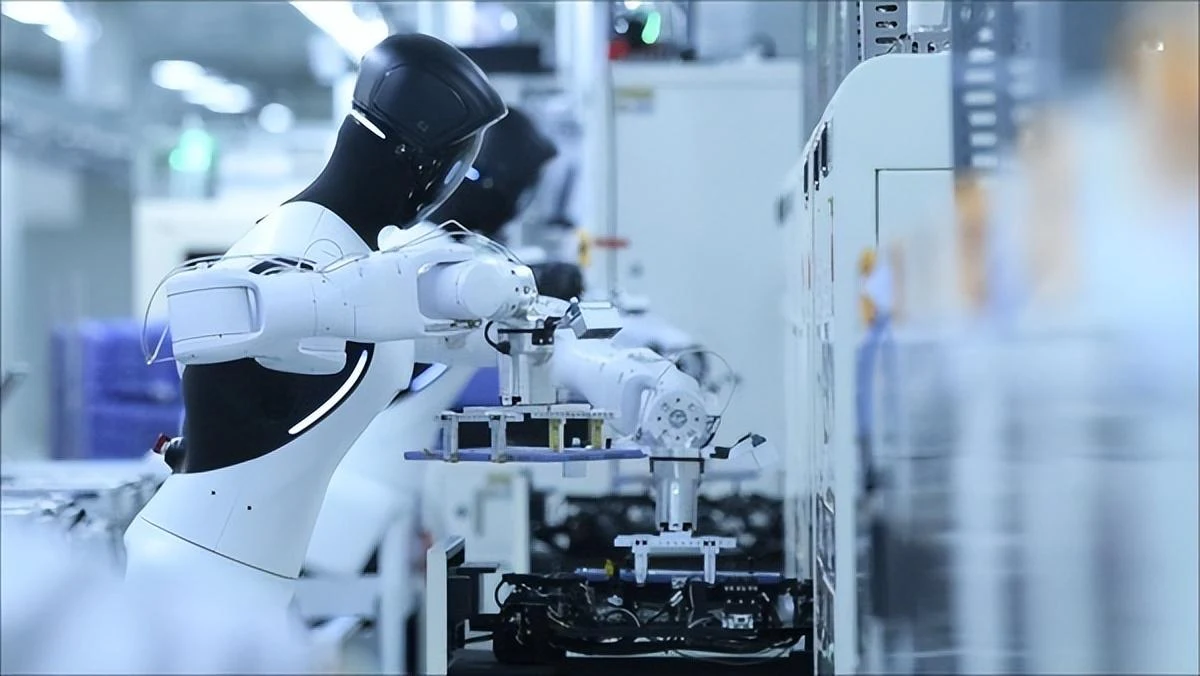
Figure 2: Zhiyuan Spirit G2 robot operating on the factory production line
There are also embedded integration paths. Pudong enterprise Qinglang Smart embedded the world model into VLA, allowing the robot to “think through things before working” – this humanoid robot does not rely on remote operation and has completed long-process tasks such as coffee production.
The World Model also has essential questions to answer—it needs to be fast, realistic, and rich in data. The simulation must be rapid: on the RTX 5090, GE-Act 2.0 generates a continuous motion block in about 104 milliseconds. Realism requires precision: some models can produce vivid images of robot-endheld water cups, but the water inside remains completely still. Data needs to be abundant: according to Tao Daocheng, chief scientist at Da Xiao Robotics, and Wang Fei, head of development at Kawou World Model, significant capabilities emerge only with “near ten million hours of data”.
III. A Flourishing of Hundred Flowers: Shanghai’s Embodied Intelligent Ensemble
The uniqueness of Shanghai’s embodied intelligence industry lies in the fact that multiple solutions are simultaneously being tried to address the same problem.
Some embodied AI systems feature a end-point shelf. Da Xiao robot uses the self-developed World Model 3.1 to directly drive the robot; in September, its first gas station convenience store partnership with Sinopec Shanghai Sales Company began trial operation: the robot picks up and packs online orders in a passage 75 centimeters wide. Chairman Wang Xiaogang explained that during robot operations, “approximately every 100 milliseconds, the World Model predicts the future state.” In terms of data collection generalization, Qiongche Intelligent collects over 100,000 hours of real-world data across more than 50 cities nationwide. From pre-training to post-training, it relies on human data—making it more economical and scalable compared to robots collecting data. Lingchu Intelligent converts manual operations into robot actions through its self-developed World Model, and then iterates through reinforcement learning at the customer site.
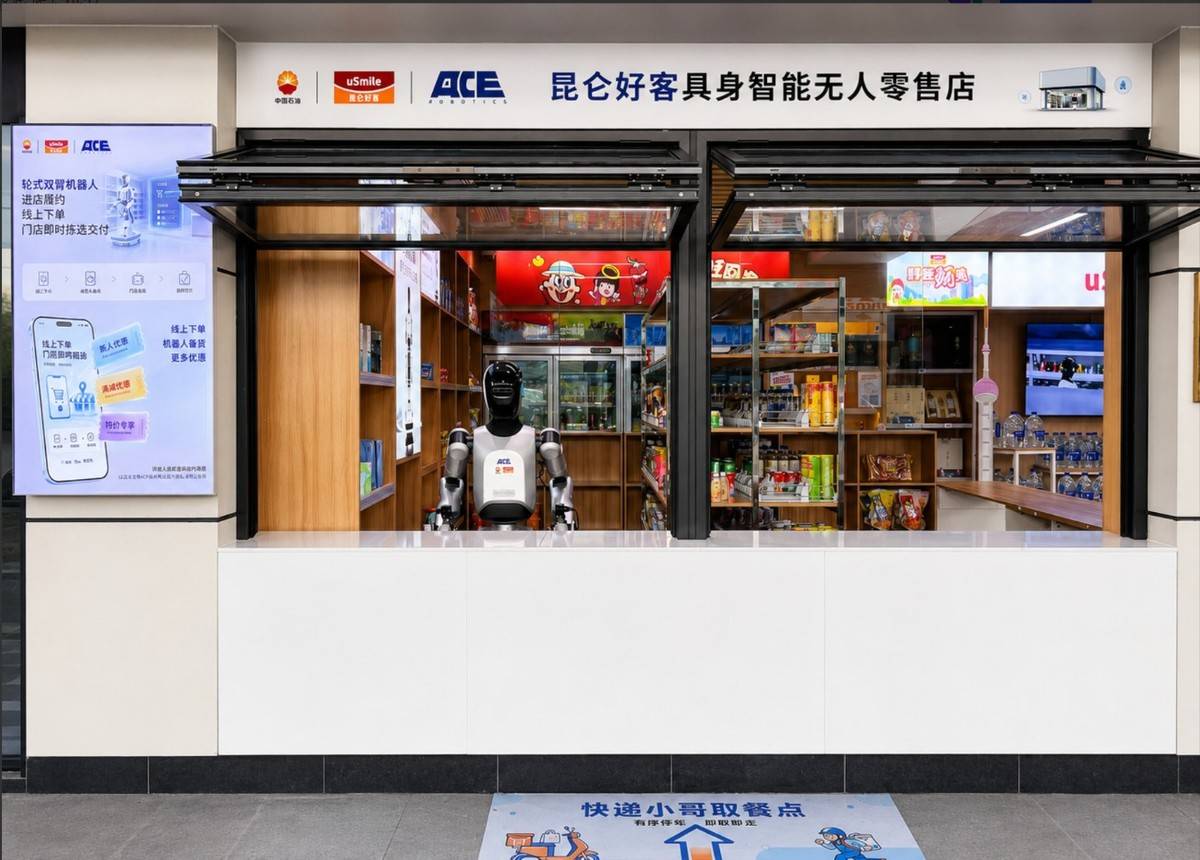
Figure 3: Da Xiao Robot in the CNPC Kunlun Hostel
Some embodied AI starts from the Bend-of-line production facilities. Shi Zhihang’s next-generation model has been deployed in production lines such as automobile wiring assembly. Its founder and CEO, Chen Yilun, emphasized: “World models understand the world; physical AI changes the world.” There is also embodied AI that starts from the AI4Slab. The Shanghai Artificial Intelligence Lab has released the InternW0-Δ world action model research, which integrates vision, force perception, and touch into a single model. This allows robots to continuously perform technical tasks such as lab pipetting, enabling them to sense the strength and feedback of each step.
More technical paths are being explored simultaneously in Shanghai. Ju Brain Panyi releases a brain-based cognitive world model that allows exploration, navigation, and operation in unfamiliar environments without the need for pre-built maps; Su Du Technology trains in simulation environments before transferring the skills to real devices.
There is only one test criterion: whether it is reliable in real scenarios.
4. Planning, standards, and evaluation are being accelerated in development
While the technical approach develops in multiple directions, it is even more necessary to clarify the direction. The “Pudong New Area’s ‘15-25 Plan for Accelerating New Industrialization’” proposes focusing on the integration technology of “large embodied models + world models”, so as to promote models in understanding physical laws and making autonomous decisions.
Industry standards are also being developed at an accelerated pace. The Ministry of Industry and Information Technology has made public requests for feedback.“National Humanoid Robot Industry Standard System Construction Guide”(2026Version)》(Draft for Comment) The World Model Standards have been included as items.“Guidelines for the Construction of Shanghai Artificial Intelligence Standards System (2026—2028)”List the “World Model Standards” as key technical standards, and require the establishment of a multi-dimensional evaluation system.
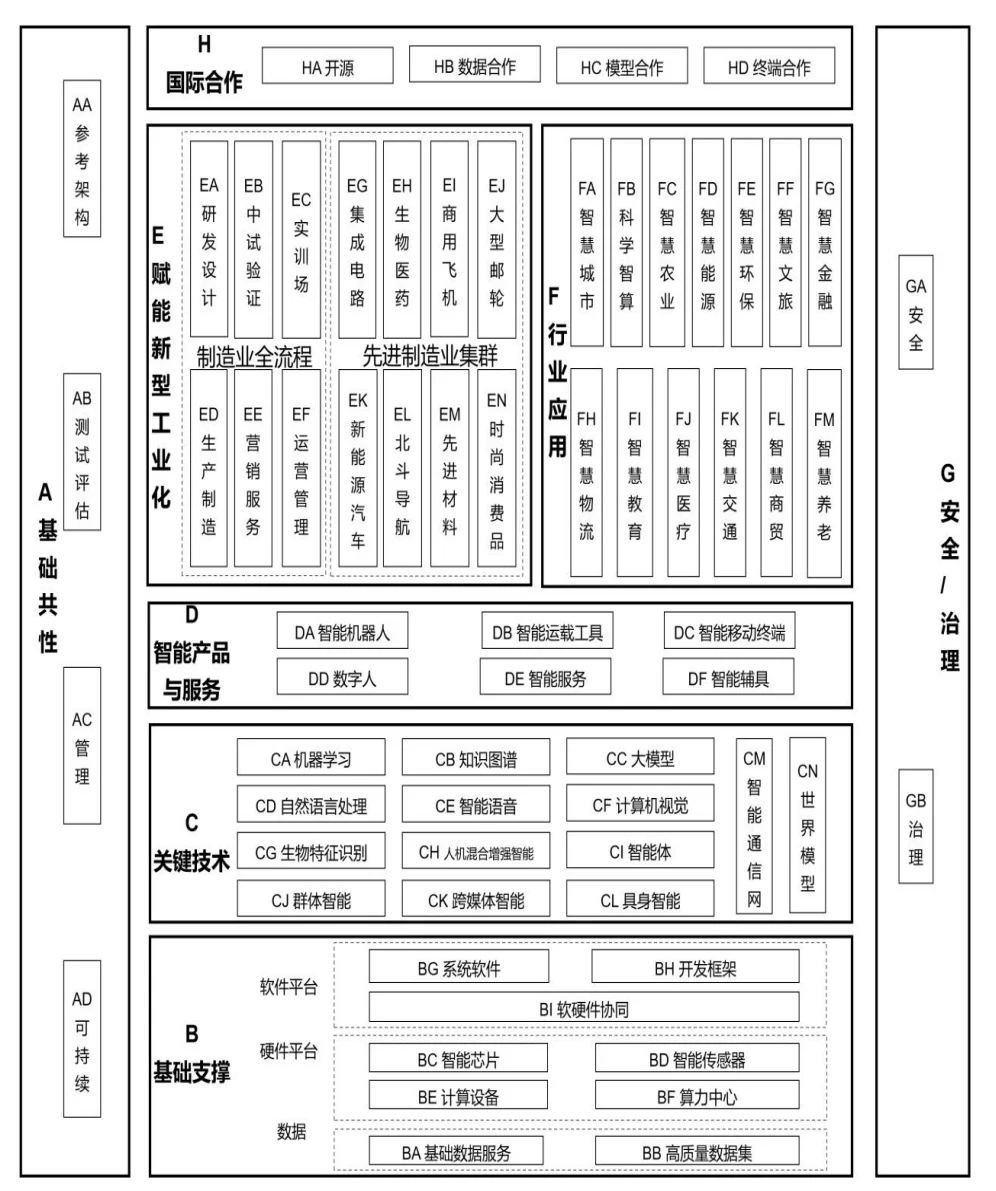
Figure 4: Structure Diagram of Shanghai Artificial Intelligence Standard System
Still that busy pharmacy. At this moment, the robot can see the medicine boxes, understand the orders, and reach out to take the medicines. When it reaches out again, will it have a little more foresight about “what happens if it touches”? Which “brain” will be used? This answer determines whether it “can work” or is “reliable”.
From “understanding the world” to “practicing the next step”, the answers are being explored, verified, and implemented in the training grounds and workstations of GDPS 2026, as well as in more laboratories, stores, and production lines in Shanghai.
This article is provided by Ants Lingbo, and Quantumbit has been authorized to repost it. The views belong to the original author.