
Yunzhong, reporting from Aifeisi
QbitAI | Official account QbitAI
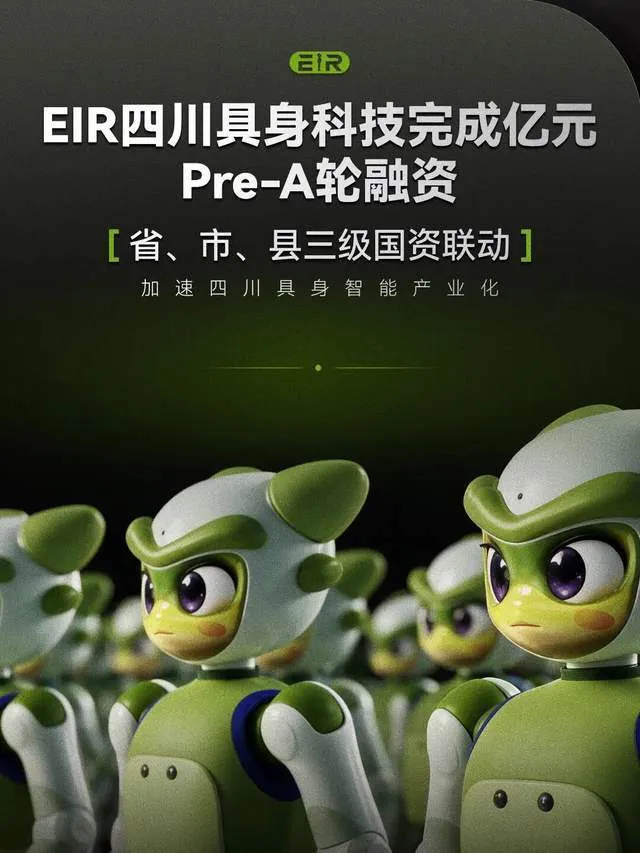
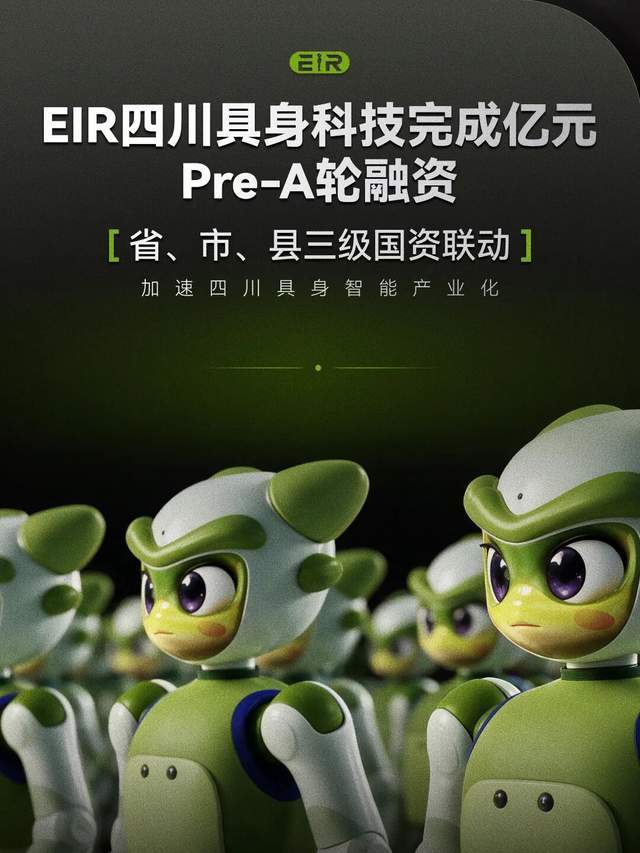
Recently, Sichuan Embodied Humanoid Robot Technology Co., Ltd. (EIR) completeda Pre-A round of financing of over 100 million yuan。
This financing round is coordinated with support for the humanoid robot pilot-scale maturation project, forming a pattern of linked support from state-owned capital at the provincial, municipal, and county levels of Sichuan Province.
(The pilot-scale maturation project refers to projects that carry out small-batch trial production, engineering verification, and process optimization for technological achievements, advancing them from prototype to mass-production deployment.)
It is reported that the funds from this round will be mainly used for the iterative R&D of its flagship product, the humanoid robot"Aiqiu", the construction of a 10,000-unit-scale production base, and the establishment of the sales system.
The company's next round of financing has also been launched simultaneously.
From AI Native to Emotion Native, born for long-lasting companionship
The home scenario amplifies the robot's product experience to every single day。
Beyond delivering items and assisting with daily tasks, users will also expect it to keep up with conversations, respond appropriately, and build emotional connections through ongoing interaction.
This kind of demand requires interaction to participate in software and hardware design from the very beginning.
On the basis of fully self-developed integrated software and hardware, EIR proposesEmotion Native:
, making emotional companionship the product's native goal, so that the body form, language understanding, facial expression, and motion control all serve the long-term coexistence of humans and robots.。
Aiqiu's projected face is the most intuitive presentation of this design.
According to the company, EIR's 3D ultra-short-throw projection face solution is unique in China, presenting bionic expressions on a three-dimensional face, creating a lively, approachable demeanor while also keeping implementation costs low and mass production feasible.
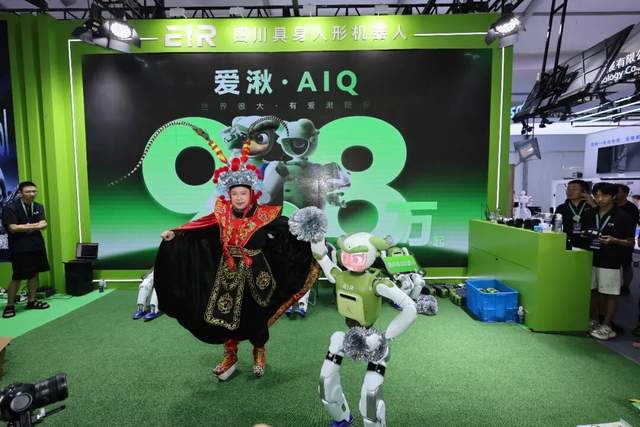
Through digital content adaptation, Aiqiu can switch its appearance and expressions with one click, flexibly presenting different content such as cultural tourism characters and brand IPs.
The same set of hardware thus gains room for continuously updated forms of expression, and also leaves extensibility for companion experiences aimed at different users.
Behind the recognizability brought by the projected face lie trade-offs based on user needs:
How to make people willing to approach, how to make communication more natural, and how to make the product suitable for long-term use. Users' pain points determine where the product improves and how technology investment is prioritized.
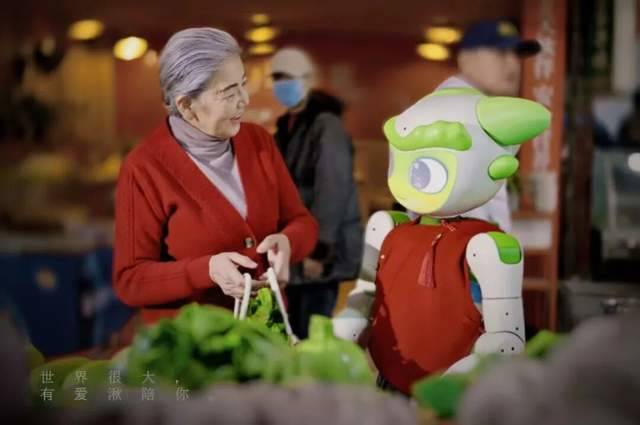
In EIR's view, consumer robots are expected to open up a trillion-yuan-scale market; whether providing services or entering homes, they need to balance practicality, emotional experience, and affordability.
Aiqiu's starting price of 98,000 yuan provides a concrete competitive benchmark for small and medium-sized bipedal humanoid robots:
On top of task capabilities, the companion experience and purchase cost also enter users' choices。
The moat of long-term companionship hides in every instance of real use
To move a robot from first-glance approachability to long-term companionship requires crossing the technological chasm of coordinated perception, understanding, and action.
Real users will switch topics, change needs, and also convey unspoken meanings through tone and gestures; the robot needs to continuously understand the context, keeping language, expressions, and actions consistent.
This is also where the value of full-stack self-development lies.
EIR's core team comes fromUniversity of Electronic Science and Technology of China. The company extends the university's research accumulated expertise to whole-machine R&D and industrialization, advancing full-stack self-development around the robot body, core algorithms, and key components, enabling software and hardware to iterate in coordination toward the same product goal.
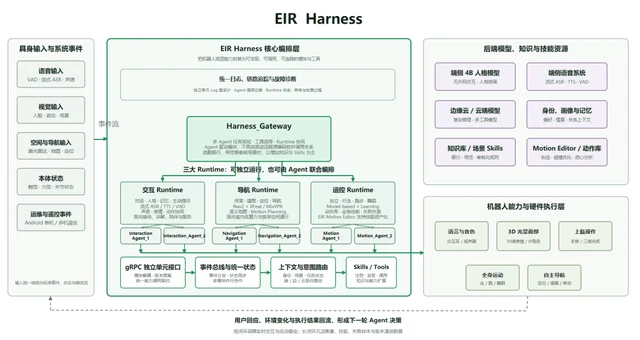
The EIR HARNESS architecture built independently by EIR undertakes the unified orchestration task, connecting perception, interaction, memory, navigation, and motion capabilities.
For emotional companionship, what it aims to solve ishow a single exchange can extend into repeated interactions over time:
Retain the necessary context, understand the current situation, coordinate role expression, verbal responses and body movements, and turn the needs arising from interaction into action.
Physical capability gives companionship practical support.
In the fields of motion control and intelligence, EIR focuses on humanoid robot Loco-Manipulation (whole-body mobile manipulation) capabilities, building an integrated end-to-end Pipeline for whole-body VLA (Vision-Language-Action models) covering data collection, model training and deployment inference, connecting environmental perception and instruction understanding to coordinated movement and operation.
At the same time, relying on its self-operated Sichuan Province Humanoid Robot Training Field B, real application scenarios and self-developed toolchains, EIR has completed the full loop ofreal-robot data collection, data governance, model training, evaluation deployment and data backflow。
The interaction strategies, expression coordination and task execution experience accumulated in real usage are continuously consolidated into reusable product know-how.
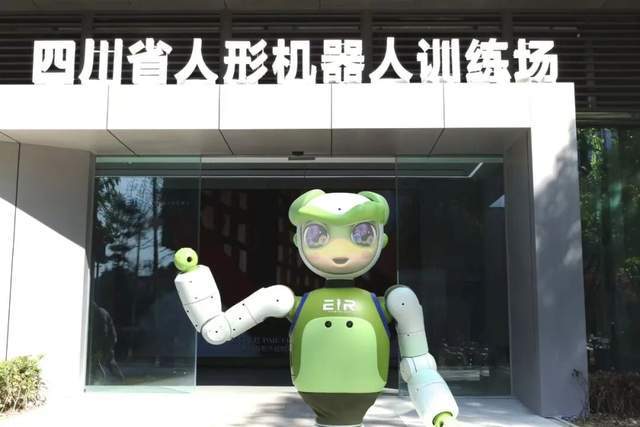
This closed loop drives the data flywheel of "scaled application — data accumulation — model evolution — product upgrade — application expansion".
As interactive content, scene skills and development tools continue to accumulate, EIR is combining its emotional companionship data assets with full-stack self-developed capabilities, forming a technical ecosystem from user feedback to whole-machine iteration.
Thus its competitive advantage in the home market extends deep into the data and experience accumulated through long-term use.
Mass production competition, returning to first principles
With humanoid robots arriving at their first year of mass production, the next problem to solve is:
how to provide reliable, efficient products and services to more users at a sustainable cost.
Quality determines long-term trust, efficiency affects service value, and cost determines the boundary of adoption。
Only when all three hold together can humanoid robots move from early adoption to a sustainable commercial foundation.
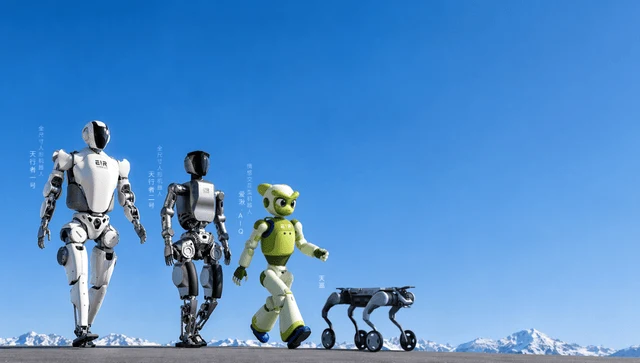
Currently, EIR'sAiqiu emotional interaction robot, Tianxun quadruped robot, and Tianxingzhe humanoid robotthree major product lines have all entered the batch delivery stage, landing in scenarios such as bank branches and public services, emergency inspection, and robot training fields.
Real applications let products face market tests, and also drive R&D, manufacturing and services to continuously iterate around user needs.
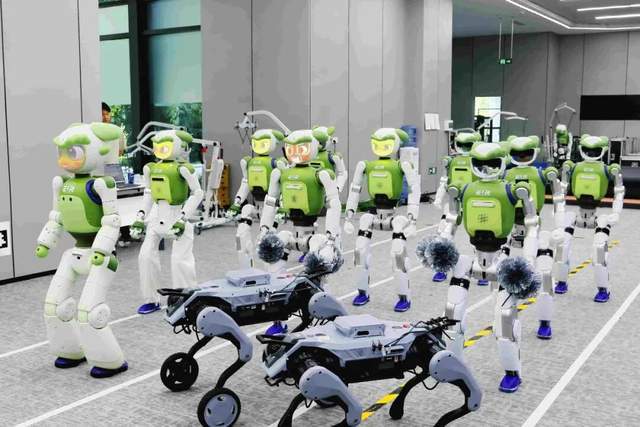
Relying on Deyang's industrial foundation in major technical equipment manufacturing, EIR has started construction of a whole-machine mass production base in Kaizhou New City, Deyang, expected to begin production by the end of 2026, with the base planned to achieve scale capacity from thousands to tens of thousands of units in stages.
Moving from a thousand-unit scale to a ten-thousand-unit plan tests a company's systematic ability to integrate R&D, manufacturing and supply chain.
Full-stack self-development enables software and hardware to be optimized in coordination, module reuse and standardized processes support the consistency of batch products, and supply chain collaboration creates conditions for faster delivery and cost optimization.
EIR is bringing these capabilities into a single product system, turning technological accumulation into product advantages that can be replicated at scale.
Against the backdrop of the nation cultivating future industries such as embodied intelligence, Sichuan's research resources, equipment manufacturing foundation and scenario needs provide support for this industrialization path.
For EIR, the long-term direction of its mass production layout is human-robot symbiosis moving from services to the home consumer market:
integrating reliable task capabilities, natural emotional interaction and affordable usage costs into a single product, giving long-term companionship a foundation for realization at scale。
so that the trillion-level imagination of humanoid robots is ultimately fulfilled in the daily lives of thousands of households.
*This article is republished by QbitAI with authorization; the views are those of the original author.