
IT之家 October 17 news: artificial intelligence company Anthropic released a report yesterday (October 16) stating that, about 5 years after the company's founding,its revenue per employee has reached 2 to 4 times that of Meta Platforms and Google during their respective high-growth periods.
This data is based on Anthropic's internal financial and headcount records as of 4/2026, and was compared, after inflation adjustment, with public financial data from Meta and Google at the five-year mark after their founding.
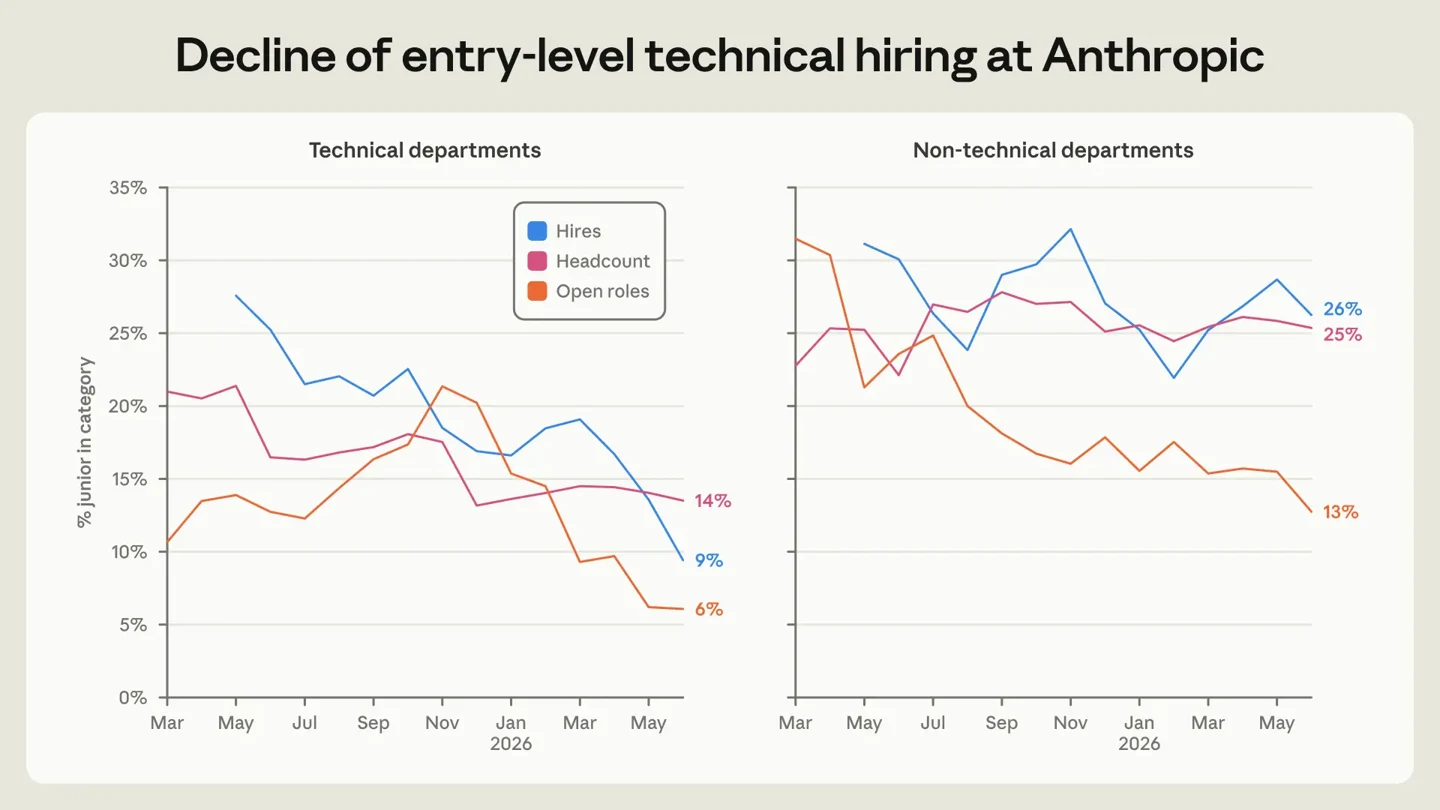
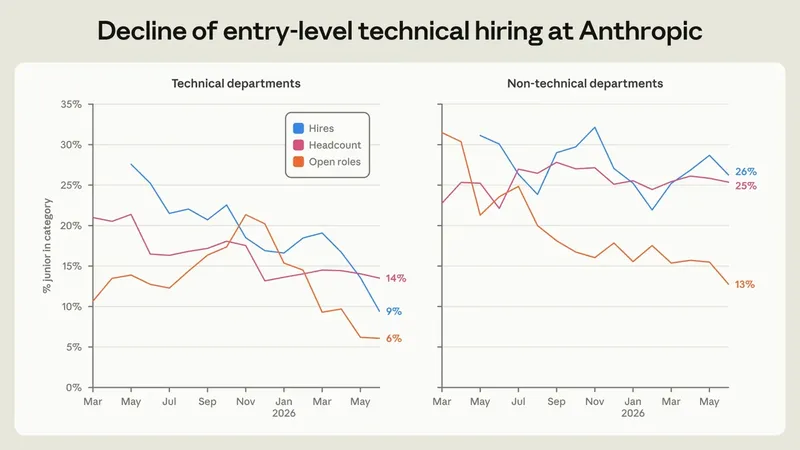
The report shows that the share of junior employees in Anthropic's technical departments has fallen from 21% in early 2025 to 14%, and the share of junior technical position hiring has plunged even more sharply from 27% to 9%. About one third of machine learning managers and one fifth of software engineering managers said they reduced hiring because of the emergence of AI. Meanwhile, the company as a whole is still expanding, with positions in sales, finance, and recruiting growing faster.
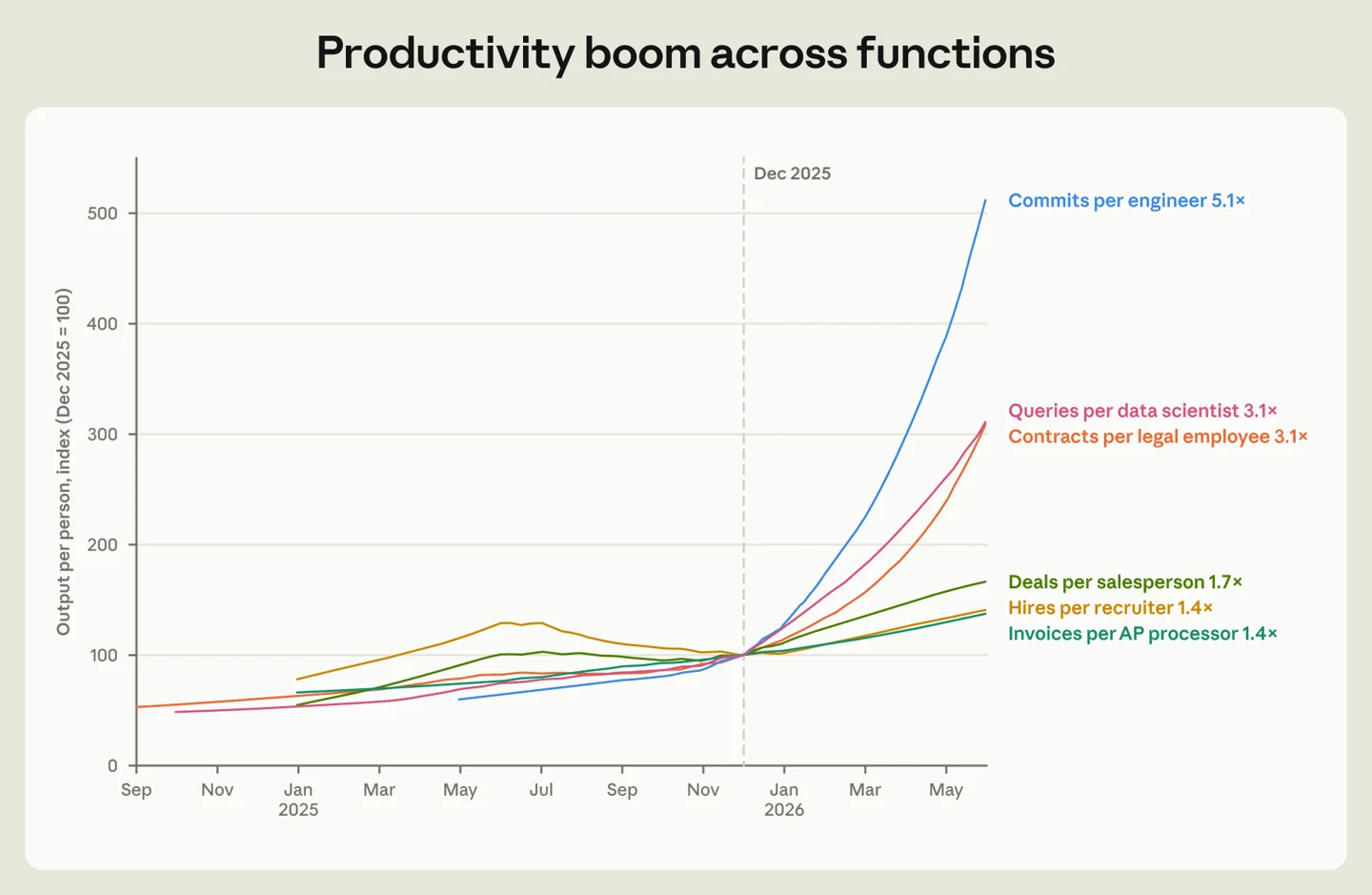
AI brings not only job contraction but also a leap in efficiency. After adopting coding agents, engineers' code commits per person reached 5 times the level of 6 months earlier; lawyers process more contracts, finance processes more invoices, and salespeople close more deals. The report tracked 192 engineers who adopted coding agents and found that their code output rose markedly after adoption, and the proportion of code later deleted or rolled back showed no deterioration.
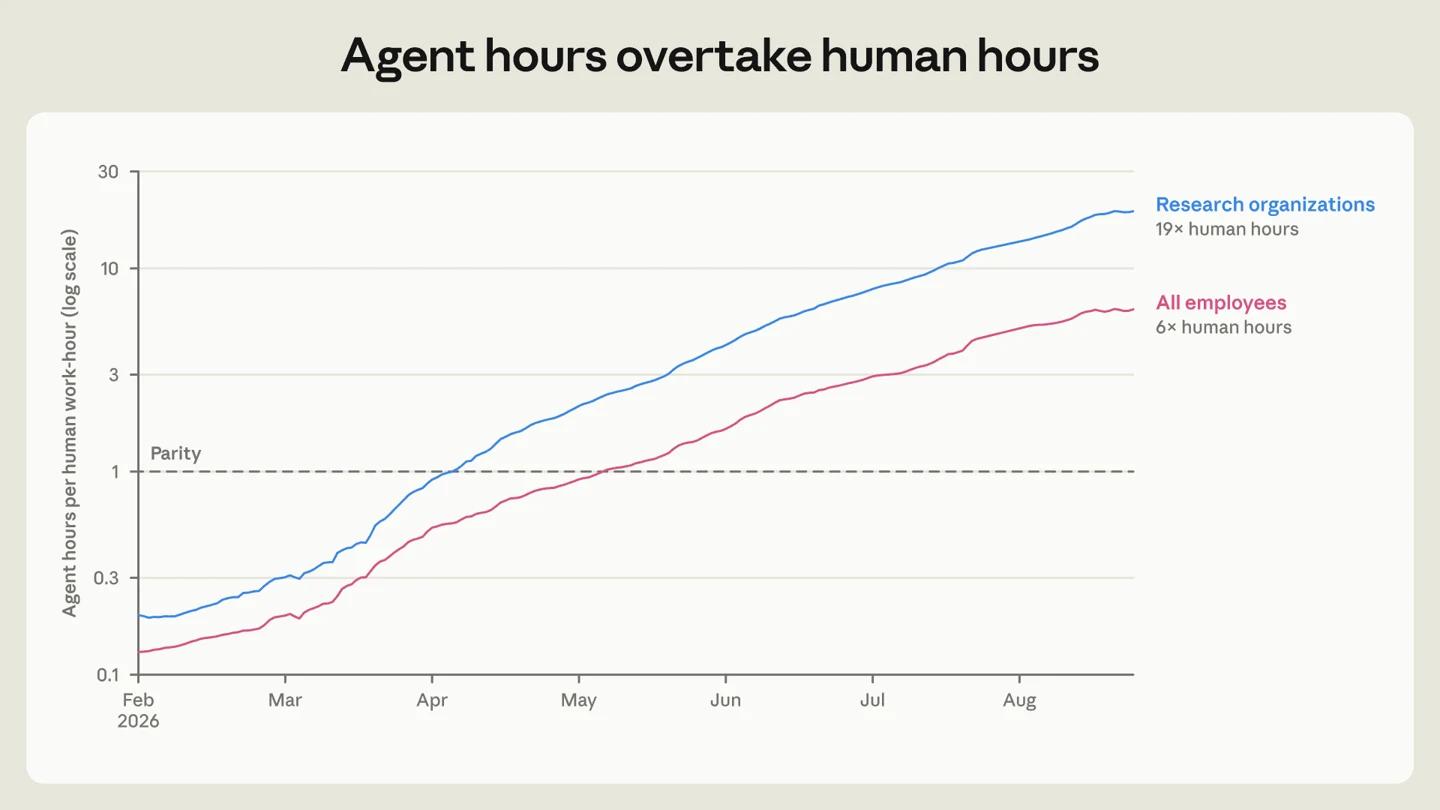
The report states that by 8/2026, the working hours of interactive AI agents deployed by employees had reached 6 times those of human employees; as early as in month 3, total agent working hours across the company exceeded human working hours for the first time. IT Home attaches the relevant images below:
But "human-machine collaboration" also brings new burdens. The report says that even non-technical employees may spend up to half a work week reading the full output of their Claude agents; employees are shifting from "executors" to "agent managers," responsible for writing instructions, building monitoring dashboards, and reviewing AI output. In spring 2026, this kind of "meta-work" already accounted for 22% of employees' interactive Claude sessions, up from 10% the previous year.
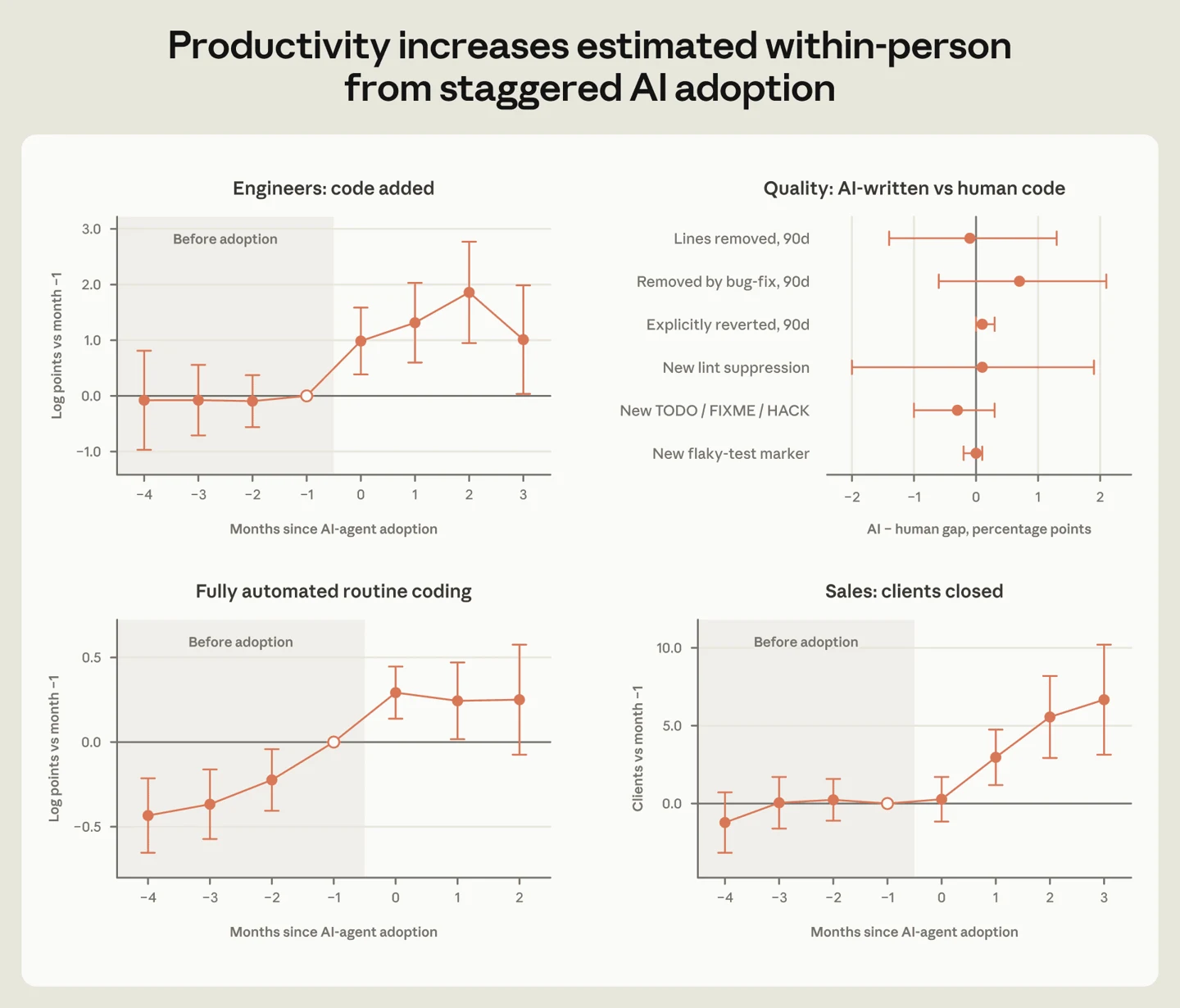
Hiring standards have changed accordingly: managers value candidates' autonomy, judgment, and creative use of AI more than narrow domain expertise and specific execution skills. Anthropic has also established a job risk early-warning mechanism and prioritizes reassigning affected employees internally.
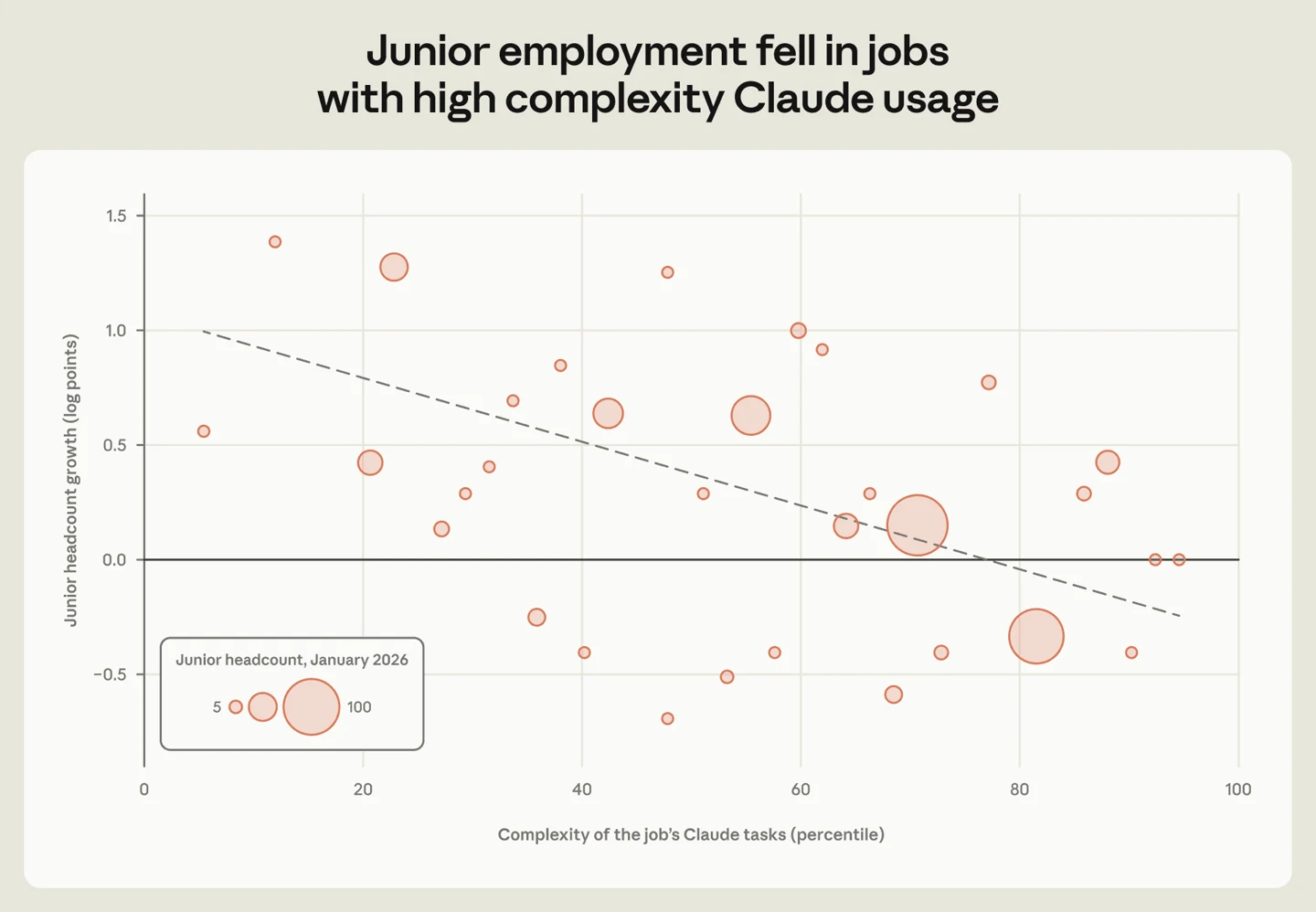
However, revenue per employee is not the only measure of a company's health. External research firm Epoch AI previously estimated that Anthropic's annualized revenue per employee in April 2026 was about $9 million, clearly higher than Meta's roughly $2.55 million and Google's roughly $2.11 million; but the firm also cautioned that the headcount and revenue figures were not disclosed for the same period, so the estimates carry uncertainty.