
By Lin Fangzhou, from凹非寺
QbitAI | Official Account: QbitAI
Attention, all tech companies preparing to go overseas—look this way!
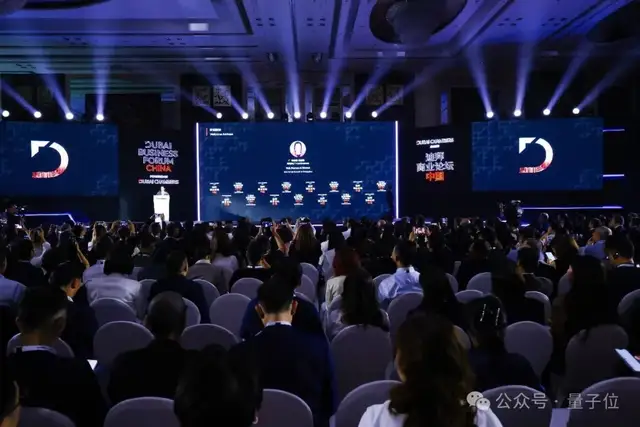
Just now,the Dubai Business Forum · Chinawrapped up in Shenzhen, and the AI-themed forum was packed to the last seat~
The situation is easy to understand: AI is now the hottest commodity worldwide. Companies must keep pace with the fierce competition in the domestic market while also positioning themselves for the big cake that is the global market.
In the past, Chinese phones and home appliances swept overseas markets; today, Chinese smart vehicles are gradually becoming foreigners' Dream Cars; and in the future, China's AI infrastructure and products will also achieve big results in global markets.
Now, Dubai has opened its arms to warmly welcome Chinese AI and other tech companies. Enterprises with plans to go global should seriously consider it.
Why?
Dubai is one of the most internationalized cities in the world, with expatriates making up more than 85% of its population. 'Openness and inclusiveness' has always been its hallmark.
Dubai is modern, livable, and full of vitality. It not only willingly invests heavily in emerging industries like tech, but also offers a fairly reliable business environment.
More importantly, Dubai sits at the crossroads of Asia, Europe, and Africa. It is not just a stop on the way overseas, but a pivot for expanding into the Middle East, Africa, and European markets.
A luxurious Dubai delegation visits China
Following its 2024 Beijing stop, this was the second time the Dubai Business Forum came to China, and the Dubai delegation's lineup was truly impressive.
A total of more than 100 core government and business representatives from Dubai attended—the largest delegation Dubai Chambers has ever sent to an international event.
The delegation was led by the President of Dubai Chambers, with members including senior representatives of top institutions such as the Dubai Department of Economy and Tourism, DP World, and Emirates.
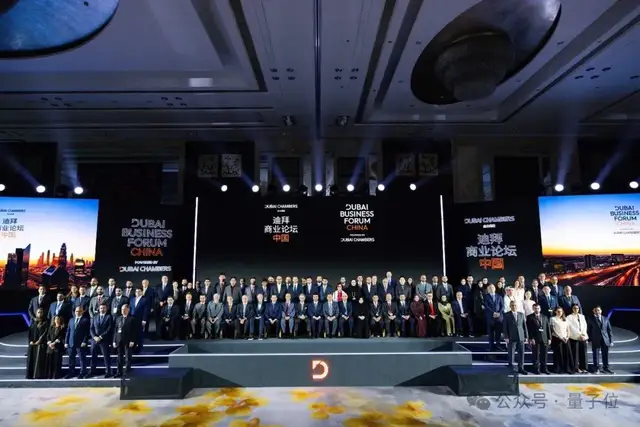
Most of the Dubai attendees were company founders, chairmen, and CEOs. They hold capital, logistics, and channel resources—the top decision-makers who can sign off on deals.
They did not come for a cursory sightseeing tour, but with genuine sincerity for cooperation.
During the forum, the parties signed a total of 10 memoranda of cooperation, covering areas such as trade and investment promotion, technological innovation, and industrial collaboration.
In terms of the forum agenda, AI and technology were absolutely front and center.
From agentic AI, cloud computing, and digital infrastructure to autonomous driving and future mobility, multiple discussions focused on the opportunities brought by AI and technology.
Most of China's leading large tech service providers have already established a presence in Dubai. At this forum, quite a few Chinese AI and advanced manufacturing companies shared their experience of building a complete business loop in Dubai.
For example, Baidu's Apollo Go has already launched fully driverless commercial operations in Dubai, obtaining Dubai's first fully driverless testing permit.
Consider two figures: in 2025, more than 85% of the electric passenger vehicles imported by Dubai came from China; and Dubai's 2030 transportation strategy proposes that 25% of trips be completed by autonomous driving.
For Chinese automakers competing fiercely at home, isn't this the opportunity knocking~
Cloud providers are also making moves. Tencent Cloud is cooperating with UAE tech companies to promote the building of a super-app ecosystem and explore integrating digital wallets and cross-border payment functions; Huawei Cloud is partnering with a Middle East payments company to jointly develop digital payment-related technologies.
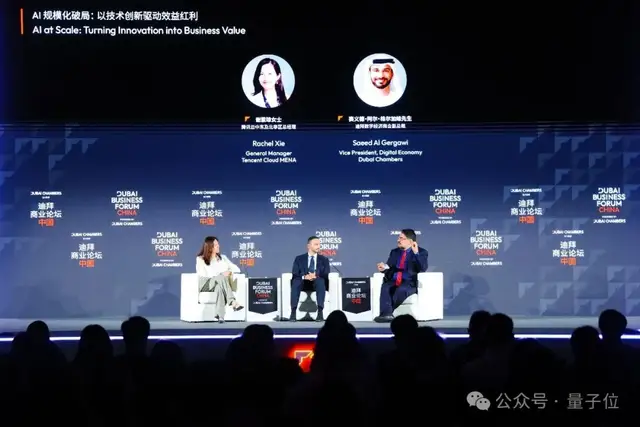
Dubai previously set targets:to reach 7 trillion dollars in foreign trade within ten years and attract 177.0 billion dollars in foreign direct investment.
With such a big cake on the table, tell me—doesn't it look tempting?
Dubai bets on AI and the digital economy
Why does Dubai place such great importance on AI and the digital economy?
If your impression of Dubai is still stuck on "oil-rich tycoon," you couldn't be more wrong.
Dubai has been steadily moving away from its dependence on traditional industries.It is transforming from a global trade hub into a global digital economy center.
The UAE previously set an extremely ambitious goal:to double the digital economy's contribution to GDP from 9.7% in 2022 to 19.4% within ten years.
Dubai, for its part, launched the "D33 Economic Agenda." One of its goals isto create AED 100 billion (approximately RMB 180 billion) in economic value each year through digital transformation.
To achieve such a goal, AI has to enter enterprises' business processes. Customer service, procurement, sales, and logistics all need to identify specific areas where efficiency can be improved.
And so, it's the AI Agents' turn to take the stage.
In May this year, Dubai announced the launch of a major initiative:the Two-Year Agentic AI Initiative。
Under this plan, the Dubai Chamber of Commerce will promote the widespread application of Agentic AI technology across Dubai's business community, empowering more than 295,000 private enterprises, and will develop and launch 100 specialized AI assistants within two years to help enterprises enhance their practical application of the relevant technologies.
Currently, the Dubai Chamber of Commerce is providing Agentic AI application training to 14,000 private enterprises.
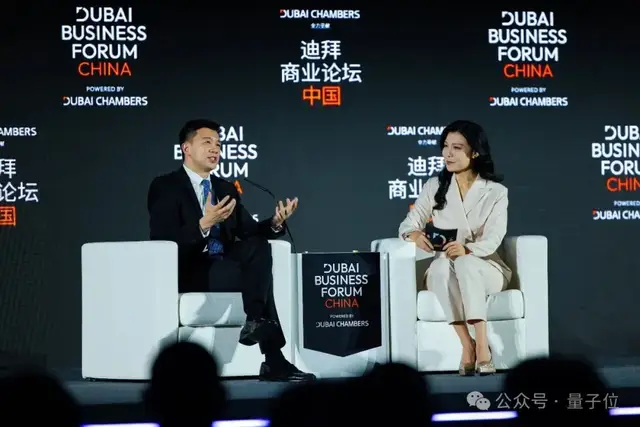
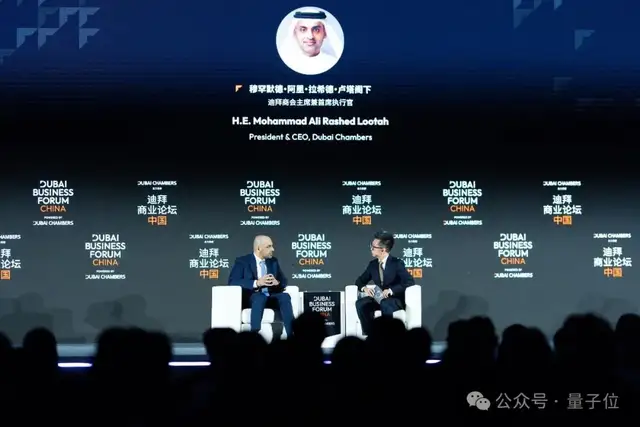
In this regard, Mohammad Ali Rashed Lootah, President and CEO of the Dubai Chamber of Commerce, believes: the value of AI depends on how many industries actually put it to use, and how much business benefit it ultimately generates.
For Chinese AI companies, this is like timely rain. China's intensely competitive AI large models and applications can now find an excellent testing ground and commercialization scenarios in Dubai.
Why Dubai?
China is currently Dubai's largest trading partner globally.
Sultan bin Saeed Al Mansoori, Chairman of the Dubai Chamber of Commerce, presented a set of figures that left a deep impression on me:
Non-oil trade between Dubai and China grew from USD 45.3 billion in 2016 to approximately USD 99 billion in 2025, an increase of 118.4% over ten years.
Since the previous Dubai Business Forum · China was held in 2024, the momentum of cooperation between the two sides has further accelerated.
From 2024 to 2025, bilateral non-oil trade grew by nearly 23%, and Chinese foreign direct investment in Dubai also nearly tripled, rising from approximately USD 335 million to over USD 935 million.
Chinese companies are also voting with their feet.
In the first quarter of 2026 alone, 292 Chinese companies newly joined the Dubai Chamber of Commerce. By the end of the 9th month, the number of active Chinese member companies registered with the Dubai Chamber of Commerce had reached 6650.
From 2016 to now, this figure has grown more than threefold.
Why are Chinese companies flocking to Dubai?
First is theadvantage of location and gateway. Dubai is not only the center of the Middle East but also a super hub connecting Asia, Europe, and Africa. Securing Dubai means obtaining a pass to radiate across the vast surrounding markets.
Emirates' flight routes cover approximately 140 destinations, and DP World also operates a globally distributed system of ports and terminals. About 60% of Chinese goods shipped to the Middle East and North Africa are transshipped through UAE ports, heading to more than 400 cities.
Lu Shuai, co-founder of the payments company PingPong, gave an example in a previous interview. A Shenzhen-based seller supplies retailers in Nairobi, Karachi, and Cairo simultaneously. With just one entity established in the UAE, all business relationships can be managed.
Second is thepolicy and capital dividends. The Dubai government regulates emerging industries with flexibility and is very willing to offer favorable policies.
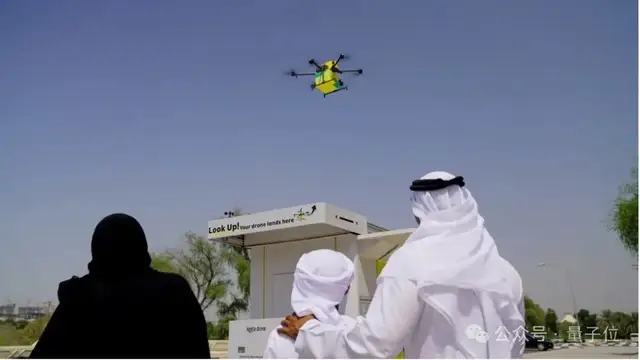
Yang Junwei, general manager of drone delivery company Keeta Drone, said that Dubai's speed in granting airspace access, along with the openness and trust of its institutional framework, exceeded the other markets they had evaluated.
Moreover, Dubai is the financial center of the Middle East, Africa and South Asia. The Dubai Financial Market (DFM) saw its average daily trading value exceed 1 billion dirhams in the first quarter of this year, up 56% year-on-year. It added 20,700 new investors, 79% of whom came from overseas.
Finally, there ismature commercial infrastructure. From modern ports to top-tier data centers, Dubai lowers infrastructure barriers for companies going global.
With the combined advantages of location, policy, capital and infrastructure, Dubai is no longer just an overseas foothold, but a super springboard for Chinese tech companies toward global markets.
Go to Dubai, go to the Middle East, go to the broader global market.
The great age of exploration for Chinese tech and AI companies is only just beginning.