
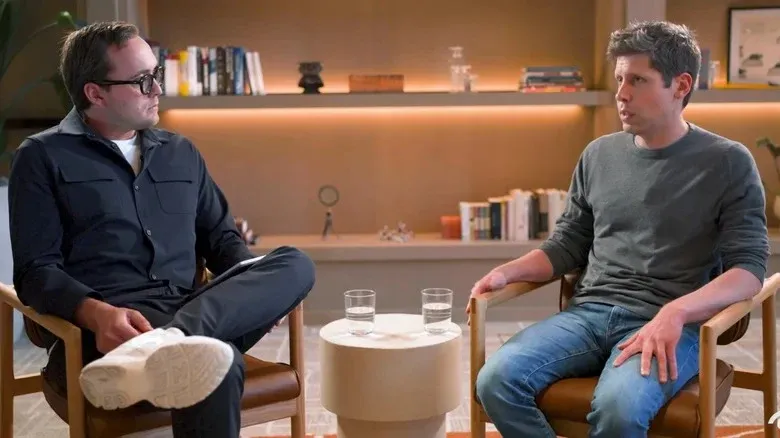
IT Home On October 18, although OpenAI is busy developing artificial intelligence models and new consumer-grade hardware, CEO Sam Altman and his team clearly still have the energy to advance another project: humanoid robots.
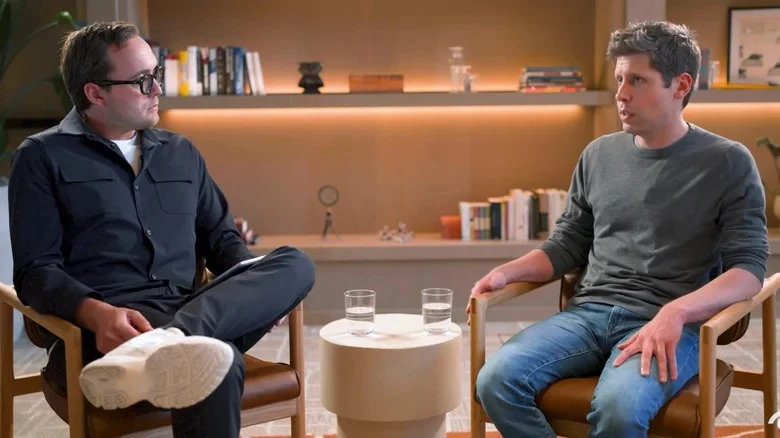
In the “Sources” podcast, Ortekan explained that it makes sense to choose a human-like form because “the world itself is designed for humans.” Doors, keyboards, and various tools are all crafted according to specific human body shapes. For a robot that needs to move in a similar environment, adopting a similar appearance would be a suitable choice. As Ortekan said: “Matching this shape is a good idea.”
When asked whether OpenAI would personally create humanoid robots, his answer was very concise: “We will.” However, Ortegan didn’t care much about such trivial details regarding the appearance of the robots. He said these issues “are far less important than actually developing the ‘brain’ that powers the robots.” In simple terms, if a machine doesn’t know how to use its limbs, even if it is given arms and legs, it will still be difficult to function properly.
IT Home noticed that the project is still a long way from becoming a formal product. Ortekan said in an interview with Fortune magazine: “I expect we will present a impressive demo unit in 2027… but it will take several more years before robots can be on the streets.” OpenAI did not reveal what will be shown during this demonstration, what the humanoid robot looks like, or when external people will have the opportunity to interact with the device up close.
A high-performance humanoid robot must be able to understand the images captured by cameras and sensors, interpret commands, plan and execute actions, coordinate body movements, and automatically correct its actions in case of unexpected situations in a real environment. For example, when picking up a mug, the robot needs to identify the mug, find the handle, estimate the way to hold it, and apply the appropriate force to lift the mug. If something goes wrong, coffee will spill, and the robot has to clean up the floor.
OpenAI has started recruiting people to address the above challenges. The robot-related positions include motion control, state estimation, actuator control, overall system behavior development, and machine learning infrastructure for training artificial intelligence systems.
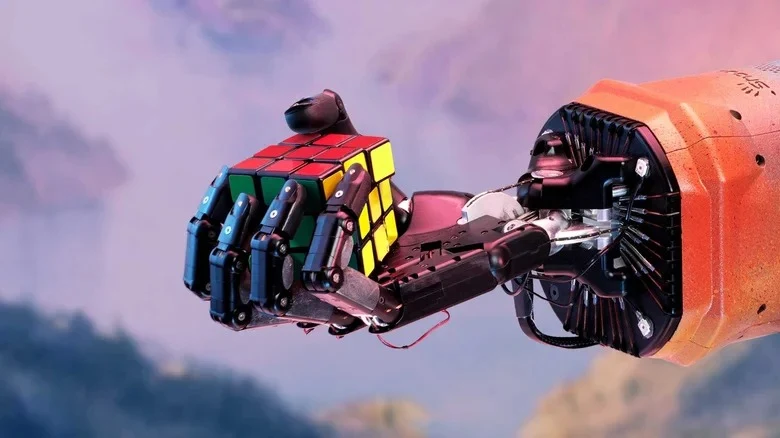
This research and development context is also traceable. OpenAI’s Dactyl research project taught robotic hands how to manipulate real objects, and all training was conducted in a simulation environment. Later, the company used this technology to challenge Rubik’s cubes. This is also an early example of the problem that still plagues all robot companies today: the model can learn expected actions at the software level, but real-world physical laws are the ultimate determining factor.
Ortman emphasized the intelligent aspect, but this does not mean that OpenAI treats hardware as a secondary accessory. Information on robot positions at the company indicates that the team is developing self-developed mechatronic actuators, including motors, transmission mechanisms, sensors, and thermal management systems. Other positions also cover manufacturing and supply chain aspects required for large-scale production of hardware. The other half of robots, which are considered “not that important,” actually require a huge amount of work.
OpenAI has not entered a field that no one has touched before. Tesla has been developing the Optimus for many years, and Xpeng recently enabled the IRON humanoid robot to walk off the production line after assembly is completed. Both examples show that even if the software is intelligent enough, it still requires a highly complex set of motors and joints to carry out movements.
Instead of directly providing robot roommates to each household, OpenAI’s planning phase is more practical. A robot recruitment announcement states that the company’s short-term goal is to develop general-purpose robots that assist technical workers in building infrastructure; its long-term goal is to develop personal robots capable of performing a wider range of tasks.
If you have started to imagine a physical version of ChatGPT bending over with knees to wash dishes, then for now, there’s no need to remove the dishwasher at home. OpenAI has not officially released any physical robot, nor has it announced the selling price, subscription model, launch date, or privacy policies specifically for robots to consumers. Even so, the OpenAI job page still has 27 vacancies in the robot area.