
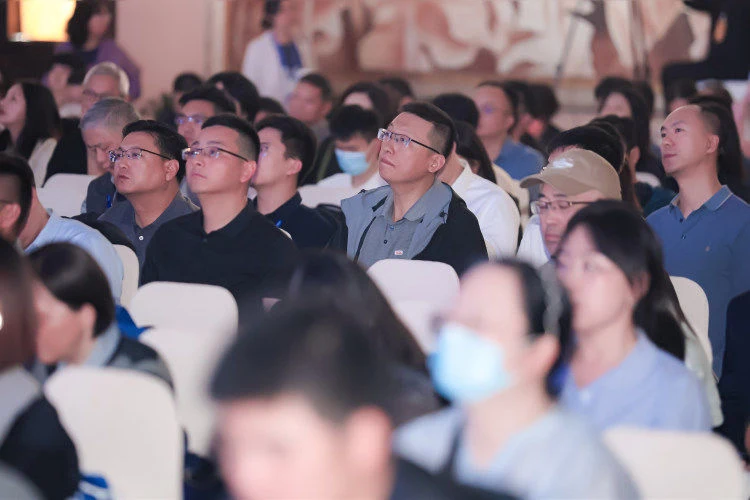
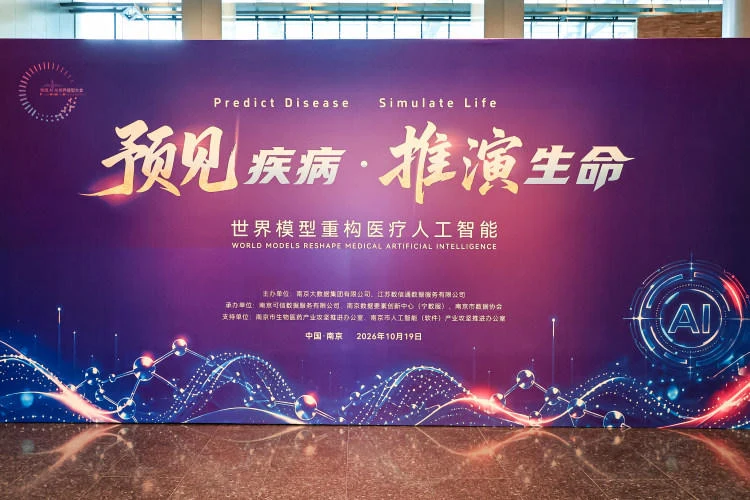
On the afternoon of October 19, 2026, as one of the important parallel events of the 2026 Physical AI and World Model Conference, the Medical Health World Model Sub-Forum was held in the Zhongshan Hall of the Nanjing International Expo Center. Under the theme "Foreseeing Disease, Simulating Life — World Models Restructuring Medical AI", the sub-forum brought together academicians and experts, clinical medical workers, university researchers, and representatives from the artificial intelligence, pharmaceutical, and data industries to exchange views on key issues such as the evolution of disease states, simulation of intervention responses, medical knowledge modeling, real-world validation, and medical data security. Unlike traditional artificial intelligence, which focuses on single-point recognition and static prediction, medical world models further explore how to understand changes in patient states over time and the possible outcomes of different interventions.
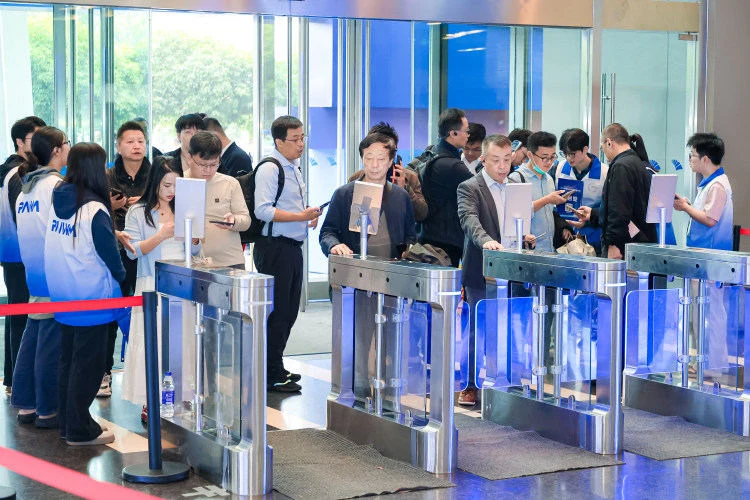
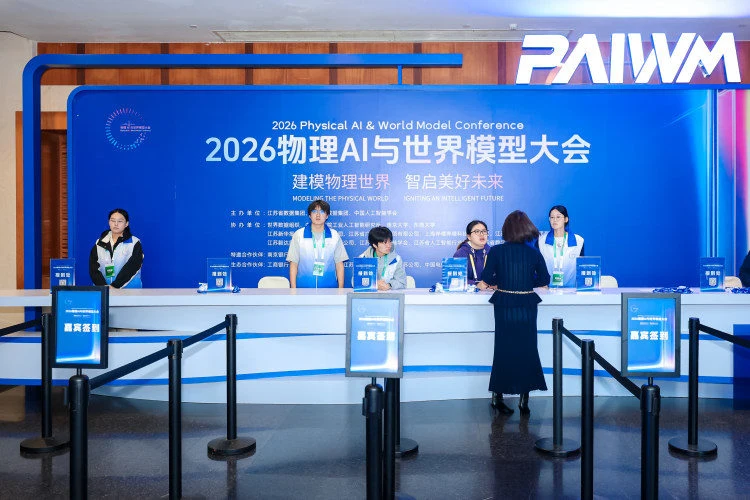
This year's conference, themed "Modeling the Physical World, Intelligence Empowering a Beautiful Future", was jointly hosted by the Jiangsu Provincial Data Group, Nanjing Big Data Group, and the Chinese Association for Artificial Intelligence. According to officially released information from the conference, it is China's first high-level comprehensive industry conference focused on the field of physical AI and world models, adopting a structure of "1 opening ceremony + 1 supporting exhibition + N thematic seminars", with exchanges centered on world model theory, medical health, industrial applications, data development, autonomous driving, and embodied intelligence. The Medical Health World Model Sub-Forum was hosted by Nanjing Big Data Group Co., Ltd. and Jiangsu Shuxintong Data Service Co., Ltd., organized by Nanjing Trusted Data Service Co., Ltd. and the Nanjing Data Element Innovation Center (Ningshufu), and supported by the Nanjing Biopharmaceutical Industry Advancement Promotion Office and the Nanjing Artificial Intelligence (Software) Industry Advancement Promotion Office. Teng Gaojun, academician of the Chinese Academy of Sciences and Director of the Department of Medicine and Life Sciences at Southeast University, served as chair of the sub-forum; Sun Baijun, Vice Mayor of Nanjing, attended and delivered a speech.
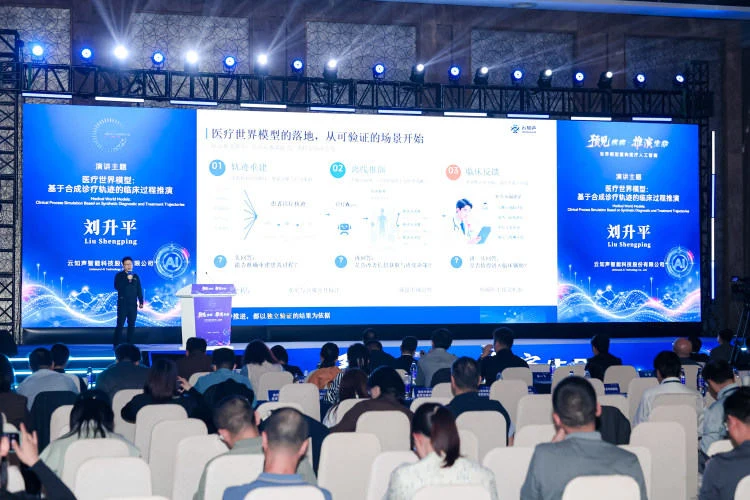
The eight keynote speeches followed the thread of "clinical needs — modeling methods — scientific validation — application exploration". Liu Yun from Jiangsu Province Hospital presented "Artificial Intelligence Transforming the Paradigm of Chronic Disease Management", focusing on long-term chronic disease management and intervention research; Jiang Qing from Nanjing Drum Tower Hospital, addressing "New Methods for Generalization in Medical Continuous Domains", discussed the applicability of medical models across different populations and changing scenarios; Song Jian from Peking Union Medical College Hospital of the Chinese Academy of Medical Sciences, with the talk "Previewing the Future of Rehabilitation with World Models: A Paradigm Upgrade of Continuous Diagnosis and Treatment Platforms", focused on continuous assessment of rehabilitation states and future simulation; Jiao Yun from Zhongda Hospital Affiliated to Southeast University shared "Ontology-Based Construction of Medical World Models", exploring how to organize medical concepts and relationships into computable knowledge representations; around scientific discovery and industrial practice, Tang Peifeng from Suzhou Mega Robotics Technology Co., Ltd. presented "From AI Models to Wet Lab Validation, Empowering Clinically-Driven Innovation Acceleration", focusing on the research closed loop of AI-proposed hypotheses and experimental feedback; Shao Yang from Nanjing Geneseeq Technology Inc. shared "AI Empowering Gene Big Data Mining of Novel Drug Targets", exploring the use of genetic data to discover candidate drug targets; Ji Jianmin, a cooperating expert from Tuodao Medical Technology Co., Ltd., introduced "Evolution and Practice of Embodied Models for Endoscopic Surgery", focusing on perception, decision-making, and action in surgical scenarios; Liu Shengping from Unisound Intelligent Technology Co., Ltd. concluded with "Medical World Models: Clinical Process Simulation Based on Synthetic Diagnosis and Treatment Trajectories", exploring modeling methods for continuous diagnosis and treatment processes. The eight reports extended from medical cognition to validation and action, also indicating that medical world models must continuously test their reliability in real-world scenarios.
The major achievements release session showcased innovations in six areas, covering high-quality datasets, medical health world model all-in-one machines, disease-specific world models, data foundations, and intelligent applications. The first release, the "Joint Construction Plan for High-Quality Medical World Model Datasets", involves the Information Center of the Nanjing Municipal Health Commission, Jiangsu Province Hospital, Nanjing Drum Tower Hospital, Nanjing Hospital of Integrated Traditional Chinese and Western Medicine, Nanjing Maternity and Child Health Care Hospital, Nanjing Brain Hospital, Nanjing Central Hospital, and Nanjing Jiangning Hospital, among other institutions. It focuses on multi-institutional collaboration, data standards, and quality governance, and on the premise of legal compliance and patient privacy protection, aims to provide sustainable data support for the training, evaluation, and clinical research of medical world models.
Subsequently, Jiangsu Province Hospital and Nanjing Trusted Data Service Co., Ltd. under the Nanjing Big Data Group, together with teams from H3C, UnionTech Software, and Yashan Database, released the "Medical Health World Model All-in-One Machine", which deeply integrates world model technology with domestically produced computing equipment, operating systems, and databases to build a secure, trusted, and autonomously controllable hospital-localized intelligent computing platform, promoting a paradigm shift in medical research from "humans propose hypotheses, AI assists validation" to "AI proposes scientific hypotheses, humans scientifically validate", and helping medical research enter a new era of AI-driven scientific discovery. Jiangsu Province Hospital and Nanjing Trusted Data Service Co., Ltd. jointly released five chronic disease world models, covering insulin resistance, diabetes medication, continuous hypertension management, blood lipids and atherosclerosis, and chronic kidney disease risk, focusing on dynamic research into disease state changes and intervention responses. The "Thalassemia Screening World Model" jointly conducted by Wuzhou Workers' Hospital and the Guangxi Precision Medicine Industry Technology Research Institute was released simultaneously. This achievement, based on the principle that hospitals' raw data does not leave its domain, explores model training and validation within hospitals, and on the basis of security compliance and local clinical validation, will gradually apply screening model capabilities to ASEAN-oriented medical cooperation, advancing the innovative practice of "data staying in hospitals, intelligence going to ASEAN".
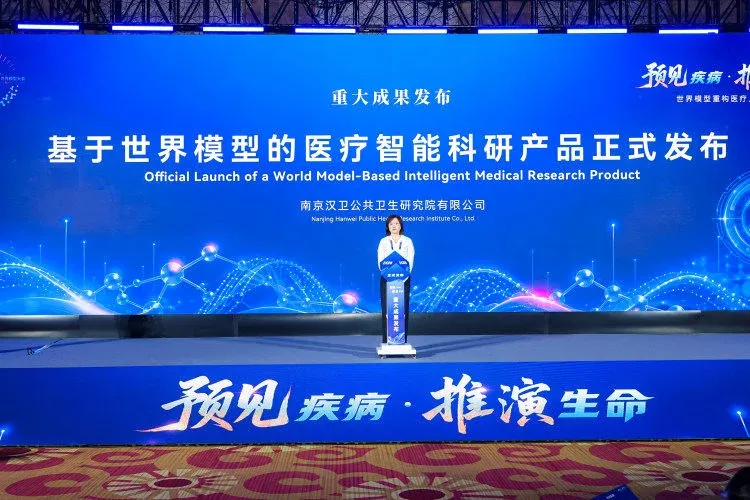
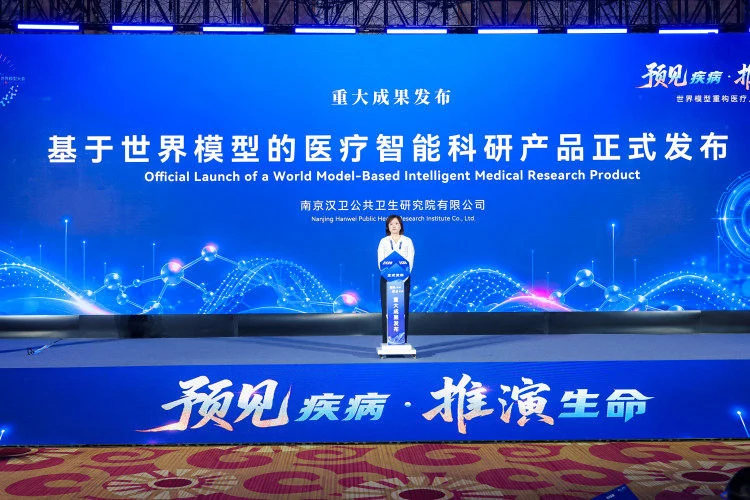
In addition, Zhongda Hospital Affiliated to Southeast University and Yidu Technology released the "Medical World Model High-Quality Data Foundation" achievement, exploring support for state computation, model training, and validation around data quality governance, medical semantic unification, and temporal information organization; Neusoft Group released the "Neusoft City-Level Digital-Intelligent Health Solution Based on the Tianyi Medical Large Model", focusing on the application of medical large models in regional health services, hospital business coordination, and other scenarios; Nanjing Hanwei Public Health Research Institute Co., Ltd. released the "World Model-Based Medical Intelligent Research Products", exploring intelligent assistance and research process support for medical research questions. These achievements each have their own focus, collectively demonstrating a direction of coordinated development of data, models, applications, and research.
Exchanges at the conference showed that the value of medical artificial intelligence is extending from answering medical questions and identifying single-point risks to characterizing disease states, studying disease progression, and comparing possible intervention pathways. The key to world models lies not only in "accurate prediction", but also in whether the basis of prediction is clear, whether simulations can withstand testing against real data, whether they are reliable across different medical scenarios, and whether doctors can understand and prudently use them. The relevant achievements still need external validation, clinical evaluation, and continuous supervision to gradually clarify their scope of application; model simulations must not replace physicians' diagnostic and treatment decisions.
Jiangsu, with its concentration of high-level medical institutions, universities and research institutes, and software and information industry resources, has a good foundation for promoting industry-academia-research collaboration in medical world models. Nanjing, relying on medical institutions, research teams, and data service enterprises, carries out joint exploration, promoting the linkage of high-quality data supply, medical knowledge modeling, model training, clinical validation, and application promotion. Facing China-ASEAN medical health cooperation, the Thalassemia Screening World Model showcased at the sub-forum also proposed a cooperation approach of "raw data not leaving its domain, model capabilities serving across regions", providing new research topics for the secure use of medical data and the promotion of artificial intelligence achievements.
From "foreseeing disease" to "simulating life", this sub-forum, through eight keynote speeches and releases of achievements in six areas, presented multi-level explorations of medical artificial intelligence from theoretical research, trusted data, to clinical scenarios. In the next step, the relevant institutions will continue to advance interdisciplinary cooperation, model validation, and application evaluation around real clinical needs, allowing world models to gradually move from scientific conceptions toward verifiable, deployable, and continuously improvable medical innovation practices, better serving doctors and patients.
This article was provided by Nanjing Big Data Group and republished by QbitAI with authorization; the views belong to the original author.