
In 2026, the AI track is undergoing an interesting shift. While industry attention remains focused on large model parameters, agents, and general superintelligence, Zuckerberg has bet his money on a trickier field: living systems.
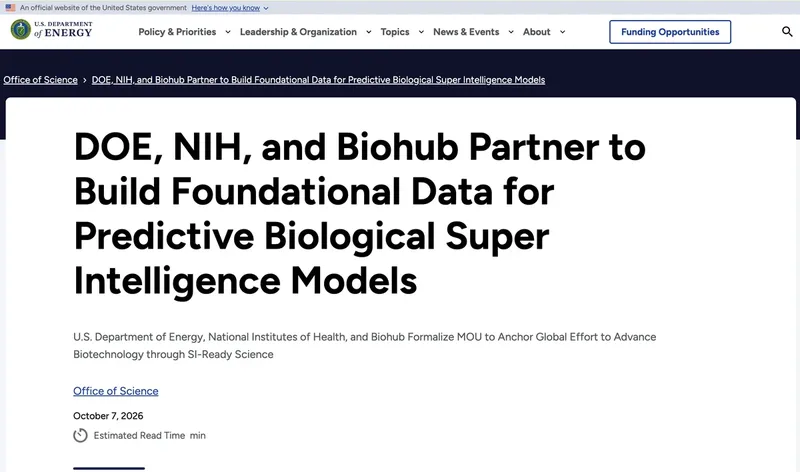
In April (month 4) of this year, Biohub, founded by Zuckerberg and his wife Priscilla Chan, launched a virtual biology program, investing 500 million dollars to build the supporting data and experimental capabilities needed to train AI models capable of predicting biological phenomena. By October (month 10), the project had expanded further: the U.S. Department of Energy, the U.S. National Institutes of Health, and Biohub joined forces to build the data foundation for life-prediction models, with Meta, Google DeepMind, and Isomorphic Labs all participating. The project has a combined committed investment of 1800 million dollars, of which the U.S. Department of Energy will contribute more than 500 million dollars over the next five years, and the NIH will open up large amounts of accumulated biomedical data.
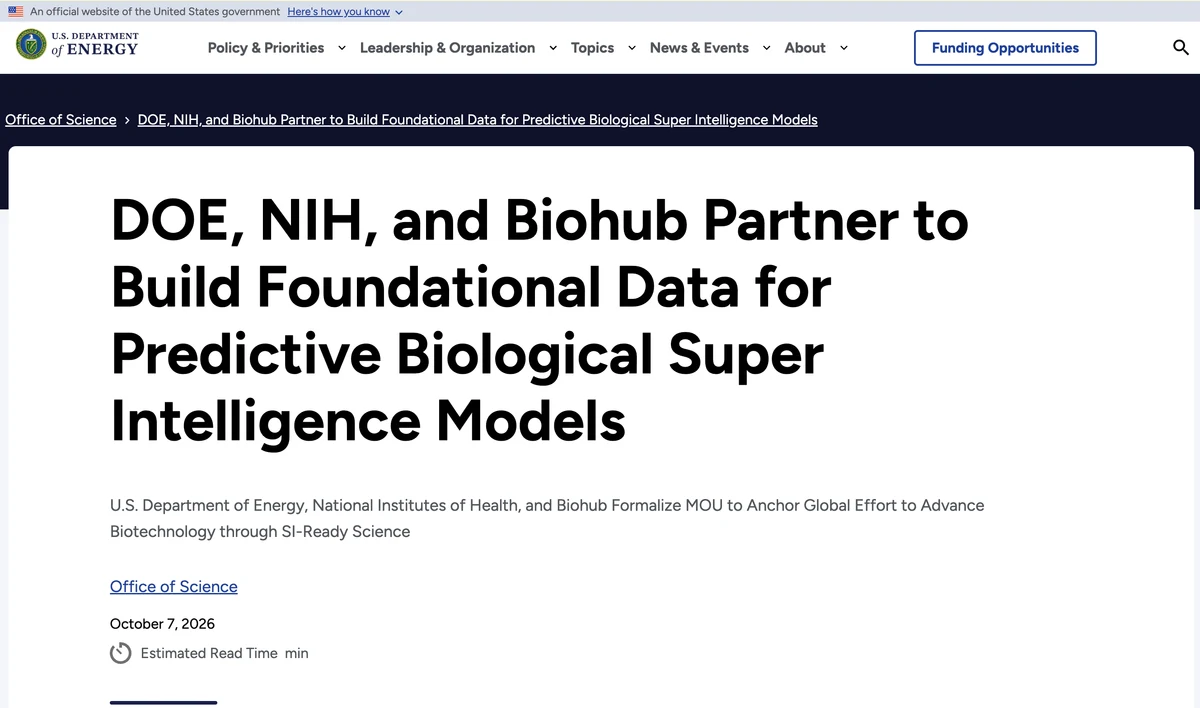
The goal of this project is straightforward: to build an AI that can predict the behavior of life, which Biohub calls virtual biology. Simply put, it means building high-fidelity digital versions of life, from molecules and genes to cells, all the way up to complete living systems. In the future, researchers will be able to pose hypotheses about life and simulate interventions on a computer, just as they now query large models, completing digital experiments first before doing real experiments in the lab.
This is not just Zuckerberg being optimistic about biopharmaceuticals. Looking deeper, life sciences are becoming the second battlefield of AI competition. The general large model track has burned money to a fever pitch, with ever-rising thresholds for compute, talent, and capital; whereas understanding living systems is still an unformed frontier. Whoever enables AI to truly read life can build a barrier far harder to replicate than chatbots.
AI is good at designing molecules, but new drug development remains hard
The combination of AI and biopharmaceuticals is nothing new, and it was one of the earliest directions where AI was expected to industrialize. But after more than a decade, a core question still stands before us: are we really any closer to new drugs?
In recent years, the most dazzling achievements of AI drug development have been concentrated at the molecular level: protein structure prediction, candidate molecule screening, molecule generation, drug safety prediction, drug-target interactions, and so on. AI can produce tens of thousands of candidate molecules at once, greatly expanding the chemical space available for screening—the efficiency gains are real.
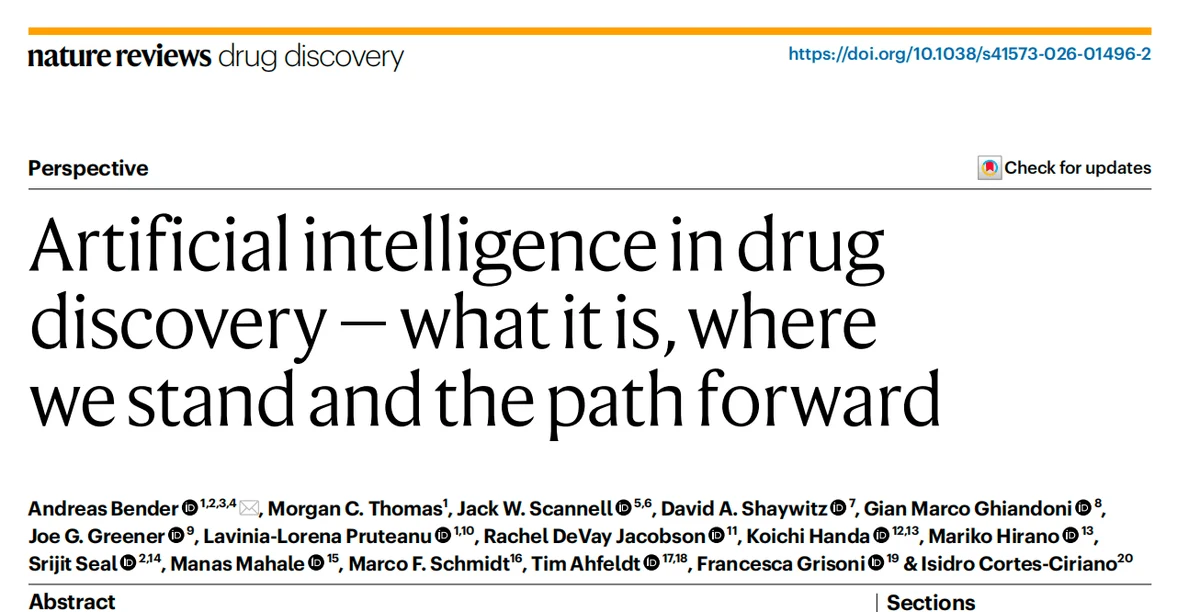
But if the yardstick shifts from model benchmark scores to successfully bringing a new drug to market, reality is not so optimistic. In August this year, Nature Reviews Drug Discovery published a retrospective of more than a decade of AI drug development: although AI algorithms of all kinds have emerged endlessly, results that truly generate clinical value remain limited. Many AI pharmaceutical companies' projects are stuck in the preclinical stage or phase I and II clinical trials, and very few projects have entered phase III clinical trials.
In small-molecule generation, AI indeed finds molecules that bind proteins more easily, but that is only ligand design, not drug design. Finding a molecule that binds a target and finding a drug that is safe and effective in the human body are entirely different matters.
This is the point most worth reflecting on in the industry today. In the past, we simplified complex life problems. AI is good at answering "what molecules can bind this target," but the real difficulty of new drug development lies in a chain of systems questions: why does this target cause disease? After intervening in the target, what chain reactions will the body's entire living system produce? Why is the same drug effective in some people and ineffective in others? Why do cell and animal experiments work well, only to fail in human clinical trials?
Drug molecules do not work in isolation. What they enter is a dynamic complex system—genes, proteins, cells, tissues, organs, immunity, metabolism, plus the external environment—with all factors influencing each other. Whether a drug succeeds depends precisely on this system. This raises a fundamental question: if AI can only understand molecules but not the complete living system, how far can it take new drug development?
From single-point molecular models toward a life world model
This also explains the core change in AI life sciences in 2026: the modeling scale is no longer confined to a single protein, molecule, or cell; it is beginning to extend upward to build life prediction models. The goal is no longer just to predict protein structures, but to characterize life states, anticipate how systems change after intervention, and simulate how cells respond to perturbations—what the industry calls alife world model。
Large language models learn the rules of language, and physical world models learn the rules of object motion and space, but the rules faced by life world models are far more complex. Genetic mutations alter protein expression, proteins regulate signaling pathways, and signals change cell states; interactions among cells form tissue microenvironments, which in turn influence organs and the whole body, layer by layer. Life itself is not static: it grows, ages, compensates, mutates, and continuously feeds back in response to external interventions.
So a life world model is not a static encyclopedia of life. Its core is understanding how life operates and predicting how the entire system will evolve after a given variable is changed.
Once this kind of model is realized, AI's role in pharmaceutical R&D will change completely. Old model: given a target, quickly search for candidate molecules. New model: given a disease, first figure out the root cause of its onset, then decide where to intervene and which patients can benefit, anticipating the whole-body chain reactions the intervention brings. Although both are AI empowering new drug development, the problems the two models need to solve are completely different.
Domestic parallel layout: computational medicine written into national planning
This transformation is not unique to the United States; domestic AI life sciences are also shifting from single-point algorithms to systemic disease modeling.
In September this year, ten departments including the Ministry of Industry and Information Technology and the National Development and Reform Commission issued the "14th-to-15th Five-Year Plan for Pharmaceutical Industry Development",marking the first time computational medicine has been listed alongside AI, quantum computing, and supercomputing as a key technology direction for the pharmaceutical industry over the next five years. AI and supercomputing provide powerful general-purpose computing capabilities; computational medicine addresses how to connect this computing power to living systems to solve real disease problems.
Zheyuan Technology in China is a team taking this route. Rather than simply training a bigger biological large model, it focuses on the diseases themselves, integrating genomics, cell features, disease mechanisms, patient data, and drug intervention information to build multi-level computational models, attempting to construct a life world model system that can be continuously iterated, trained, and validated.
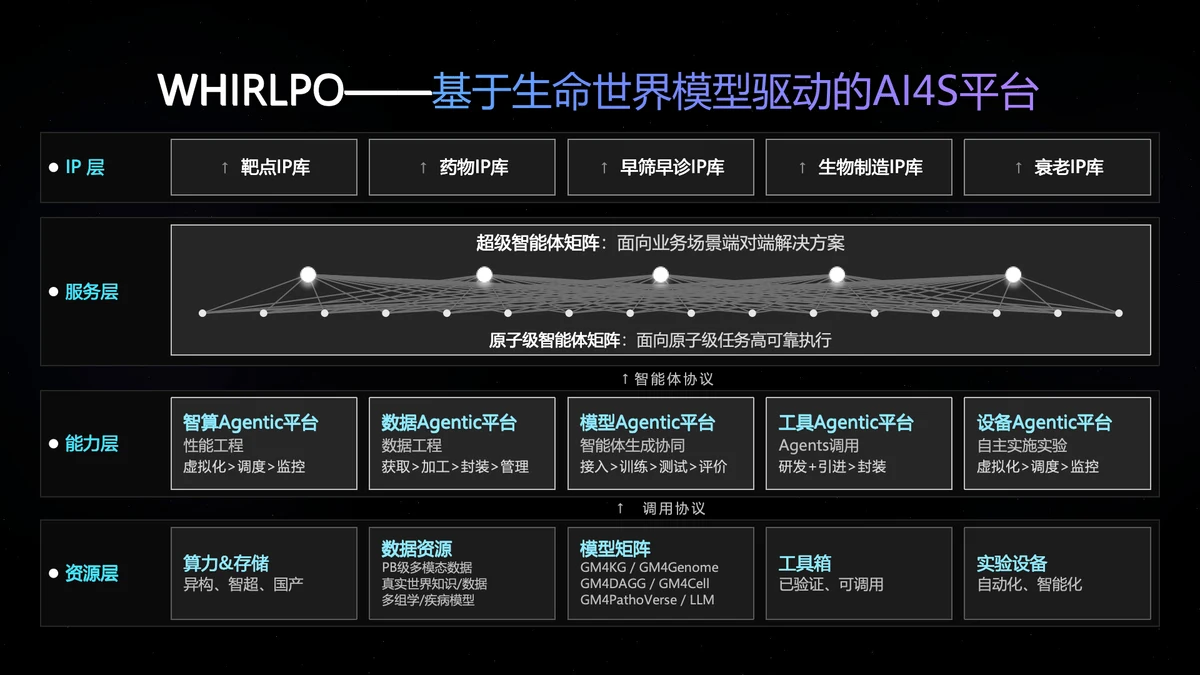
On October 17, Zheyuan Technology released the WHIRLPO computational medicine platform. It is not a standalone biological large model, but a solution to a more fundamental engineering problem: if the life world model is the infrastructure of next-generation life sciences, we need a foundation to support the training and running of such models.
Building a life world model is far harder than training large language models
The difficulty of implementing life world models is easy to underestimate. The first is the data problem. Large language models have vast internet text as nourishment, but the life sciences lack unified datasets. Genomics, single-cell, spatial omics, pathology, imaging, and clinical data come from scattered sources, with huge differences in format, quality, and observation scale. Many high-value data still require dedicated experiments to produce. A large share of the 1.8 billion dollars invested by Biohub is used to produce biological data, not simply to train models.
The second is the multi-scale modeling problem. There is no single unified model of life. Studying DNA mutations, cell states, tissue microenvironments, and human diseases requires different models working together. A complete life world model in the future will most likely not be a single giant model, but a composite system of multiple models, knowledge bases, and tools working in coordination.
The third is the heterogeneous computing engineering challenge. Model pretraining, omics analysis, disease evolution simulation, and digital patient inference each involve different computational approaches, requiring flexible scheduling of CPU, GPU, and other computing resources, and will encounter large-scale scientific computing engineering problems that traditional large models rarely face.
Fourth, life models must bridge the computational world and the real experimental world. When a language model answers incorrectly, it can simply be retrained; but the target hypotheses produced by a life model must be validated in the laboratory, with the experimental results feeding back to correct the model, and ultimately they must withstand clinical testing—model conclusions cannot be merely self-consistent inside a computer.
The WHIRLPO platform targets exactly this pain point: it integrates heterogeneous computing power, multi-cohort life data, model matrices, research tools, intelligent Agents, and experimental validation pipelines, building infrastructure for the closed-loop verification spanning model training, scientific computing, and wet-lab experiments. Simply put, Zheyuan is not only building models, but creating a production foundation for models of the living world.
AI life sciences enter the infrastructure competition stage
In 2026, a resonance emerged across the industry in both China and the US. In the US, Biohub joined forces with the Department of Energy, NIH, Meta, and DeepMind to build the data, computing, and experimental infrastructure needed for life AI. In China, computational medicine was written into the 15th Five-Year Plan for pharmaceuticals, and local teams began building engineering platforms for models of the living world.
Two seemingly independent events point to the same underlying judgment: AI life sciences has moved from competing on model metrics into an era of infrastructure competition.
In the past, the industry competed on whose protein predictions were more accurate, who generated molecules with better results, and who could speed up a particular step of R&D. The core of competition in the next stage becomes: whether one can obtain large-scale, high-quality life-science data; whether one can build models that span different scales—genes, cells, tissues, and the human body; whether one can coordinate and orchestrate multiple models; whether one can keep models continuously validated in a closed loop with real experiments; and ultimately achieve the upgrade of AI from processing life data to understanding living systems.
Over the past decade or more, AI drug discovery has not been headed in the wrong direction. What we previously tackled was merely the relatively computable part of the problems of life. Molecules matter, but the object of drug treatment is not the molecule—it is the human. From a candidate molecule to producing therapeutic effects in the human body lies an entire, complex living system.
If the life world model becomes AI's next core direction after language models and physical world models, the biggest opportunity in the future may not belong to teams that marginally refresh model metrics. The truly scarce asset is not yet another biological AI model, but a complete infrastructure that enables AI to step into the real world of life.
This article was provided by Zheyuan Technology and reprinted by QbitAI with authorization; the views belong to the original author.