
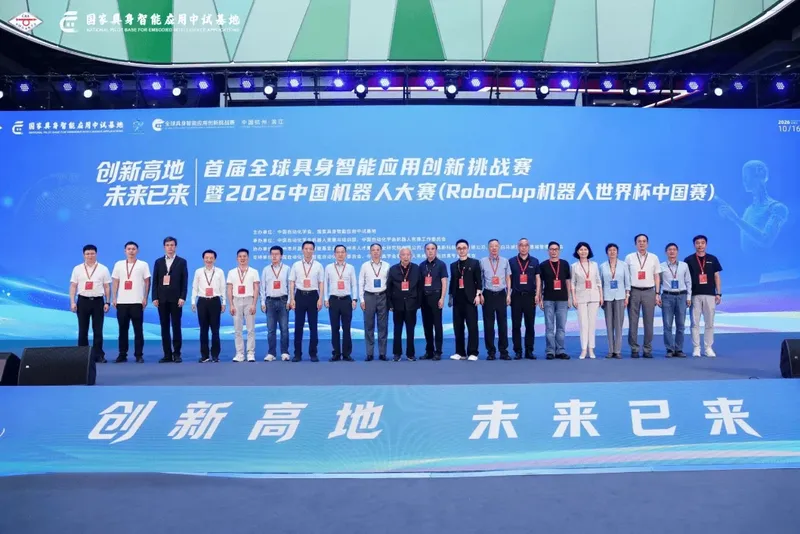
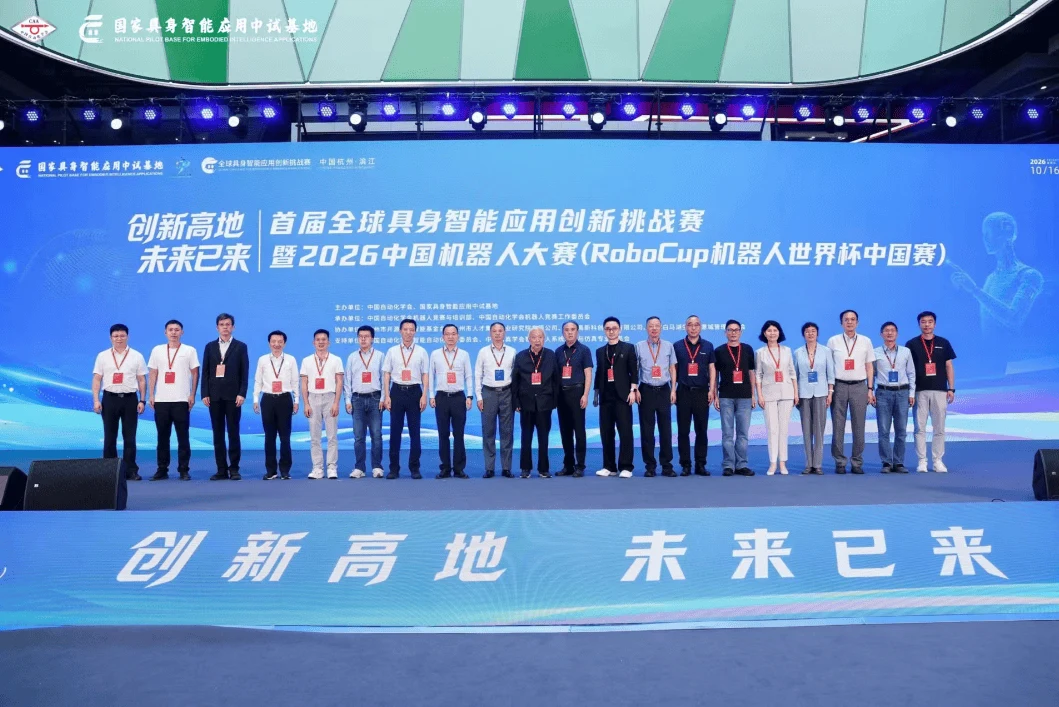
On the afternoon of October 18, the First Global Embodied Intelligence Application Innovation Challenge and the 2026 China Robot Competition came to a close. Attending the closing ceremony were Wu Hongxin, academician of the Chinese Academy of Sciences and researcher at the Beijing Institute of Control Engineering; Gao Chong, member of the Standing Committee of the CPC Hangzhou High-tech Zone (Binjiang) District Committee, deputy director of the Management Committee and executive deputy district mayor; Li Shi, deputy secretary-general of the Chinese Association of Automation and director of the Robot Competition and Training Department of the Chinese Association of Automation; Zheng Zhiqiang, chairman of the Robot Competition Working Committee of the Chinese Association of Automation and professor at the National University of Defense Technology; and Tian Shujun, chairman of Hangzhou Embodied Intelligence Application Pilot-Testing Base Co., Ltd. The closing ceremony was presided over by Wang Jingchuan, secretary-general of the Robot Competition Working Committee of the Chinese Association of Automation and researcher at Shanghai Jiao Tong University.
As a major highlight of the closing ceremony, the competition invited entrepreneurs from 10 listed companies — Sunyard, Wasu Media, Fengyuzhu, DAS-security, Arcvideo, Glodon... rather, Gooxi... precisely Guangyun Technology —
Where Glory Lands, For Whom Does the Applause Ring Out
The majestic national anthem resounded through the venue as the closing ceremony officially began.
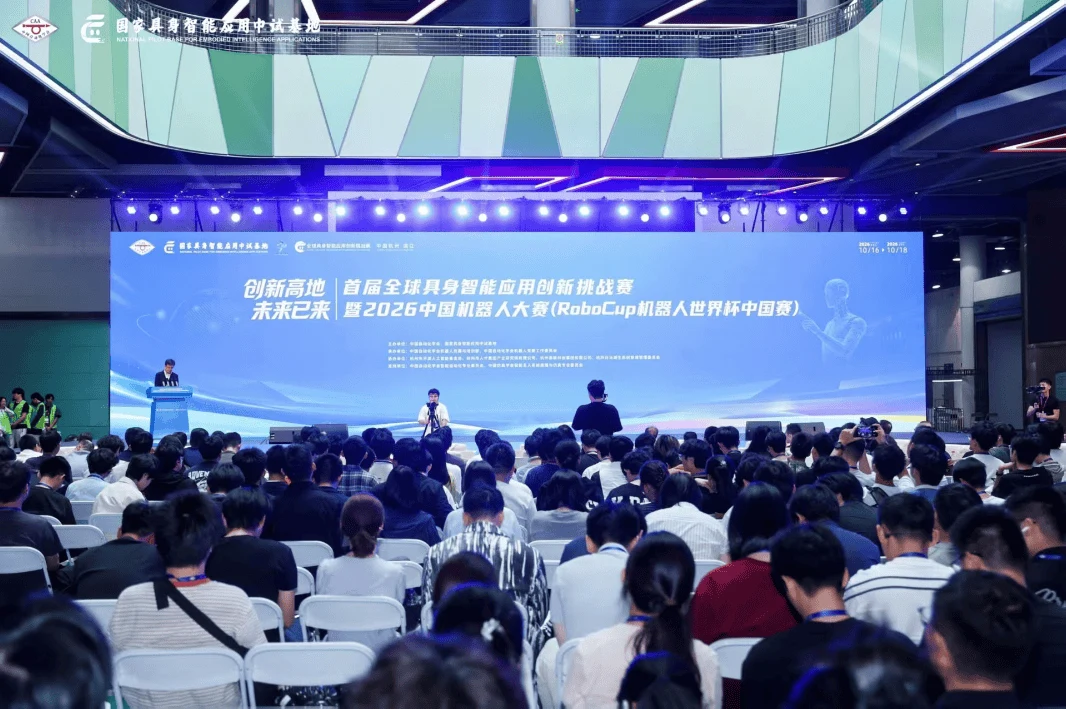
Zheng Zhiqiang, chairman of the Robot Competition Working Committee of the Chinese Association of Automation, delivered the competition's concluding speech. He stated that holding this competition is a pragmatic step in implementing the national "AI+" strategic deployment, and it has built a key verification platform for embodied intelligence to move from technology R&D toward scenario applications. Relying on the National Embodied Intelligence Application Pilot-Testing Base, the competition focused on promoting the connection of outstanding projects with enterprises and application scenarios. He emphasized that the closing is not the end of innovation, but a new starting point for climbing the peaks of science and technology; he hoped young students would keep breaking through technical ceilings and achieve accomplishments on the great journey of building a science and technology powerhouse.
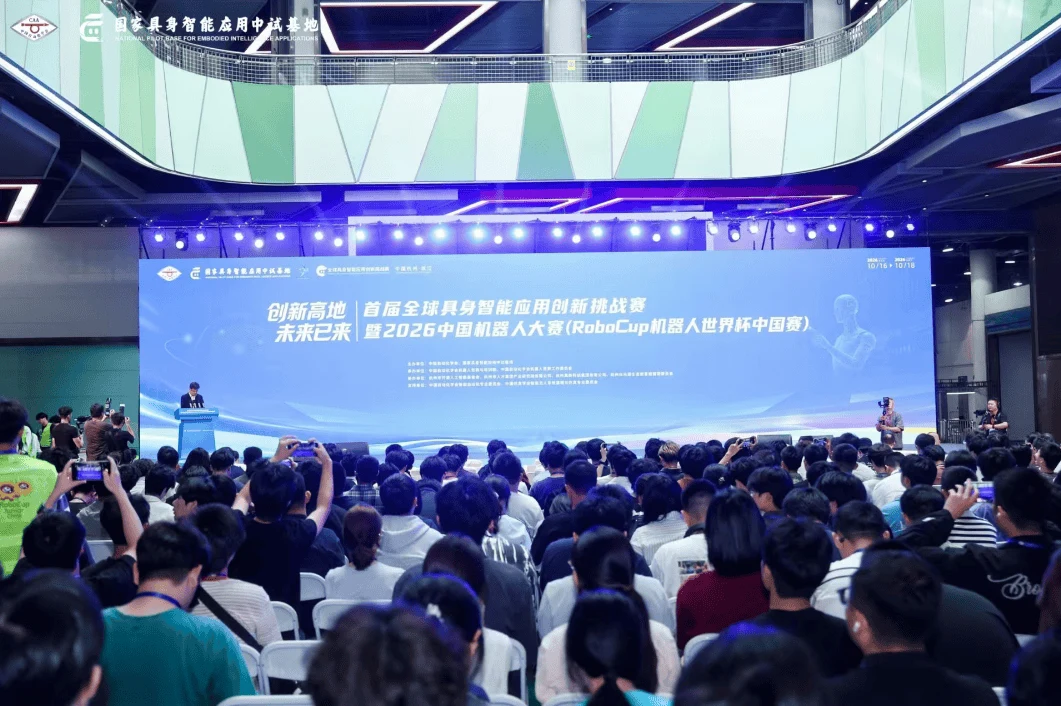
As the representative of the host location, Gao Chong, executive deputy district mayor of Hangzhou High-tech Zone (Binjiang), delivered a speech. He pointed out that the High-tech Zone (Binjiang) will take this competition as a new starting point, rely on the National Embodied Intelligence Application Pilot-Testing Base, adhere to the requirements of being the "best fertile soil" for talent growth, the "best cradle" for enterprise development, the "highest quality and efficiency" in integration and coordination, and the "most tangible" policy services, innovate and improve the embodied intelligence industry service system, and support more high-quality innovation projects in landing, transforming, growing and expanding in the High-tech Zone. He said that the entrepreneurs of the listed companies present, back in the day, were just like the college students present, full of aspirations here, starting businesses and developing here, achieving today's success. He hoped that all outstanding college students could take root, grow and develop here.
Immediately afterward, Du Xinfeng, deputy general manager of Unitree Robotics and a member of the champion team of the 2008 China Robot Competition, took the stage to speak. Drawing on his past competition experience, he shared his insights and reflections on the inheritance of technological innovation, growth through real-world practice, and the prospects for scenario applications of embodied intelligence.
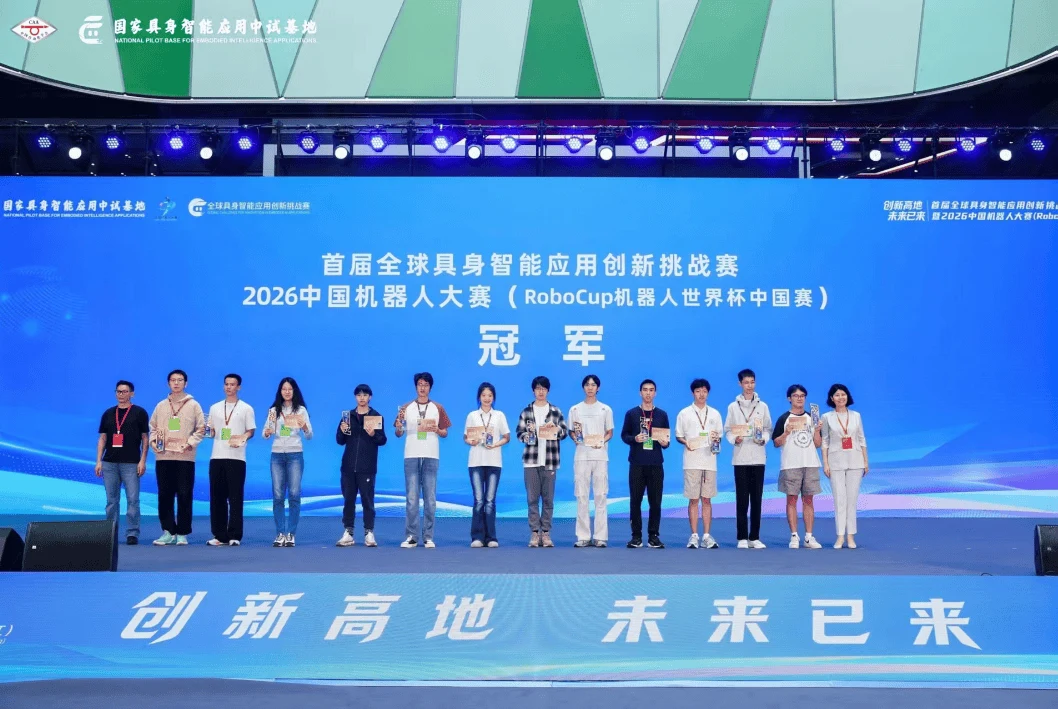
Applause rang out again and again as the award ceremony pushed the atmosphere to a climax. The third-place, second-place and first-place teams of each competition event, as well as the winning teams of the independent enterprise events, took the stage in turn to receive their awards. Entrepreneurs from the 10 listed companies presented awards to the winning team members, offering encouragement to the young contestants with attention from the front lines of industry.
As the applause died down and the competition closed, the discussion about embodied intelligence was not over.
Three Days of Competition: What Did the Robots Do
Over the three-day schedule, more than 2,000 teams and nearly 5,000 contestants from top universities including Tsinghua University, Zhejiang University and Shanghai Jiao Tong University gathered in Hangzhou to exchange cutting-edge robotics technology on the same stage through real-machine operation and real-scenario competition.
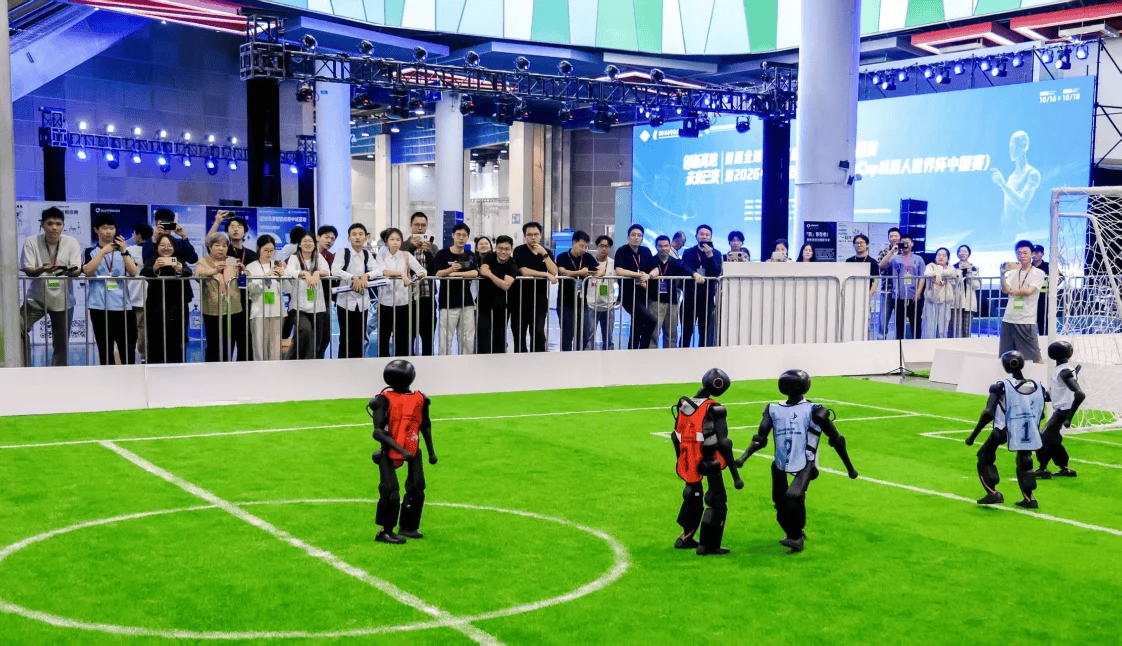
A major feature of this competition is that traditional robotics events and embodied intelligence application tasks unfolded on the same stage. Events such as automatic sorting, service robots, medical robots, agricultural robots, underwater robots and drones correspond respectively to application scenarios such as industrial production, medical services, agricultural operations and public safety. The competition both assessed foundational capabilities such as mechanical structure and sensing control, and tested levels of visual recognition, path planning, continuous operation and on-site debugging. Some events were set in real or highly simulated complex environments, where robots needed to complete multi-step tasks under uncertain conditions, pushing the competition from single-performance contests toward a test of overall system capabilities.
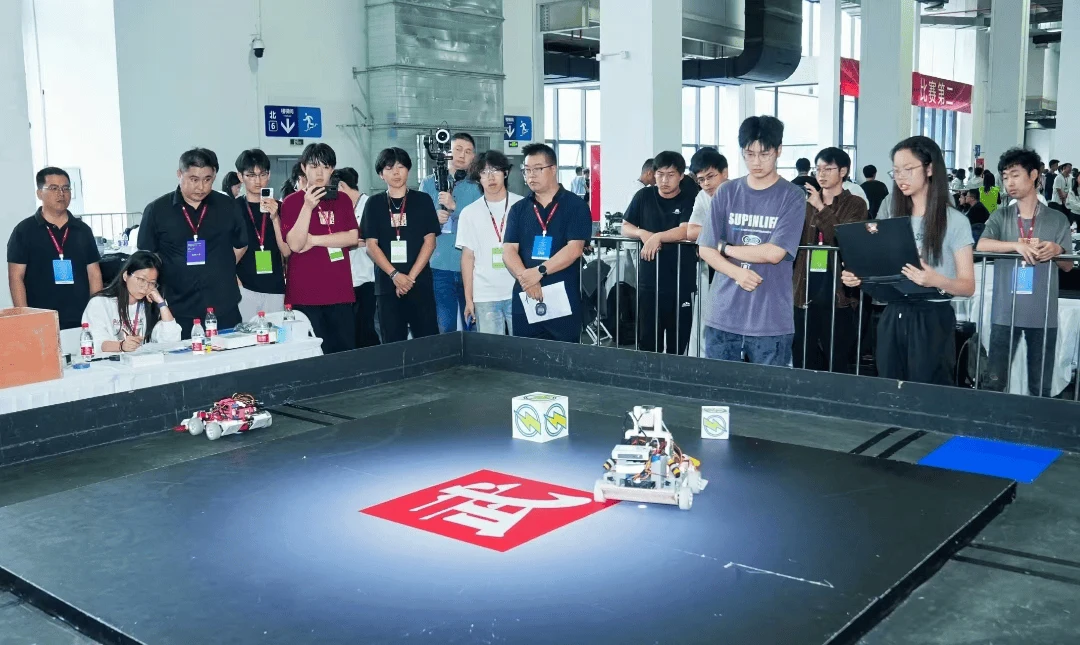
The concurrently held First Global Embodied Intelligence Application Innovation Challenge covered real scenarios including flexible sorting, air-ground collaboration, home services, medical assistance, unknown terrain exploration and dexterous manipulation, including 3 enterprise events. The competing robots needed to continuously complete tasks such as perception, judgment, planning and execution. Compared with single-function demonstrations, the relevant events paid more attention to robots' adaptability in dynamic environments and the quality of task completion.
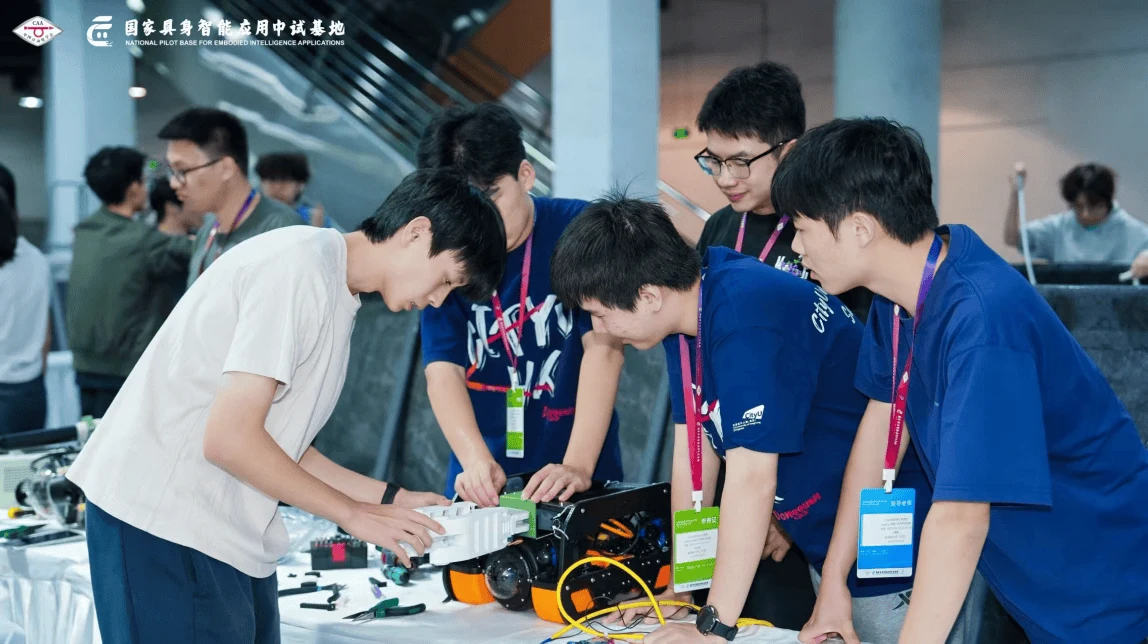
After fierce competition, this competition produced 59 championships, 57 runner-up finishes, 52 third-place finishes, and 12 winning teams in enterprise special events. Among these young people, some repeatedly debugged parameters late into the night; some optimized motion control through falls and retries in real-machine testing; and some ran through the full loop step by step, from perception and decision-making to action, enabling robots to operate in complex terrain. At this moment, they stood under the spotlight, receiving the cheers that belong to them.
A student representative of the Ziqiang Team of Shanghai University, winner of the Autonomous Robot event championship, exclaimed that this competition changed the trajectory of his life. Originally from Guizhou, he had planned to return to his hometown after graduation, but now he leans toward staying in Hangzhou, staying in Binjiang. Currently, his team has established initial contact with Jingye Intelligence to explore cooperation possibilities in scenario applications such as security patrol and defense.
Beyond the Field: Where Does Innovation Go
On the award podium, entrepreneurs from ten listed companies placed trophies into the hands of young contestants. For enterprises, the venue was also a window for evaluating teams and technology; for young contestants, beyond the trophy, there was also a channel leading to the front lines of industry. The champion teams of this competition will receive an "Internship Gold Card" issued by the National Embodied Intelligence Application Pilot-Testing Base, with which they can enter internship at ecosystem partner enterprises of the National Embodied Intelligence Application Pilot-Testing Base without examination, and enjoy benefits such as full-cycle services for the transformation of competition project achievements and the cultivation of entrepreneurial projects.
If the "Internship Gold Card" on the award podium opens a channel for champion teams to enter the front lines of industry, then beyond the field, industry matchmaking and achievement transformation aimed at a broader range of young teams are advancing in parallel. The competition organized supporting recruitment activities for interns and graduates, with 50 leading embodied intelligence and tech-innovation rising enterprises — including Unitree Robotics, Alibaba DAMO Academy, Hikvision, Supcon Technology and Xinuo Technology — attending and offering more than 500 internship positions. Well-known financial investment institutions such as Zhongying Venture Capital, Zhongtian Technology, Caitong Capital, Hangzhou Science and Technology Innovation, Jin Investment Capital and Industrial and Commercial Bank of China visited and exchanged on site, effectively shortening the distance for cutting-edge technology to move from the laboratory to industrial application.
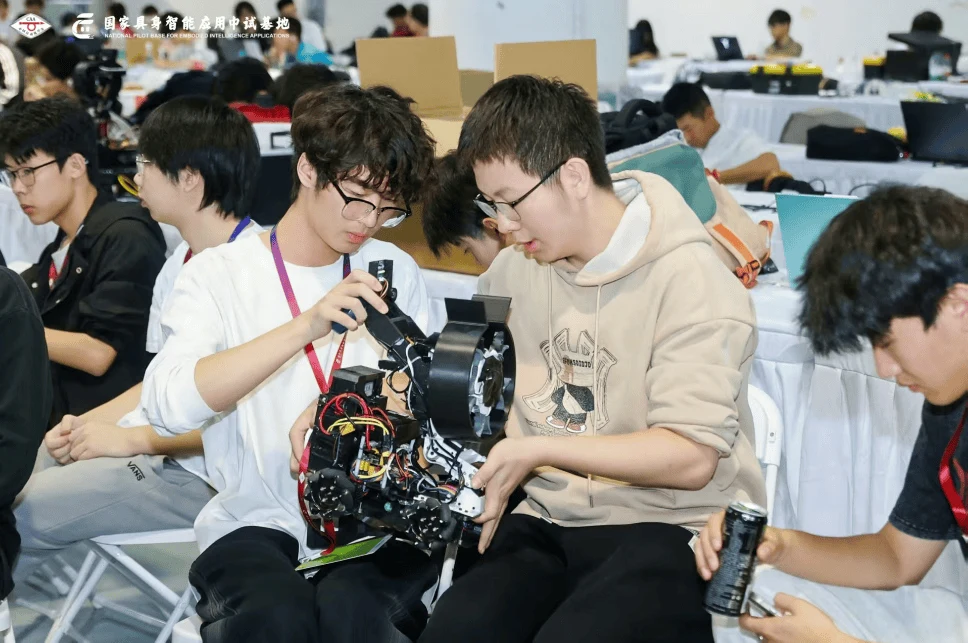
Behind the enthusiasm of the recruitment tables and matchmaking stands lies the High-tech Zone's (Binjiang) institutional support for embodied intelligence talent and industry. After the competition, the High-tech Zone (Binjiang) will fully leverage the resource advantages of the National Embodied Intelligence Application Pilot-Testing Base, this national-level application pilot-testing platform, to promote competition teams' connection with local enterprises, explore application scenarios, and accelerate the industrialization of embodied intelligence. Using this competition as a window, the High-tech Zone (Binjiang) is transforming the innovation momentum gathered on the field into real productivity on the industry front lines, laying a solid foundation for Hangzhou's bid to become the leading city for AI innovation and development, and making greater contributions to our country's effort to seize the commanding heights of global embodied intelligence technology and industry competition.
This article was provided by the National Embodied Intelligence Application Pilot-Testing Base and reprinted by QbitAI with authorization; the views belong to the original author.