Google · X

Project Suncatcher 是我们的登月计划,探索我们能否有朝一日在太空承载机器学习基础设施 🚀

谷歌介绍其“登月”项目Project Suncatcher,探索未来能否在太空托管机器学习基础设施。文中称,为验证AI硬件能否在轨运行,研究人员已探讨TPU能否承受航天物理应力以及太空辐射与极端温度;上周谷歌发射了首颗搭载四块TPU的测试卫星,称这使其“离得到答案更近一步”。

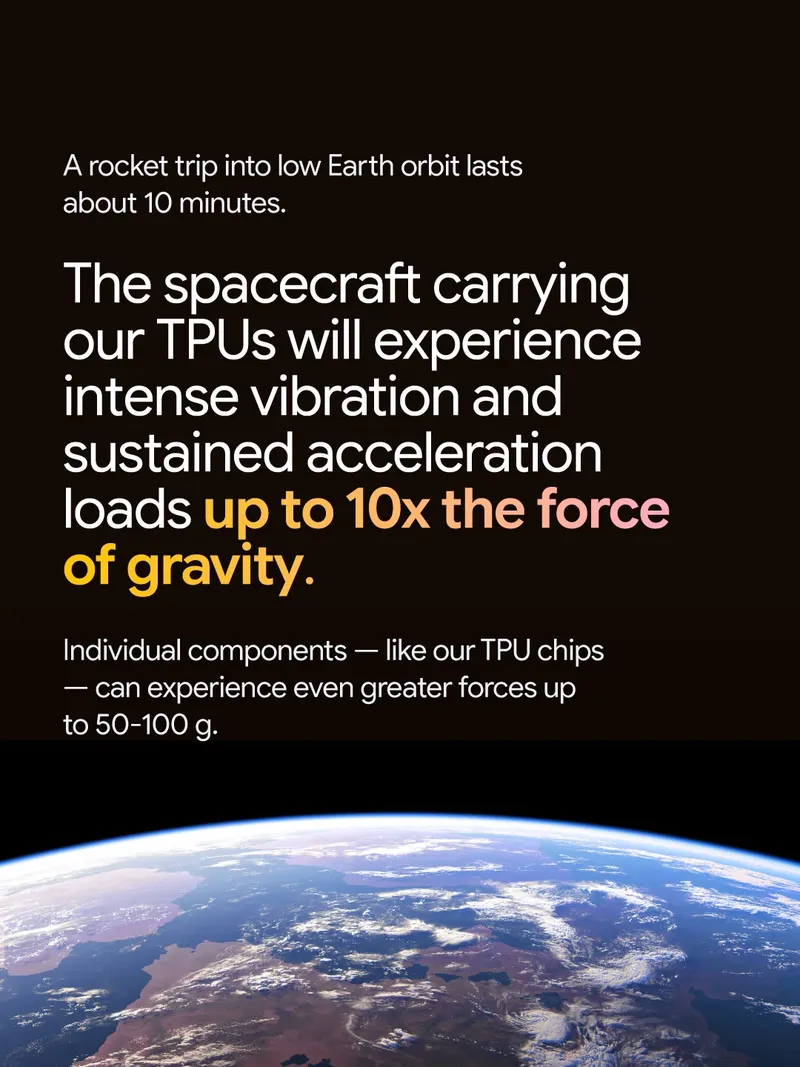
An infographic against a black background depicting the Earth below states that a rocket trip to low Earth orbit takes about 10 minutes, exposing spacecraft carrying TPUs to acceleration loads up to 10x gravity, and individual TPU chips to forces up to 50–100 g.
配图来源 · Google · X

Project Suncatcher 是我们的登月计划,探索我们能否有朝一日在太空承载机器学习基础设施 🚀

为此,我们需要了解我们的 AI 硬件能否在轨道上运行。我们的 TPU 能否承受航天飞行的物理压力以及太空的辐射和极端温度?这些是 Google 研究人员在过去几年里一直在探索的问题。

上周,我们将首颗搭载四个 TPU 的测试卫星送入轨道——让我们距离获得答案又近了一步。
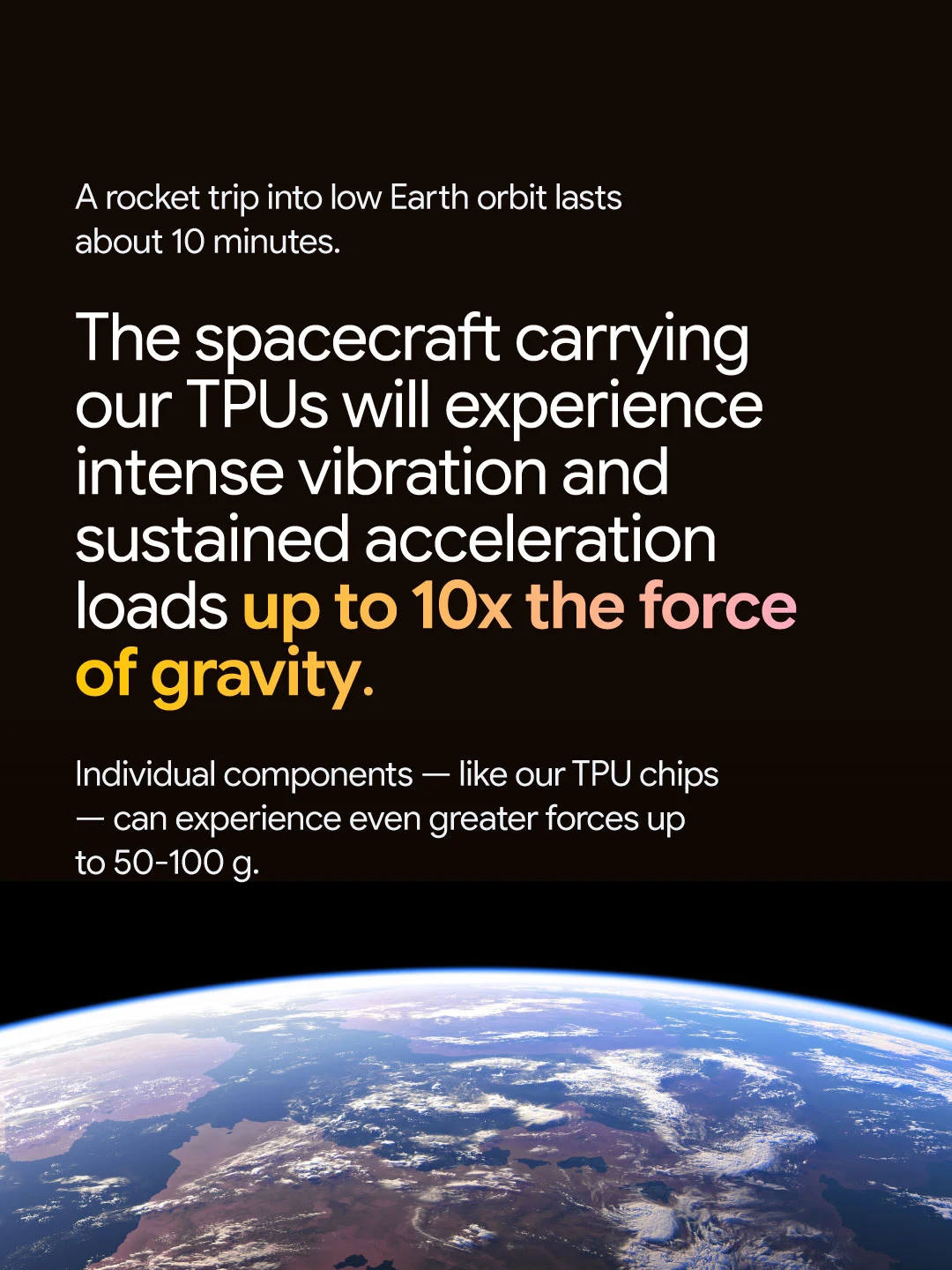
An infographic against a black background depicting the Earth below states that a rocket trip to low Earth orbit takes about 10 minutes, exposing spacecraft carrying TPUs to acceleration loads up to 10x gravity, and individual TPU chips to forces up to 50–100 g.
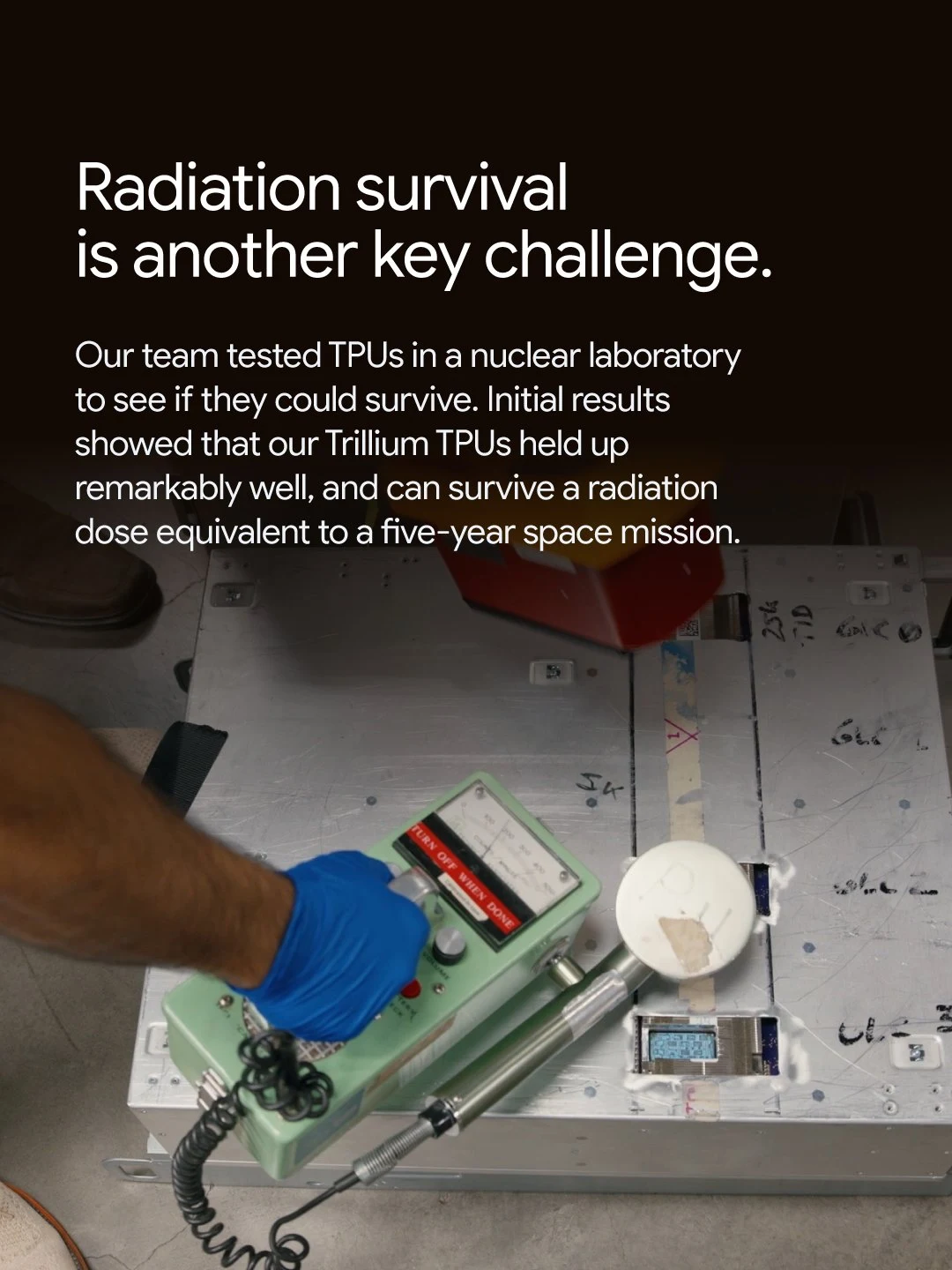
A person wearing glasses works with specialized laboratory equipment under a red laser line below text stating that Trillium TPUs can survive a radiation dose equivalent to a five-year space mission.
原始出处

Google · X

内容说明

原始发布及相关权利归来源方。

机器翻译 · 请以原文为准